
Hajj Quota Trial: Gus Alex Acknowledges No Reprimands on DPR Money Requests
-
News
-
3 minutes ago
This article was translated by AI. Read the original article on Kompas.com. See Original
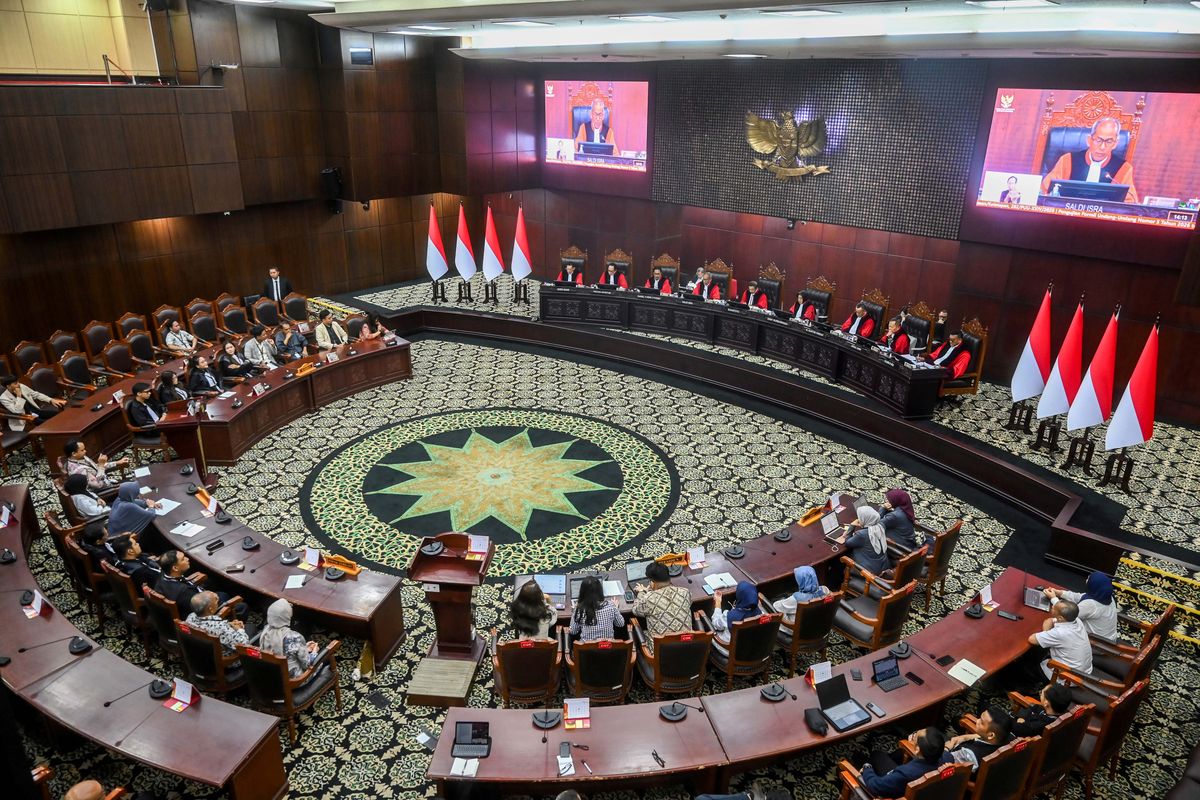
It must also be proven that the result of these organizational actions indeed contradicts the Constitution.
Without such proof, the dissolution of political parties risks becoming an instrument to penalize political divergences.
The issue is, even if the dissolution of a political party can be an instrument to demand accountability for organizational activities leading to unconstitutional consequences, not every party has the opportunity to file such a request.
Article 3 paragraph (1) of PMK No. 12/2008 only grants the status of applicant in party dissolution cases to the Government.
This means that citizens like us cannot file for the dissolution of a political party.
The government's position as the sole applicant has even been repeatedly emphasized by the MK in several of its decisions.
In Decision No. 53/PUU-IX/2011, for example, the MK stated that granting exclusive rights to the Government as an applicant is a legal policy set by the lawmakers.
This exclusivity was affirmed again in Decisions No. 16/PUU-XXII/2024 and No. 17/PUU-XXII/2024.
These three decisions demonstrate that lawmakers have the discretion to determine who is qualified to be an applicant in political party dissolution cases.
This is because the 1945 Constitution does not explicitly regulate who has standing as an applicant.
Thus, determining who has the right to file for the dissolution of a political party is part of the lawmakers’ authority.
However, this discretion should be used to broaden the scope of valid applicants.
This is because limiting applicants solely to the Government places the enforcement of the constitutionality of political parties entirely in the Government’s hands.
As a consequence, when the Government lacks the will, there is no mechanism for ordinary citizens to penalize political parties engaged in unconstitutional activities or for the consequences of their activities.