
Hajj Quota Trial: Gus Alex Acknowledges No Reprimands on DPR Money Requests
-
News
-
3 minutes ago
This article was translated by AI. Read the original article on Kompas.com. See Original
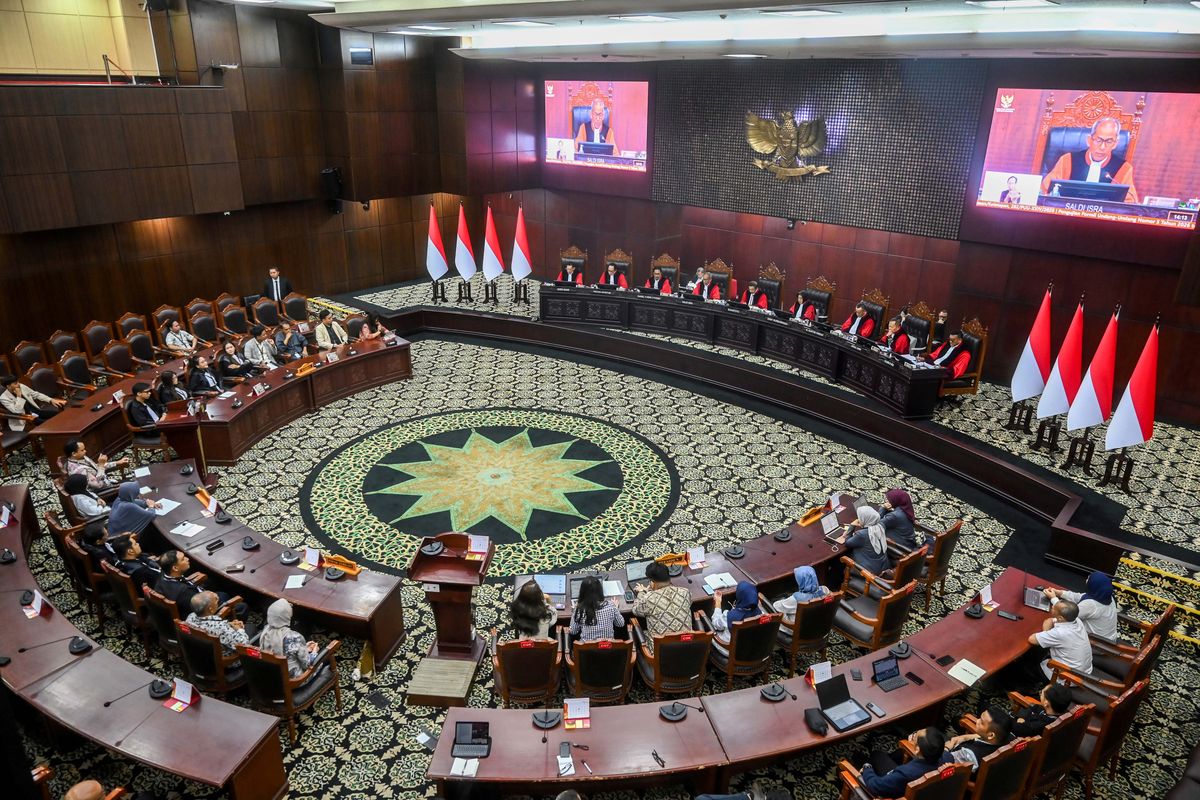
The reasons for dissolution are outlined in Article 2 of MK Regulation No. 12 of 2008.
One reason includes the activities of the political party being contrary to the Constitution, or the consequences thereof being unconstitutional.
When a party officially instructs all its members to support a specific law, this activity does not conflict with the Constitution.
In fact, giving such instructions is constitutional. However, do not forget that the consequences arising from this instruction, which can be deemed as party activity, can also serve as grounds for disbanding the party.
In this context, the consequence is the passage of a legal product in the form of a law that is in contradiction with the Constitution.
For this reason, I believe that the elements described in Article 2 of the MK Regulation may be satisfied, holding the party supporting unconstitutional legislative products accountable through dissolution, although several matters still need to be proven.
For instance, we still need to prove whether there was an official party decision? Was the formulation of this law part of the party's agenda?
Was the action taken as part of organizational policy?
Is the unconstitutional aspect related to the process of its formation or its substance?
And other questions to connect the unconstitutional legislative product with the party's policy to endorse it.
Such proof is essential because I believe that the dissolution of a political party should not be understood as an automatic consequence of any law annulled by the MK.
We must distinguish between flaws in legislative products and flaws in political organizational actions.
Because a law can be declared unconstitutional based on procedural formation issues, not just the substance of its norms.
Therefore, there must be a clear relationship between the actions of the party organization and the consequences that arise.
It must be proven that the actions were indeed organizational policies or decisions, not just individual DPR member opinions.