

ICW: The Asset Forfeiture Law Should Address Officials’ Unreasonable Wealth Increase
-
News
-
Just now
This article was translated by AI. Read the original article on Kompas.com. See Original
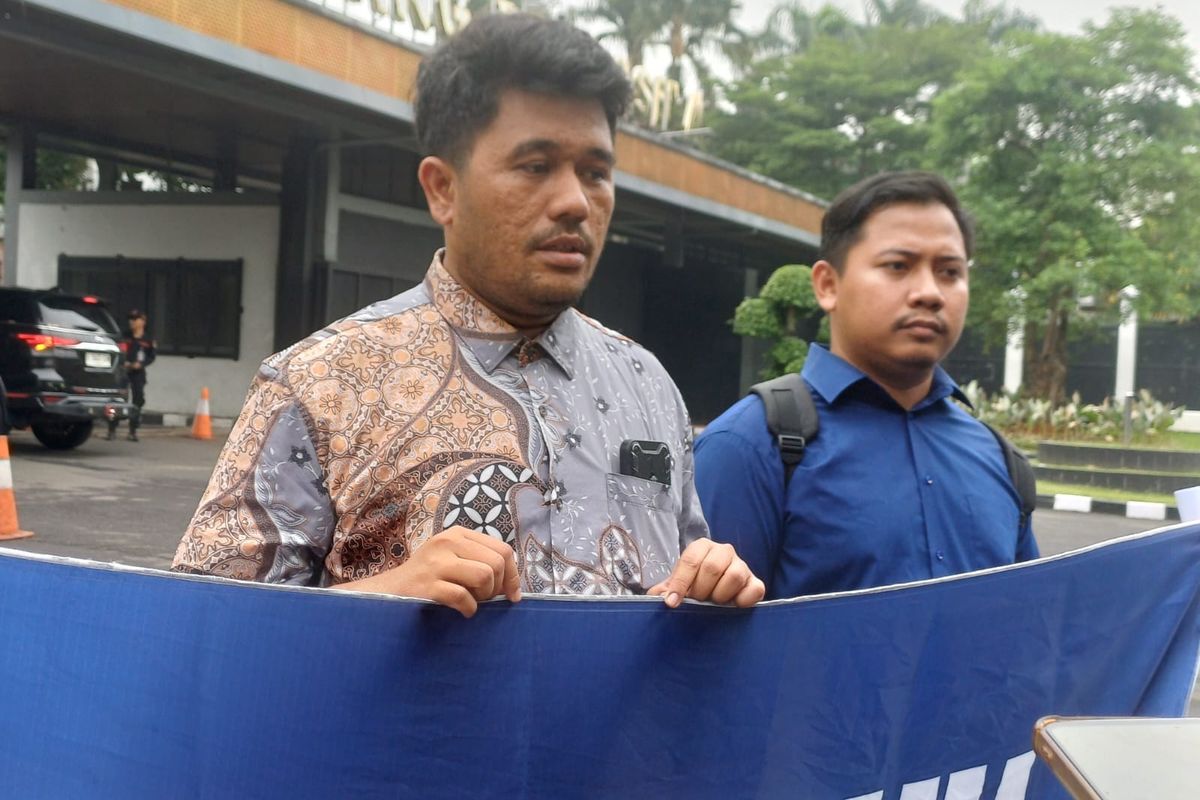
JAKARTA, KOMPAS.com - Indonesia Corruption Watch (ICW) believes that provisions regarding illicit enrichment should be included in the Asset Forfeiture Law related to corruption and other criminal acts, which was passed today.
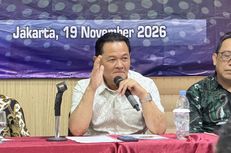
"What should actually be included in the formulation of the asset forfeiture law is related to illicit enrichment, the increase in wealth that is unreasonable, which is currently a major issue concerning our economic inequality," said Ibrahim, Head of the Law and Investigation Division at ICW, during an interview at the Senayan Parliament Complex in Jakarta on Thursday (19/11/2026).
Without such provisions in the Asset Forfeiture Law, corrupt individuals who have gained wealth illegally under the newly enacted law cannot be prosecuted.
He added that the House of Representatives (DPR) ignored the Corruption Eradication Commission's (KPK) request to include illicit enrichment norms in the law.
ICW also highlighted the DPR’s reasoning for omitting such provisions on grounds of human rights (HAM) violations.
ICW believes this cannot be used as a justification.
They suspect that many DPR members are unable to prove their wealth in their State Officials Wealth Reports (LHKPN).
"And that is not a violation of human rights, right? Why is the DPR afraid to regulate illicit enrichment? Because many current members of the DPR and government have experienced unreasonable increases in their wealth and are unable to prove it. Their LHKPN submissions are inaccurate, and there are companies they own but are not reported in the LHKPN," he emphasized.
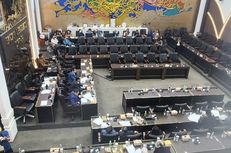
The Indonesian House of Representatives (DPR RI) revealed the reasons for not including provisions on illicit enrichment in the Asset Forfeiture Law.
Chairman of Commission III of the DPR RI, Habiburokhman, stated that this decision was made after the DPR absorbed the aspirations of academics and the public, considering aspects of human rights.
"Regarding illicit enrichment, we have heard various community aspirations. Some support it, but many also oppose it, yes. Experts feel similarly," said Habiburokhman at the DPR RI building on Thursday (19/11/2026).
Habiburokhman mentioned that the DPR has also studied the application of such provisions in several countries.
He noted that the United States and the United Kingdom do not enforce illicit enrichment laws because they are deemed contrary to human rights.
Additionally, Habiburokhman pointed out that Germany has previously rejected such provisions through its Constitutional Court.
"We are presented with at least 15 elements indicating that illicit enrichment is contrary to human rights," he stated.
Apart from human rights considerations, Habiburokhman explained that the DPR did not include these provisions because the Asset Forfeiture Law is a formal regulation governing procedures or legal processes.
Thus, he continued, the Asset Forfeiture Law does not contain substantive rules related to punitive norms.
"So indeed, with these two reasons, we cannot include it in this asset forfeiture law," he concluded.