
Behind the Affirmative Quota, the Rocky Road for Persons with Disabilities to Parliament
-
News
-
Just now
This article was translated by AI. Read the original article on Kompas.com. See Original
JAKARTA, KOMPAS.com - The proposal for a 10 percent quota for persons with disabilities in legislative candidacies is a first step toward expanding their representation in parliament.
However, merely providing opportunities to stand as candidates is not sufficient.
Being listed as a candidate does not guarantee equal chances of being elected.
Persons with disabilities still face various obstacles, ranging from limited access, societal stigma, to insufficient support from political parties.
Thus, affirmative policies must do more than ensure representation on candidacy lists.
Comprehensive preparation and support are necessary to translate these opportunities into actual representation in legislative bodies.
So, what needs to be done to ensure that affirmative action for persons with disabilities truly paves the way to parliament?
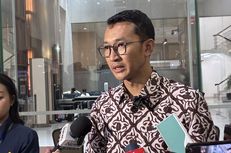
Gufroni Sakaril, a member of the Advisory Council of the Indonesian Disability Association (PPDI), stated that the lack of specific affirmative provisions for persons with disabilities limits their chances of becoming candidates.
Gufroni explained that the barriers preventing persons with disabilities from entering politics extend beyond the absence of quota regulations.
The recruitment processes within political parties are not seen as entirely inclusive because they do not systematically seek out and prepare candidates from the disabled community.
"The recruitment is not inclusive. Political parties have not systematically recruited and prepared disability candidates," Gufroni told Kompas.com on Wednesday (18/11/2026).
Moreover, there remains a stigma that persons with disabilities are incapable of leading, debating, or performing duties as legislative members.
Another challenge surfaces in the determination of candidate numbering and electoral districts.
Persons with disabilities risk being assigned non-strategic numbers or placed in electoral districts where their chances of election are low.
Party support, such as assistance, political networks, resources, and campaign aid, is still limited.
In fact, the high costs of politics pose a unique challenge for legislative candidates from the disability community.
Gufroni emphasized that persons with disabilities are a significant part of society whose political rights need to be realized through representation in legislative bodies.
He cited estimates from the World Health Organization (WHO) indicating that about 16 percent of the global population has disabilities.
Meanwhile, data collection of persons with disabilities in Indonesia faces challenges due to discrepancies among various sources.
Sources include the National Socio-Economic Survey (Susenas), 2024 data from the Central Statistics Agency (BPS), the Inter-Census Population Survey (SUPAS) 2025, and the National Social-Economic Data (DTSEN) 2025.
“Discrepancies in disability numbers between Susenas, SUPAS, and administrative data show that the issue of disability data remains a challenge. However, methodological differences should not delay affirmative political policies,” Gufroni stated.