
Political Parties' Responsibility for Unconstitutional Legislation
-
News
-
4 minutes ago
This article was translated by AI. Read the original article on Kompas.com. See Original
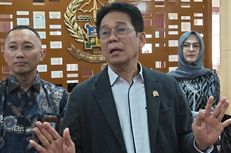
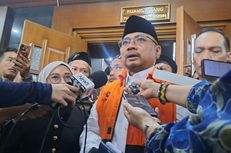
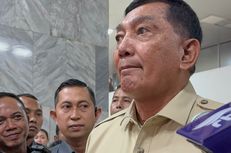
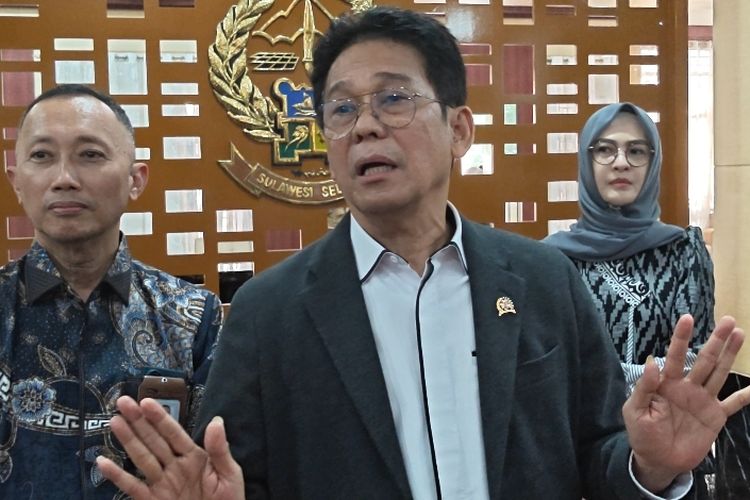
JAKARTA, KOMPAS.com - Deputy Chairman of the Corruption Eradication Commission (KPK) Johanis Tanak stated that, even in the absence of an Asset Seizure Law, the KPK retains the authority to seize the assets of suspects involved in corruption cases.
"Because even without the Asset Seizure Law, the KPK is authorized to take coercive measures to seize assets of suspects that are allegedly derived from corruption," Johanis said in a written statement to reporters on Thursday (19/11/2026).
Johanis emphasized that the KPK will continue to carry out its duties and functions in combating corruption as mandated by Law No. 31 of 1999 concerning Corruption Crimes, along with Law No. 20 of 2001 concerning Amendments to the Corruption Crime Law, Law No. 30 of 2002 regarding the KPK, Law No. 19 of 2019 concerning Amendments to the KPK Law, and Law No. 20 of 2025 concerning the Criminal Procedure Code.
He further explained that the KPK can still enforce measures such as arresting and detaining suspects, as well as taking other necessary legal actions during investigations or prosecutions of individuals suspected of corruption.
"Additionally, the KPK, as the executor, can seize assets in accordance with court decisions that have permanent legal force (inkracht van gewijsde)," he said.
Johanis clarified that if the assets derived from corruption committed by convicted individuals are insufficient to cover state financial losses or economic losses, the KPK can seize assets of the convict that were not derived from corruption.
He indicated that this aligns with court rulings and, subsequently, the confiscated assets will be auctioned by the State Wealth and Auction Service Office (KPKNL) upon the KPK's request, following an appraisal by the KPKNL.
Tanak noted that the proceeds from the auction will be used to cover any shortfall in state financial losses or economic losses.
"If there is a surplus from the auction, the KPK will return it to the convict; however, if it is still insufficient, the KPK can continue to trace other assets of the convict to seize and auction them according to the procedures I have outlined to cover state financial losses or economic losses," he stated.
"Therefore, it is clear that the enactment of the Asset Seizure Law does not impede the KPK from carrying out its duties and functions as mandated by applicable regulations," he added.
Johanis remarked that although the Asset Seizure Law does not regulate the authority of the KPK, ideally, the KPK’s duties and functions should remain focused on combating corruption.
"If there is a civil matter related to the handling of corruption cases, the KPK will refer it to the State Attorney or the aggrieved agency, as outlined in Articles 32, 33, and 34 of the Corruption Crime Law," he said.
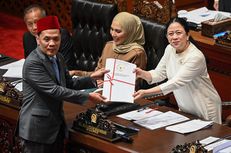
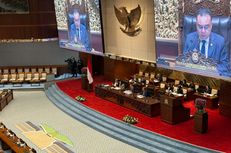
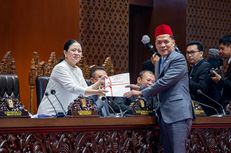
Previously, the Indonesian House of Representatives (DPR RI) approved the Draft Law on Asset Seizure Related to Corruption and Other Crimes as a law on Thursday (19/11/2026).
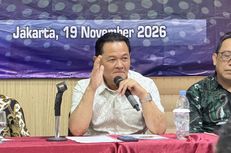
Chairman of Commission III of the DPR, Habiburokhman, pointed out that there are ten main points included in this Asset Seizure Bill, covering aspects from ensuring the bill protects human rights to the scope of the bill.
The scope of the bill includes crimes from fraud to trafficking. This bill also regulates the division of authority in asset forfeiture, protections for good-faith parties, returns of assets to victims, monitoring mechanisms, preventing abuses of power, and technological applications.