
Political Parties' Responsibility for Unconstitutional Legislation
-
News
-
4 minutes ago
This article was translated by AI. Read the original article on Kompas.com. See Original
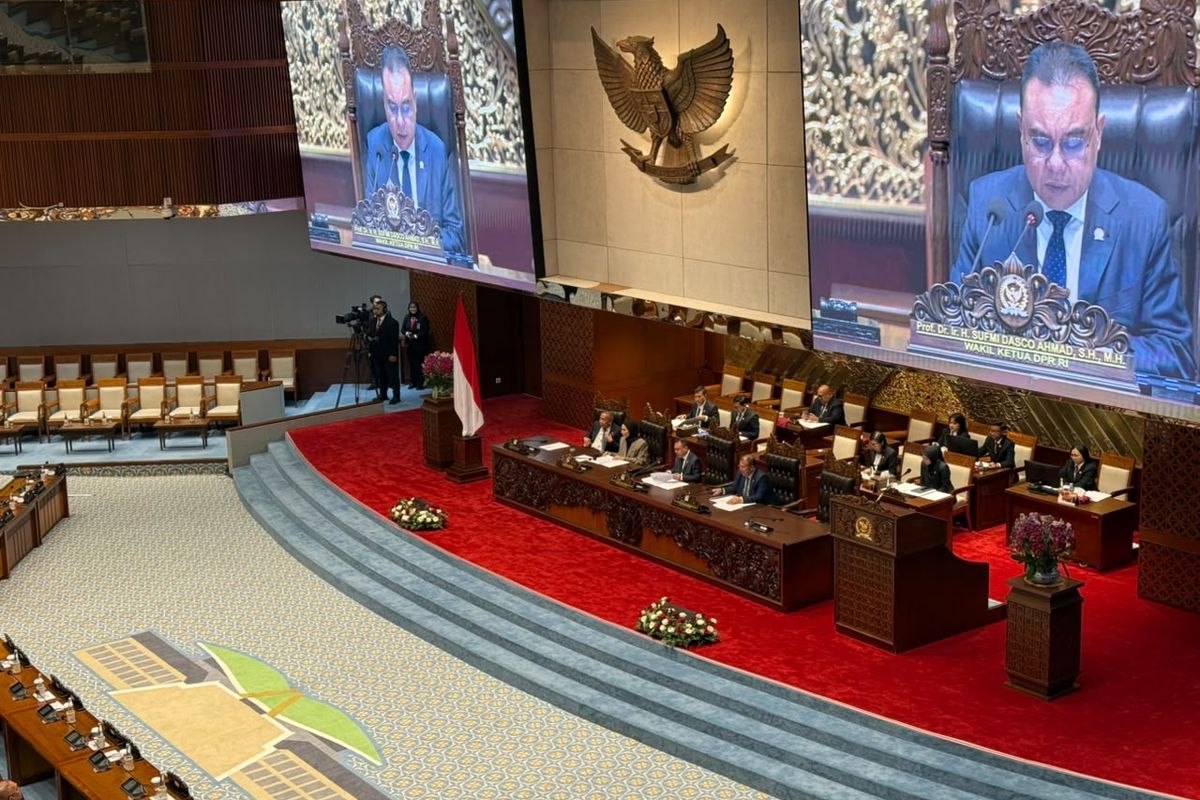
JAKARTA, KOMPAS.com - The proposal for a 10 percent quota for persons with disabilities in legislative candidacies is a first step toward expanding their representation in parliament.
However, merely providing opportunities to stand as candidates is not sufficient.
Being listed as a candidate does not guarantee equal chances of being elected.
Persons with disabilities still face various obstacles, ranging from limited access, societal stigma, to insufficient support from political parties.
Thus, affirmative policies must do more than ensure representation on candidacy lists.
Comprehensive preparation and support are necessary to translate these opportunities into actual representation in legislative bodies.
So, what needs to be done to ensure that affirmative action for persons with disabilities truly paves the way to parliament?
Gufroni Sakaril, a member of the Advisory Council of the Indonesian Disability Association (PPDI), stated that the lack of specific affirmative provisions for persons with disabilities limits their chances of becoming candidates.
Gufroni explained that the barriers preventing persons with disabilities from entering politics extend beyond the absence of quota regulations.
The recruitment processes within political parties are not seen as entirely inclusive because they do not systematically seek out and prepare candidates from the disabled community.
"The recruitment is not inclusive. Political parties have not systematically recruited and prepared disability candidates," Gufroni told Kompas.com on Wednesday (18/11/2026).
Moreover, there remains a stigma that persons with disabilities are incapable of leading, debating, or performing duties as legislative members.
Another challenge surfaces in the determination of candidate numbering and electoral districts.
Persons with disabilities risk being assigned non-strategic numbers or placed in electoral districts where their chances of election are low.
Party support, such as assistance, political networks, resources, and campaign aid, is still limited.
In fact, the high costs of politics pose a unique challenge for legislative candidates from the disability community.
Gufroni emphasized that persons with disabilities are a significant part of society whose political rights need to be realized through representation in legislative bodies.
He cited estimates from the World Health Organization (WHO) indicating that about 16 percent of the global population has disabilities.
Meanwhile, data collection of persons with disabilities in Indonesia faces challenges due to discrepancies among various sources.
Sources include the National Socio-Economic Survey (Susenas), 2024 data from the Central Statistics Agency (BPS), the Inter-Census Population Survey (SUPAS) 2025, and the National Social-Economic Data (DTSEN) 2025.
“Discrepancies in disability numbers between Susenas, SUPAS, and administrative data show that the issue of disability data remains a challenge. However, methodological differences should not delay affirmative political policies,” Gufroni stated.
According to him, the affirmative quota can open up access for persons with disabilities to power and the political decision-making process.
“The 10 percent quota is not just an administrative number, but an instrument to change the structure of democracy in Indonesia,” he asserted.
Neni Nur Hayati, Director of the Democracy and Electoral Empowerment Partnership (DEEP) Indonesia, views the proposal for a 10 percent quota for persons with disabilities in legislative candidacies as a progressive step that should be seriously considered in revising the Electoral Law.
However, she cautioned that this policy should not stop at meeting quotas without changing political processes.
“I see the proposal for a 10 percent quota for persons with disabilities in legislative candidacies as a progressive step that should be seriously considered in the revision of the Electoral Law," Neni told Kompas.com on Wednesday.
"However, we must ensure that this policy does not stop at quota politics, but truly becomes an instrument to address disparities in political representation. Because so far, everything has just stopped at numbers but not substance,” Neni added.
She noted that every citizen indeed has the right to vote and be voted for.
However, this right does not automatically provide equal opportunities for everyone to enter the political competition.
“Our electoral democracy still faces issues of representation. Procedurally, every citizen has the right to vote and be voted for. However, substantively, not all citizens have equal opportunities to enter the arena of political competition,” she remarked.
Neni believes one area that needs to be improved is the candidate recruitment process within political parties.
Parties cannot merely list the names of persons with disabilities on candidate lists to fulfill quota requirements.
They also need to develop leadership programs, provide political education, and open support access for persons with disabilities who wish to enter politics.
Experience in implementing a minimum 30 percent quota for women also provides important lessons.
Increasing the number of women on candidate lists does not automatically change the structure of political power.
This is because political parties still have significant control over the recruitment process, the placement of candidates in electoral districts, the provision of resources, and campaign support.
Therefore, according to Neni, affirmative policies for persons with disabilities must be accompanied by transparent recruitment mechanisms and candidate placements that provide equal competition opportunities.
Parties also need to ensure that persons with disabilities receive adequate support, not just being a complement to meet percentage quotas.
Apart from recruitment and party support, Neni emphasized the importance of accessibility throughout all electoral stages.
She pointed out that accessibility issues do not only arise when persons with disabilities seek to run for legislative positions.
Obstacles can also emerge starting from accessing electoral information, registering as voters, participating in candidacy processes, to campaigning.
For instance, persons with disabilities should be able to easily check their voter registration status through an accessible application.
"For example, can disabled voters check their registration status in an application that eases access for people with disabilities? So far, we are still far from expectations. There are many things that need attention," Neni explained.
Thus, electoral organizers need to ensure that the facilities and information provided are accessible to persons with disabilities with diverse needs.
In the context of candidacy, accessibility must also be considered when persons with disabilities undergo administrative processes, campaign stages, and interact with voters.
Neni stated that the success of affirmative policies is not enough to be measured merely by the number of persons with disabilities on legislative candidate lists.
The measurement must also include whether they receive adequate political support, can campaign equally, and have opportunities to be elected and engage in legislative work.
Neni believes that the affirmative quota provision for persons with disabilities requires a solid legal basis and clear implementation regulations.
This regulation should outline measurable obligations for political parties, including accessibility standards in candidacy and campaigning, transparent recruitment, and capacity development support for legislative candidates from disability groups.
Policy formulation also needs to involve disability organizations through meaningful consultations supported by impact studies.
As such, the regulations enacted can address the real needs and barriers faced by these groups.
In implementation, the General Election Commission (KPU) should have clear verification authority to ensure that parties comply with affirmative provisions.
Meanwhile, the Election Supervisory Body (Bawaslu) needs to monitor potential discrimination and misuse of quota policies.
Neni also insists that there should be sanctions for parties that fail to comply with provisions.
“There needs to be legal consequences for parties that do not fulfill their affirmative obligations. If the 10 percent quota is later established as a legal requirement, there must be a clear fulfillment mechanism and sanctions in place,” she emphasized.
Administrative sanctions can be applied progressively, starting from requirements to amend candidate lists to rejection if parties do not make corrections within a specified timeframe.
However, the implementation of sanctions must have a clear legal basis and be proportional, while still considering the party’s readiness to provide accessibility and rights for legislative candidates.
According to Neni, the evaluation of affirmative policies should not only rely on the fulfillment of the number of disability candidates.
Evaluations also need to analyze election results and the quality of their involvement in legislative bodies.
This is because quotas serve as an entry point, not a guarantee that one will be elected.
In an open proportional system, a candidate's electability is also influenced by vote counts, organizational capabilities, campaign resources, and political party support.
“Ultimately, inclusive democracy is not only about granting voting rights to all citizens but also about creating equal opportunities for every citizen to be elected, compete, and participate in political decision-making,” Neni concluded.