
Experts Say There is No Requirement for Written Study to Establish Additional Hajj Quotas
-
News
-
4 minutes ago
This article was translated by AI. Read the original article on Kompas.com. See Original
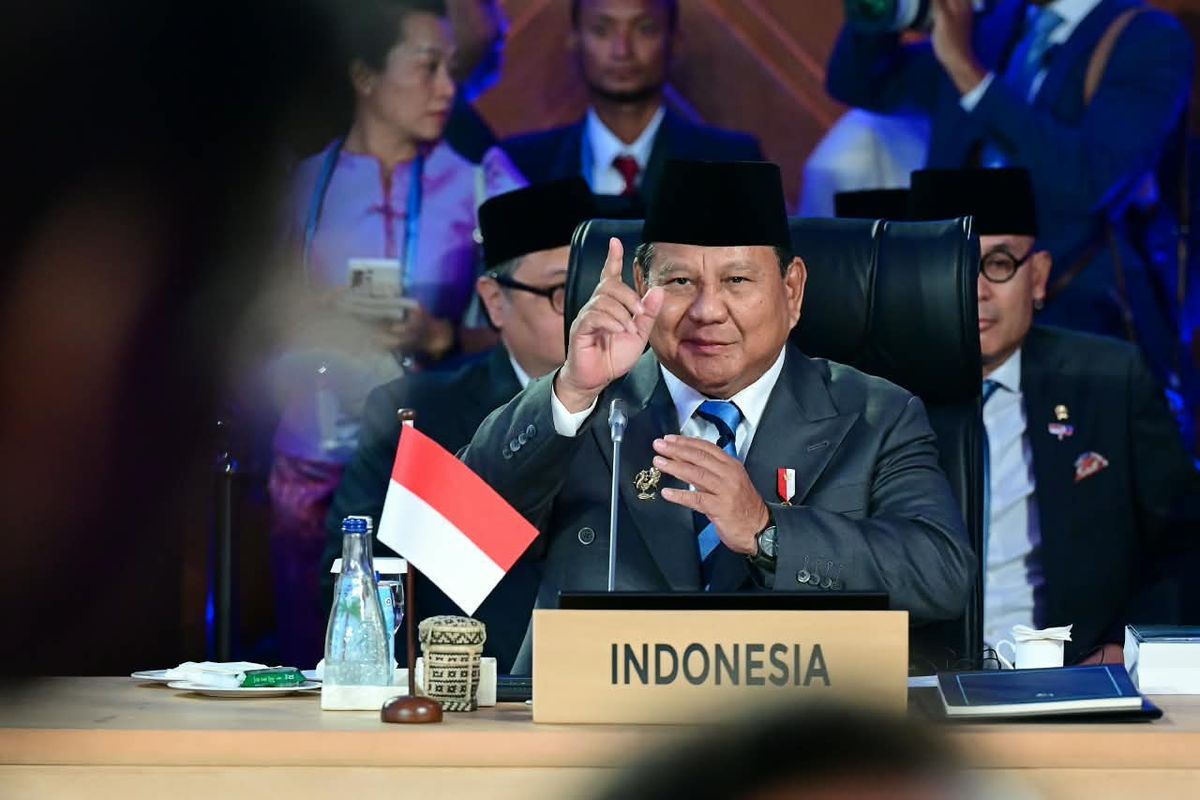
In Prabowo's context, the ASEAN and APEC Summits represent the Level I arena.
Meanwhile, issues such as the wiretapping, the vice president's resignation, government consolidation, and the political dynamics supporting the government are part of the Level II arena.
These two arenas cannot be separated. Domestic political stability strengthens the president's bargaining position in international diplomacy.
Conversely, results from diplomacy that provide tangible benefits to society can fortify the government’s legitimacy domestically.
This is where Prabowo's leadership challenge lies. The president must not allow domestic issues to derail international diplomatic momentum.
However, he must not use diplomatic engagements as a pretext to delay resolving domestic issues.
The neoclassical realism perspective is also relevant in explaining this situation.
This approach sees foreign policy as determined not only by pressures from the international system but also influenced by domestic factors, such as leadership, elite perceptions, state capacity, and internal political dynamics.
This means that global geopolitical changes do require Indonesia to remain active.
Nonetheless, Indonesia’s ability to respond to these changes is heavily influenced by the quality of leadership and institutional resilience at home.
Meanwhile, from the perspective of complex interdependence, Robert O. Keohane and Joseph S. Nye, in their book Power and Interdependence (1977), explain that modern interstate relations are no longer solely determined by military and political power.
Trade, investment, technology, energy, environment, and communication also shape increasingly complex interdependent relationships.
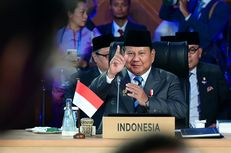
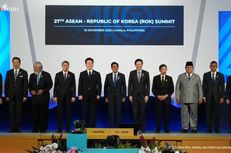
Therefore, Prabowo’s presence in Manila and Shenzhen should not merely be seen as fulfilling state agenda.
Both forums are directly related to national development interests.
In Manila, Indonesia is interested in maintaining ASEAN's centrality, regional stability, and the strategic autonomy of Southeast Asia.
Amidst the rivalry between the United States and China, issues concerning the South China Sea, tensions in the Taiwan Strait, and Indo-Pacific security dynamics need to be addressed, ensuring ASEAN remains a space for dialogue and cooperation rather than just an arena for the competing interests of major powers.
Southeast Asian nations still have room to determine their own future.
Indonesia must encourage dialogue, build trust, and ensure that differing interests among nations do not escalate into open conflict.
Simultaneously, Shenzhen presents a different geo-economic dimension.
Through APEC, Indonesia has an opportunity to advocate for market access, investment, supply chain strengthening, digital economy, and technological cooperation.
In the face of global economic uncertainty and rising technological competition, Indonesia needs to ensure that Asia-Pacific economic transformation benefits not only nations with substantial capital and technological capacity.