
Experts Say There is No Requirement for Written Study to Establish Additional Hajj Quotas
-
News
-
4 minutes ago
This article was translated by AI. Read the original article on Kompas.com. See Original
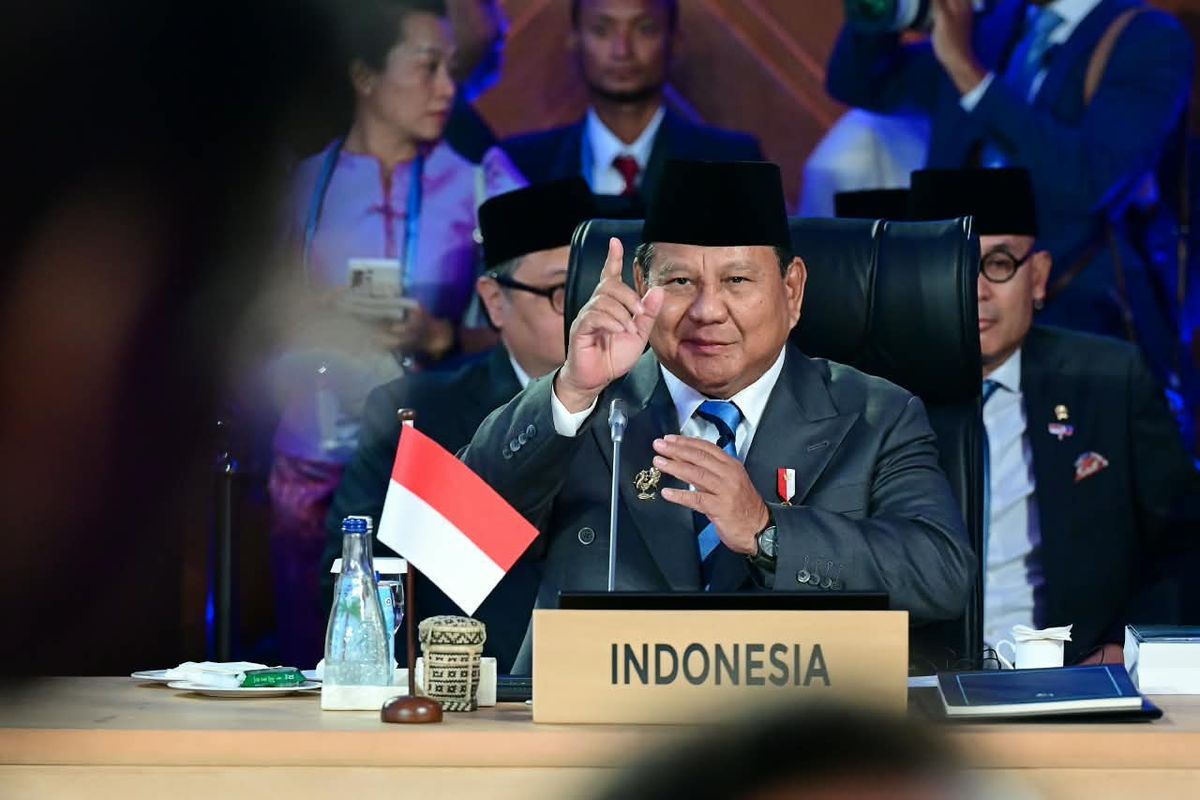
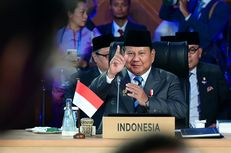
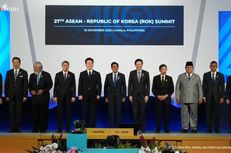
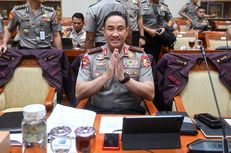
AMIDST the turbulence of domestic politics following the revelation of alleged illegal wiretapping of President Prabowo Subianto's communications and several figures, which has implicated several high-ranking police officers as suspects, along with the resignation of Vice President Gibran Rakabuming Raka on November 12, 2026, Prabowo has departed for Manila, Philippines, to attend the 49th ASEAN Summit on November 15–17, 2026.
From Manila, the President is scheduled to continue his journey to Shenzhen, China, for the APEC Summit on November 18–19, 2026.
This decision certainly raises questions. Shouldn't the President be in Jakarta more often to manage the political situation and address domestic issues?
Moreover, the wiretapping of a head of state by his own apparatus and the resignation of a vice president is not an ordinary matter.
Both issues pertain to the security of the head of state, trust in law enforcement institutions, governmental continuity, and national political stability.
However, there is one aspect that needs to be viewed proportionally.
Prabowo is not the first Indonesian president to make a foreign trip while political situations at home are unstable.
The history of Indonesian presidency notes that foreign diplomacy and domestic crises are not two events that always occur independently.
One of the most relevant examples is President Suharto's trip to Cairo, Egypt, on May 9, 1998, to attend the G-15 Summit.
At that time, Indonesia was facing a severe economic and political crisis.
The rupiah had sharply depreciated, the pressure for reform was intensifying, student demonstrations were widespread, and the legitimacy of the New Order government continued to decline.
Even while Suharto was in Cairo, the Trisakti tragedy occurred on May 12, 1998, followed by major riots on May 13–15 that shook Jakarta and other cities.
Suharto ultimately shortened his visit and returned to Indonesia on May 15, 1998.
Six days later, on May 21, 1998, he announced his resignation as President of the Republic of Indonesia.
This example illustrates that the head of state’s overseas travel during domestic pressures is not an unprecedented occurrence in Indonesia’s history.
However, there is an important lesson from Suharto's experience: the continuation of foreign diplomacy must be accompanied by sensitivity to developments in domestic politics.
When domestic situations change drastically, the priorities of leadership must also be adaptable.
Thus, the question is not merely whether the president can travel when Jakarta is tumultuous, but how to ensure that national interests in both arenas are effectively managed.
From an international relations perspective, Robert D. Putnam, in his article Diplomacy and Domestic Politics: The Logic of Two-Level Games (1988), explains that a state leader effectively operates in two arenas simultaneously.
First, Level I, which is the international arena where the government negotiates with other nations and international actors.
Second, Level II, which is the domestic arena where international agreements must garner support and acceptance from domestic actors.
In Prabowo's context, the ASEAN and APEC Summits represent the Level I arena.
Meanwhile, issues such as the wiretapping, the vice president's resignation, government consolidation, and the political dynamics supporting the government are part of the Level II arena.
These two arenas cannot be separated. Domestic political stability strengthens the president's bargaining position in international diplomacy.
Conversely, results from diplomacy that provide tangible benefits to society can fortify the government’s legitimacy domestically.
This is where Prabowo's leadership challenge lies. The president must not allow domestic issues to derail international diplomatic momentum.
However, he must not use diplomatic engagements as a pretext to delay resolving domestic issues.
The neoclassical realism perspective is also relevant in explaining this situation.
This approach sees foreign policy as determined not only by pressures from the international system but also influenced by domestic factors, such as leadership, elite perceptions, state capacity, and internal political dynamics.
This means that global geopolitical changes do require Indonesia to remain active.
Nonetheless, Indonesia’s ability to respond to these changes is heavily influenced by the quality of leadership and institutional resilience at home.
Meanwhile, from the perspective of complex interdependence, Robert O. Keohane and Joseph S. Nye, in their book Power and Interdependence (1977), explain that modern interstate relations are no longer solely determined by military and political power.
Trade, investment, technology, energy, environment, and communication also shape increasingly complex interdependent relationships.
Therefore, Prabowo’s presence in Manila and Shenzhen should not merely be seen as fulfilling state agenda.
Both forums are directly related to national development interests.
In Manila, Indonesia is interested in maintaining ASEAN's centrality, regional stability, and the strategic autonomy of Southeast Asia.
Amidst the rivalry between the United States and China, issues concerning the South China Sea, tensions in the Taiwan Strait, and Indo-Pacific security dynamics need to be addressed, ensuring ASEAN remains a space for dialogue and cooperation rather than just an arena for the competing interests of major powers.
Southeast Asian nations still have room to determine their own future.
Indonesia must encourage dialogue, build trust, and ensure that differing interests among nations do not escalate into open conflict.
Simultaneously, Shenzhen presents a different geo-economic dimension.
Through APEC, Indonesia has an opportunity to advocate for market access, investment, supply chain strengthening, digital economy, and technological cooperation.
In the face of global economic uncertainty and rising technological competition, Indonesia needs to ensure that Asia-Pacific economic transformation benefits not only nations with substantial capital and technological capacity.
Developing nations must also have opportunities to enhance their positions within the global value chain.
Thus, ASEAN and APEC essentially complement each other. ASEAN serves as the anchor of Indonesia’s geopolitical diplomacy, while APEC opens avenues to strengthen geo-economic positioning.
Regional security stability is a prerequisite for economic growth, while stronger economic cooperation can become a foundation for regional stability.
However, diplomatic success cannot be measured solely by the president's attendance, the number of bilateral meetings, handshakes, or photo ops with world leaders.
A more significant measure is the concrete results obtained by Indonesia.
Did Indonesia succeed in securing investment commitments? Is market access for national products increasing?
Are Indonesia's interests in supply chains and the digital economy gaining more space?
Is Indonesia able to maintain its strategic position amidst US-China rivalry?
These questions are benchmarks for whether the journey from Manila to Shenzhen truly adds value to national interests.
At the same time, the government must seriously address domestic issues.
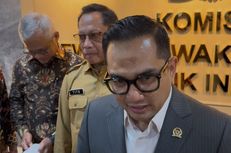
Allegations of illegal wiretapping must be investigated transparently and accountably, including revealing those who ordered and received the results of the wiretapping if proven to have occurred.
The process of filling the Vice President's position must proceed according to the constitution.
Government consolidation must also be conducted without sacrificing democracy, the rule of law, and public trust.
Suharto's experience in May 1998 serves as a reminder that domestic crises can escalate much faster than anticipated.
A president must indeed maintain continuity in foreign relations, but the ability to read changes in the domestic situation is an inseparable part of the leadership responsibility.
Ultimately, Prabowo's journey from Manila to Shenzhen reflects the classic yet relevant challenge in Indonesia's foreign policy: how to balance domestic interests with international environmental demands.
Prabowo does not need to choose between Jakarta and the international stage.
What is required is the ability to ensure that both agendas operate concurrently through effective governmental coordination, responsive leadership, and functional state institutions.
In the end, the president may face political storms domestically, but the ship named Indonesia must continue to sail.
Let it not be the case that by being too busy taming the waves in Jakarta, Indonesia loses momentum amidst the currents of global change.
Conversely, let it not be that the focus on navigating the ocean of diplomacy leads to neglecting the need to ensure that the ship at home remains strong and all its crew performs well.