
Experts Say There is No Requirement for Written Study to Establish Additional Hajj Quotas
-
News
-
4 minutes ago
This article was translated by AI. Read the original article on Kompas.com. See Original
JAKARTA, KOMPAS.com - An expert in Administrative Law from the University of Muhammadiyah Jakarta, Ibnu Sina Chandranegara, stated that there is no obligation for the Minister of Religious Affairs to prepare a written study before establishing the distribution of additional Hajj quotas.
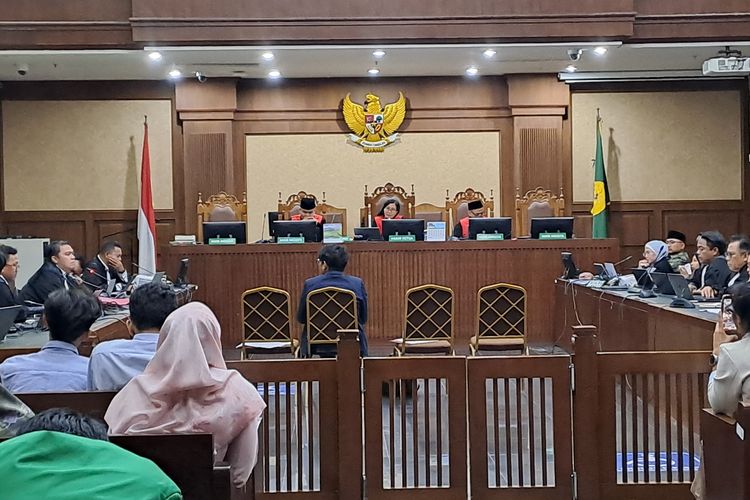
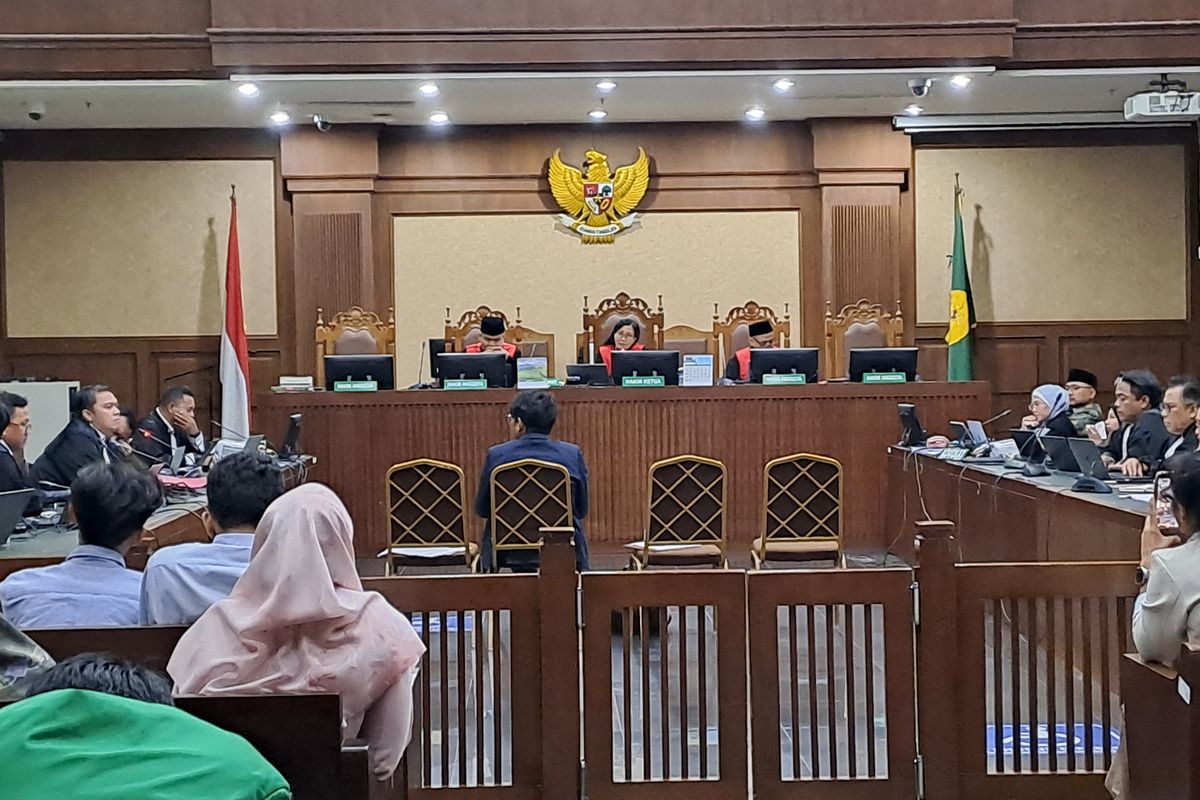
"There is no written obligation indicating the need for consideration or studies or deliberation before such a decision is made. But legally, this is not a requirement in the issuance of additional Hajj quotas," said Ibnu, as an expert presented by the defendant, during the trial of the alleged corruption case related to the management of additional Hajj quotas for 2023-2024 at the Central Jakarta Corruption Court on Tuesday (10/11/2026).
According to Ibnu, Law No. 8 of 2019 concerning the Implementation of Hajj only requires two conditions for establishing additional Hajj quotas: there must be an increase in the Hajj quota, and the Hajj quota for Indonesia must have been previously established by the Minister of Religious Affairs.
"In principle, the norm in Article 9 does not provide requirements regarding substance but instead sets conditions on how the authority is commenced," he explained.
Ibnu clarified that if a study is deemed necessary before a decision is issued, the study does not carry binding authority because it is not a requirement specified in the law.
"If a study is needed, then that study is also non-binding on the minister involved, as it does not meet what is required by law," he stated.
He added that various documents and meeting records discussing the preparation of Hajj implementation can serve as background or considerations in the decision-making process.
However, these documents do not need to be compiled into a single special written study as a condition for the issuance of additional Hajj quotas.
Nevertheless, Ibnu reminded that the organization of Hajj must still adhere to the principles of Hajj administration as outlined in Article 2 of the Hajj Law, including principles of transparency and accountability.
He also noted that the provisions of Article 8 paragraph (6) concerning the principles of proportionality and transparency govern the establishment of Indonesia's Hajj quota, not the additional Hajj quota.
The Corruption Eradication Commission (KPK) has charged four individuals in this case: former Minister of Religious Affairs Yaqut Cholil Qoumas, former Special Staff to the Minister of Religious Affairs Isfah Abidal Aziz alias Gus Alex, Operations Director of PT Makassar Toraja (Maktour) Ismail Adham, and Chairman of Kesthuri and Commissioner of PT Raudhah Eksati Utama, Asrul Azis Taba.
The KPK alleges that the management of additional Hajj quotas for 2023-2024 has resulted in state losses of at least IDR 622.09 billion.
This loss figure refers to the Investigative Audit Report by the Supreme Audit Agency of Indonesia (BPK RI) concerning the calculation of state losses related to Indonesia's Hajj quota in the organization of the Hajj for 2023-2024 by the Ministry of Religious Affairs.
The state losses consist of three components.
First, the difference between income and expenses of Special Hajj Organizers (PIHK) in organizing the 2024 Hajj, amounting to IDR 438.2 billion.
Second, income from PIHK from the sale of quotas for special Hajj officers for 2024 totaling IDR 39.95 billion.
Third, fees for the expedited filling of additional special Hajj quotas for 2023 and 2024 totaling IDR 143.92 billion.
For their actions, the defendants are charged with violating Article 3 juncto Article 18 of Law No. 31 of 1999 concerning the Eradication of Corruption Crimes, as amended by Law No. 20 of 2001, juncto Article 20 letter c of Law No. 1 of 2023 concerning the Criminal Code.