

Examining the Legal Status of Journalistic Works as Evidence in Court
-
News
-
3 minutes ago
This article was translated by AI. Read the original article on Kompas.com. See Original
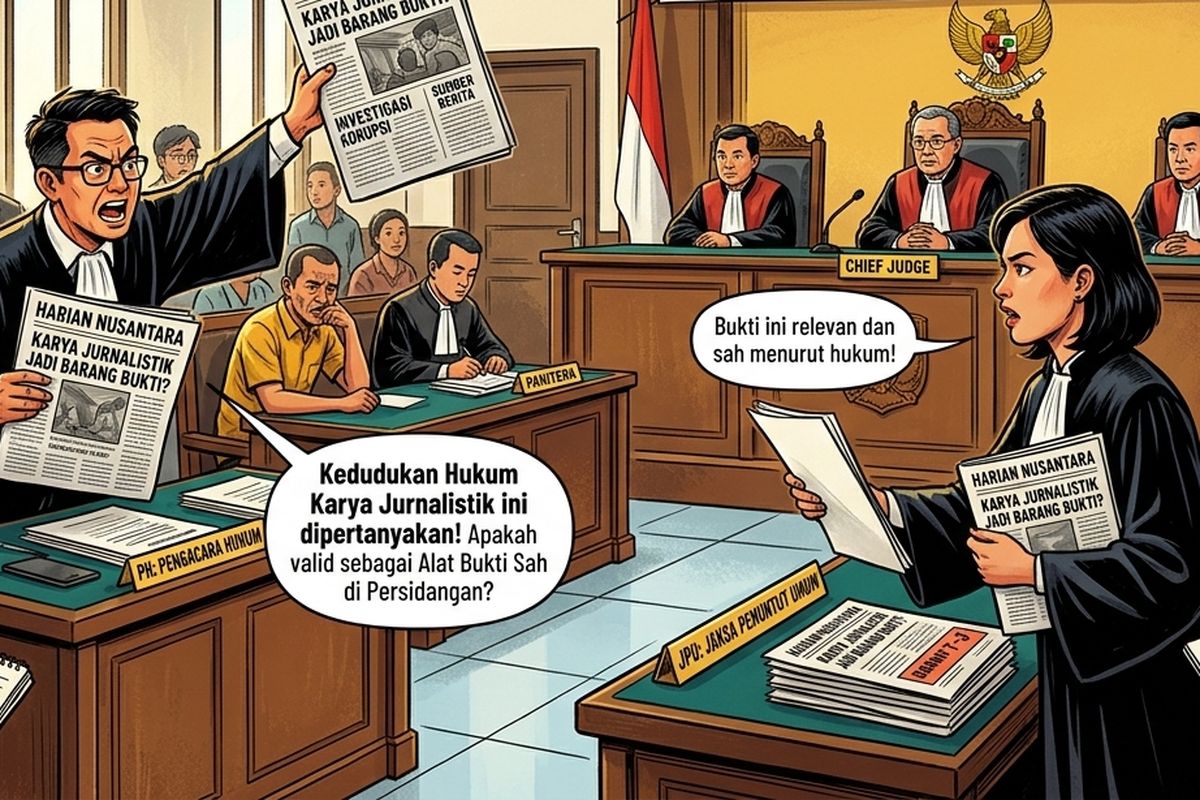
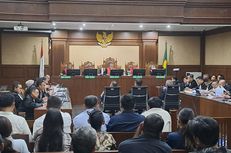
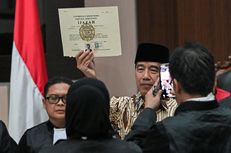
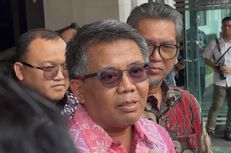
JAKARTA, KOMPAS.com - Recently, journalistic products or works have been used as evidence in the trial of Tifauzia Tyassuma, also known as Doctor Tifa, regarding the controversy surrounding President Jokowi's diploma at the East Jakarta District Court on Thursday (12/11/2026).
The journalistic product in question is the television program "Rakyat Bersuara," moderated by Aiman Witjaksono.
The prosecutor used a recording of the program as evidence to uncover facts in the trial, considering that Doctor Tifa was one of the sources during the talk show.
On the other hand, journalistic work is bound by the principles of source protection, independence, and journalistic ethics. So, to what extent can journalistic works be used as evidence in court?
Criminal Law expert from Trisakti University, Abdul Fickar Hadjar, stated that journalistic products can serve as evidence as long as they are reports of events that are publicly known and have been confirmed for their truthfulness.
These events must be factual, not opinion-based, such as a fire, flood, or physical altercation between individuals.
"So, they must involve events. However, statements, opinions, or whatever they are named, as long as they do not pertain to natural events, cannot be used as evidence," Fickar told Kompas.com on Sunday (15/11/2026).
Fickar explained that, in the context of criminal evidence, journalistic products can also be used to confirm witness statements and verify the content or substance of documentary evidence.
However, journalistic products related to expert testimony and statements from suspects cannot be used as evidence. This is because expert statements are opinions based on the knowledge they possess.
"Similarly, journalistic products consisting of statements from suspects cannot be used as evidence because suspects have the right to remain silent recognized by law. Therefore, they cannot be used as evidence," he emphasized.
Fickar mentioned that the distinction between factual events and opinion-based facts—relating to someone's opinion—should be a clear limitation when journalistic products are accepted as evidence.
Furthermore, journalists are bound by ethical codes in their duties. The work produced must also provide equal space for both sides (cover both sides).
Meanwhile, statements resulting from interviews that involve opinions cannot serve as evidence.
"Thus, the evidence that can be used consists of confirmations of real (factual) events such as fires, flooding, or collisions," he clarified.
If there are intentional statements made at a press conference by someone and reported by several media outlets with the same content and substance, they may be used as evidence. This also must comply with applicable regulations.