
Experts Say There is No Requirement for Written Study to Establish Additional Hajj Quotas
-
News
-
4 minutes ago
This article was translated by AI. Read the original article on Kompas.com. See Original
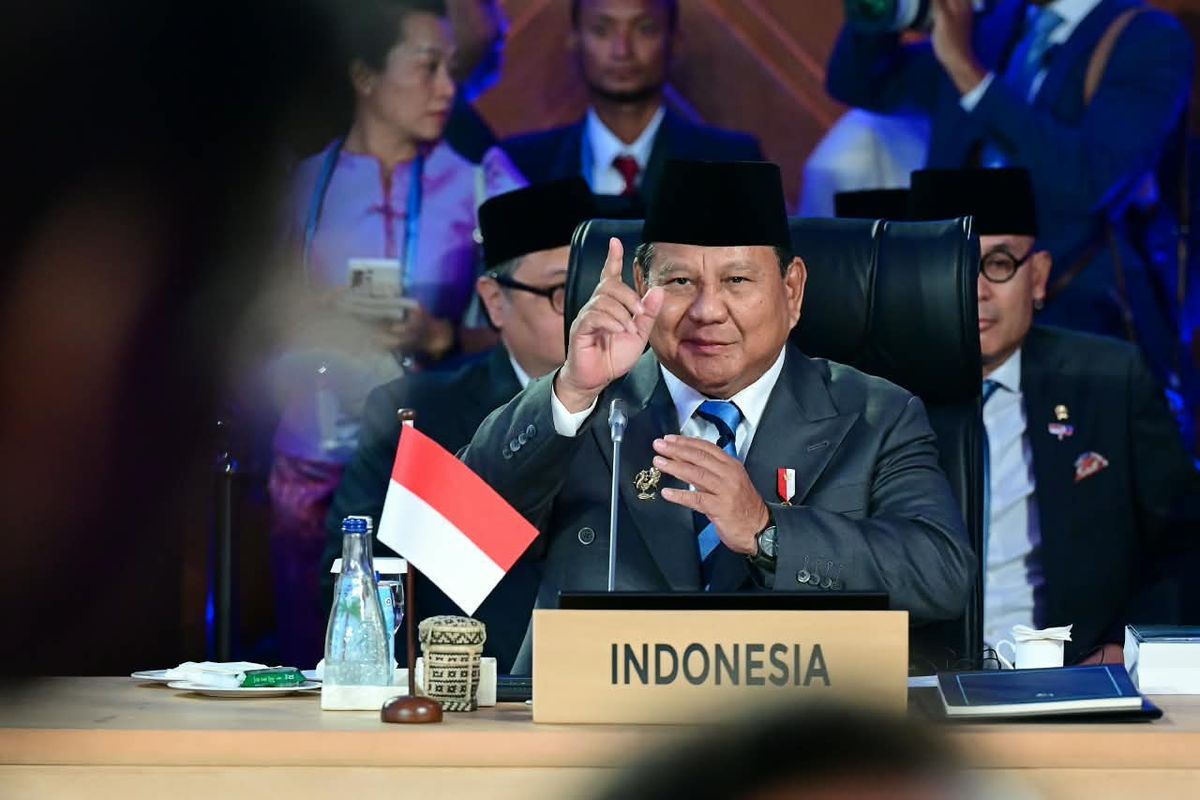
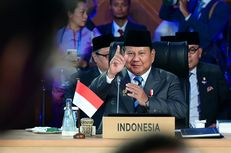
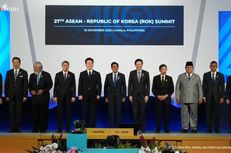
AMIDST the turbulence of domestic politics following the revelation of alleged illegal wiretapping of President Prabowo Subianto's communications and several figures, which has implicated several high-ranking police officers as suspects, along with the resignation of Vice President Gibran Rakabuming Raka on November 12, 2026, Prabowo has departed for Manila, Philippines, to attend the 49th ASEAN Summit on November 15–17, 2026.
From Manila, the President is scheduled to continue his journey to Shenzhen, China, for the APEC Summit on November 18–19, 2026.
This decision certainly raises questions. Shouldn't the President be in Jakarta more often to manage the political situation and address domestic issues?
Moreover, the wiretapping of a head of state by his own apparatus and the resignation of a vice president is not an ordinary matter.
Both issues pertain to the security of the head of state, trust in law enforcement institutions, governmental continuity, and national political stability.
However, there is one aspect that needs to be viewed proportionally.
Prabowo is not the first Indonesian president to make a foreign trip while political situations at home are unstable.
The history of Indonesian presidency notes that foreign diplomacy and domestic crises are not two events that always occur independently.
One of the most relevant examples is President Suharto's trip to Cairo, Egypt, on May 9, 1998, to attend the G-15 Summit.
At that time, Indonesia was facing a severe economic and political crisis.
The rupiah had sharply depreciated, the pressure for reform was intensifying, student demonstrations were widespread, and the legitimacy of the New Order government continued to decline.
Even while Suharto was in Cairo, the Trisakti tragedy occurred on May 12, 1998, followed by major riots on May 13–15 that shook Jakarta and other cities.
Suharto ultimately shortened his visit and returned to Indonesia on May 15, 1998.
Six days later, on May 21, 1998, he announced his resignation as President of the Republic of Indonesia.
This example illustrates that the head of state’s overseas travel during domestic pressures is not an unprecedented occurrence in Indonesia’s history.
However, there is an important lesson from Suharto's experience: the continuation of foreign diplomacy must be accompanied by sensitivity to developments in domestic politics.
When domestic situations change drastically, the priorities of leadership must also be adaptable.
Thus, the question is not merely whether the president can travel when Jakarta is tumultuous, but how to ensure that national interests in both arenas are effectively managed.
From an international relations perspective, Robert D. Putnam, in his article Diplomacy and Domestic Politics: The Logic of Two-Level Games (1988), explains that a state leader effectively operates in two arenas simultaneously.
First, Level I, which is the international arena where the government negotiates with other nations and international actors.
Second, Level II, which is the domestic arena where international agreements must garner support and acceptance from domestic actors.