
Choose Amran or Sugiono? Here’s the Current Support Map in the Indonesian Parliament
-
News
-
1 minute ago
This article was translated by AI. Read the original article on Kompas.com. See Original
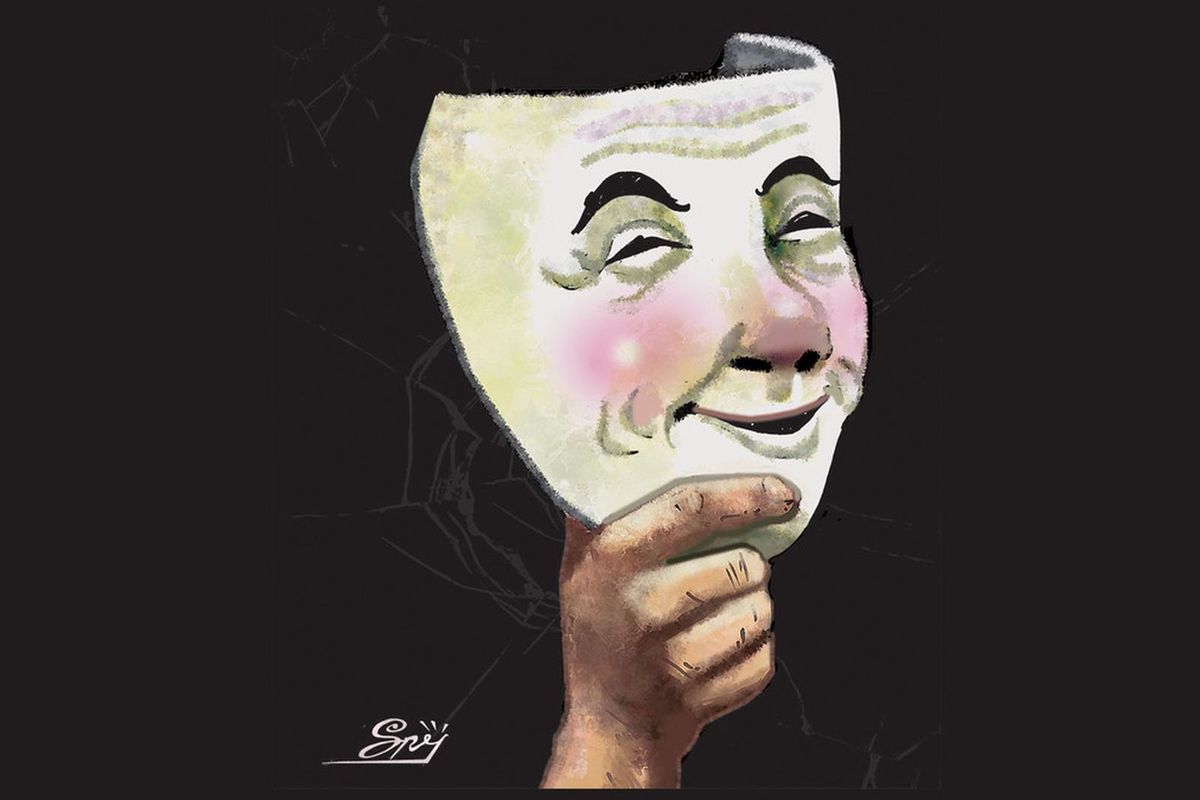
According to Tompkins and Cheney, who proposed the Theory of Organizational Control, control often operates through unwritten norms, such as "all staff members must speak with one voice."
When a leader has made a statement, consensus must bow to that statement, even if there is intellectual rejection.
The longer someone is within an organization, the more they understand the decision-making premises at work.
Without needing explicit rebuke, they intuitively grasp signals that maintaining a certain narrative would isolate them from the decision-making circle.
The correction of narratives in a matter of hours is a form of compliance with organizational control to secure existence.
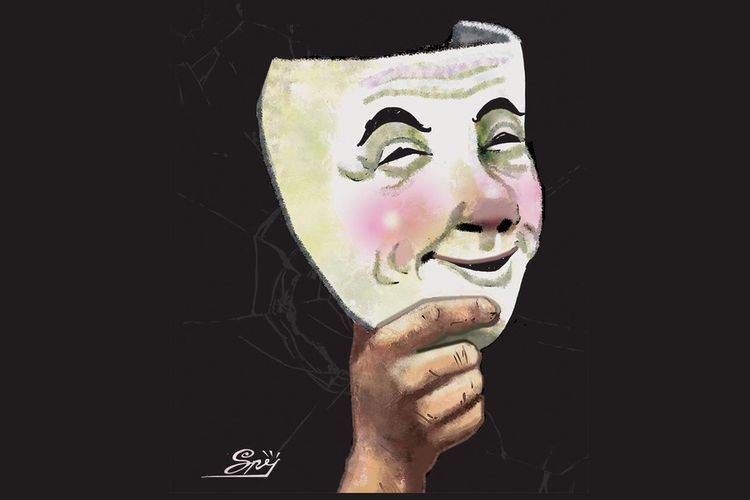
Various perspectives can be used to explain why sophism and inconsistency occur among intellectual-politicians.
However, one thing is certain: this issue raises ethical questions when echoed before a microphone and concerns human lives and dignity.
What an official says is often perceived by the public as a final verdict. The stigma of treason, for example, when stated without adequate emphasis on the fact that it remains a mere allegation, seeps and hardens in the public consciousness.
In the noisy public space, subsequent clarifications or legal revisions never possess a rectifying power commensurate with the damage to reputation and the social condemnation that has already occurred.
Legal history, both domestically and abroad, has repeatedly documented the dangers of premature labels of treason or national betrayal.
In Indonesia, during the Malari incident of 1974, Professor Sarbini Sumawinata and several other intellectuals were imprisoned for years under accusations of subversion and treason without ever being brought to trial to substantiate those claims.
Global precedents show similar destructive power—even for accusations that fall below the threshold of treason.
In recent dynamics in the United States in November 2026, Jensen Huang, founder and CEO of tech giant Nvidia, was forced to step down after allegations of threatening national security due to his personal ties with a suspected foreign intelligence asset.
Although the White House and the company’s internal audit later stated that he was cleared of national secret leaks and restored to his position, the market shock and public suspicion stigma left a permanent mark.
The impact multiplies when the label thrown is treason or betrayal of the state.
In the United States in 1807, former Vice President Aaron Burr was publicly accused by the government of treason.
Although Chief Justice John Marshall ultimately acquitted him because the allegation did not meet the stringent constitutional evidentiary standards, the stigma of being labeled a traitor permanently stuck in the public mind and forced him into self-imposed exile.
The similar fate befell Captain Alfred Dreyfus in France at the end of the 19th century, accused of leaking state secrets and socially and militarily condemned before eventually being proven innocent years later.
In all of these cases, the legal process may stop, clarify, or acquit the accused, but the social condemnation as "a threat to the state" has been ruthlessly operational since the very moment the authority uttered it.
At this point, the most fundamental ethical principle of Immanuel Kant—the categorical imperative or universal law—has been forgotten again.
Kant teaches a simple moral test: act only according to that maxim by which you can at the same time will that it should become a universal law applicable to yourself.
When the framework of treason accusations is so flexibly altered, policymakers are actually dismantling the barriers of legal protection for everyone, including themselves in the future.