

Interpreting the Political Map of the MPR in the Vice Presidential Election
-
News
-
2 minutes ago
This article was translated by AI. Read the original article on Kompas.com. See Original
THE ELECTION for a vice president to replace the current officeholder is not merely a constitutional process to fill a vacancy.
Behind the mechanism outlined in the 1945 Constitution lies competition for interests, negotiations among elites, and tests of political power balance within the People's Consultative Assembly (MPR).
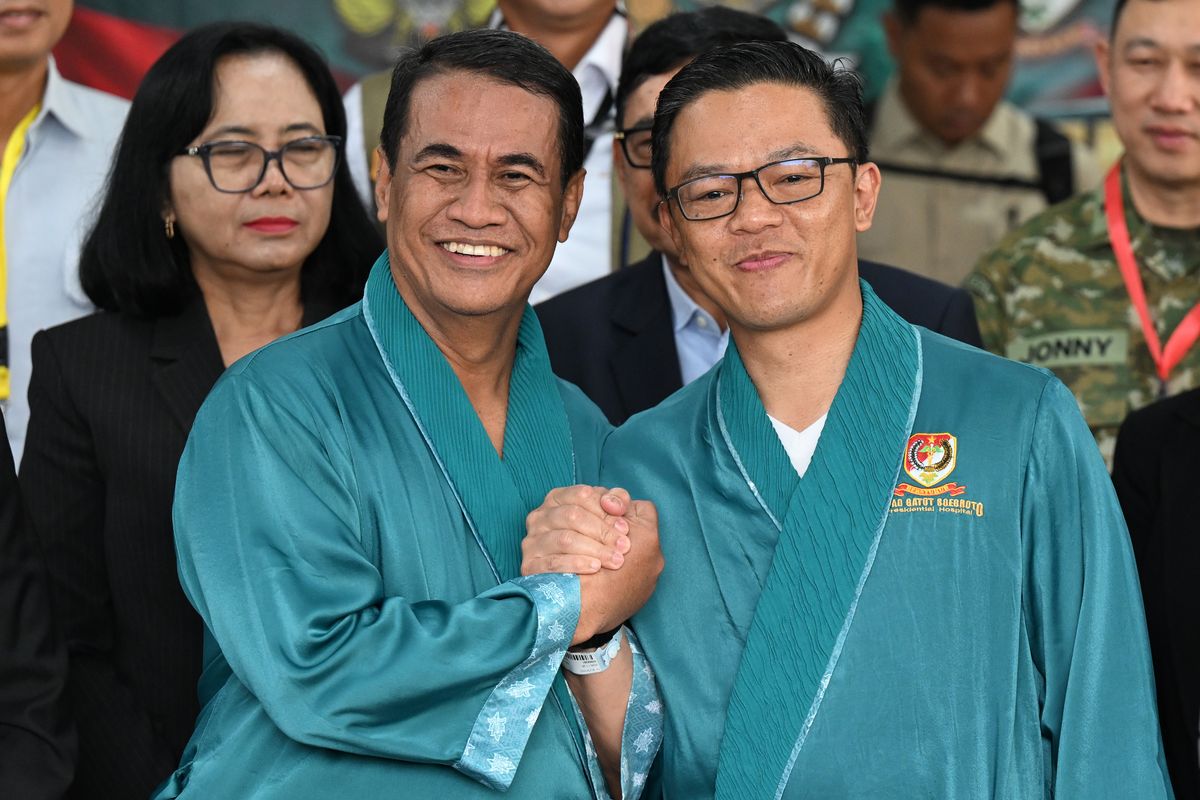
This time, the MPR is not choosing a pair of candidates competing for a direct mandate from the public. President Prabowo Subianto has proposed two names, Andi Amran Sulaiman and Sugiono.
The MPR is then granted the authority to select one of them. Consequently, the political center of gravity shifts from electoral competition to a constitutional selection process taking place among MPR members.
Here, understanding the political map of the MPR becomes essential. The election results are determined not only by the personal qualities of the candidates but also by the configuration of party factions in the House of Representatives (DPR), the stances of Regional Representatives Council (DPD) members, the President's communication with party leaders, and each candidate's ability to build broader political acceptance.
Institutionally, the MPR consists of 580 DPR members and 152 DPD members. Thus, there are 732 members with voting rights in this election process.
This composition means that the support map cannot be solely interpreted through party seat counts in the DPR. The DPD also plays a significant role, even though its political character and representational base differ.
The DPR carries a party-political configuration while the DPD brings regional representation mandates. Both convene in a constitutional forum, but do not always share the same perspectives and interests.
Therefore, this election presents at least two political arenas. The first arena is the consolidation of support among party factions.
The second arena is the formation of support among DPD members who are not directly tied to the party command structure.
In practice, political party strength in the DPR can serve as an initial capital to consolidate votes. However, the number of seats does not automatically equate to the number of guaranteed votes.
Discipline among factions, party leadership decisions, communication among elites, and individual member choices must all be factored into consideration.
Moreover, the MPR members from the DPR do not all occupy identical political positions.
There are party interests, internal faction interests, personal relationships with candidates, and considerations regarding the government's future. Thus, the voting map of the MPR cannot be understood simply by adding up party seats.
One of the largest variables in this election is President Prabowo's own position. The President is not only the one proposing two candidates but also serves as the central gravitational force of the governing coalition.
Support for one candidate will, therefore, be heavily influenced by how the parties interpret the President's will and preferences.
However, the President's right to propose two names does not mean he has the authority to determine the final outcome. The Constitution mandates that the election is conducted by the MPR.
The difference between the power to propose and the power to choose is significant, as it provides room for a political process that cannot be entirely controlled by one party.
Gerindra has a significant interest in Sugiono. In addition to serving as the party’s General Secretary, Sugiono has a close political relationship with Prabowo.
Gerindra's support for him can be seen as an attempt to strengthen leadership consolidation around the President.
However, the critical question is whether the partner parties will view this choice as necessary for consolidating the government or as reinforcing one party's dominance within the coalition.
Hence, the positions of Golkar, Democrat, PKB, PAN, and NasDem become intriguing. They have a stake in maintaining government stability while also needing to protect their influence.
Backing the President’s chosen candidate can signify coalition loyalty, but this stance does not imply that these parties lose their interest in negotiating.
Bahlil Lahadalia's statement that Golkar will continue to monitor developments indicates that the party has not yet locked in its publicly declared position.
PKB also stated it will discuss options and the election mechanism with coalition parties.
Meanwhile, the Democrat party expressed respect for the President's right to propose candidates and voiced support for the ongoing process.
These positions need to be interpreted carefully. The absence of an open decision does not automatically mean there is opposition.