
IKN Is Not Being Abandoned; Don't Misinterpret Policies
-
News
-
1 minute ago
This article was translated by AI. Read the original article on Kompas.com. See Original
TWO consecutive days, Kompas.com published two opinion articles questioning the future of the Nusantara Capital City (IKN) development.
The first article, The Fate of IKN After Its Exclusion from the Government Work Plan (25/11/2026), highlighted the changing priorities of Prabowo Subianto's administration, planning uncertainties, and the cancellation of plans to build the Deposit Insurance Corporation (LPS) office in IKN.
The next article, IKN: A Palace Left Before Occupancy (26/11/2026), linked the future of IKN to Gibran Rakabuming Raka's resignation as vice president and the loss of a political figure considered a main supporter of the capital city relocation.
Both pieces provide interesting insights into the political dynamics and development policies.
However, there are several conclusions that I believe need clarification.
A shift in government development priorities does not automatically indicate the cessation of IKN development.
Similarly, the absence of specific mention of IKN in the budget speech or its omission as a separate priority program in the Government Work Plan (RKP) does not necessarily mean that the government has abandoned the project.
We need to differentiate between a change in priority emphasis, adjustments in budget allocations, halting physical construction, and the legal decision to relocate the capital.
These four issues are distinct and should not be conflated.
Looking at the budget documents and on-site developments, there is no basis to conclude that the government has halted physical work on IKN.
On January 2, 2026, the Nusantara Capital Authority (OIKN) officially announced that the Budget Implementation List (DIPA) for the 2026 Fiscal Year was issued with an amount of approximately IDR 6 trillion.
The issuance of the DIPA was accompanied by the appointment of treasury officials, including budget users and commitment makers.
This means the OIKN's activities are funded by an officially established fiscal management framework.
In the government's budget, the definitive ceiling for OIKN in 2026 is recorded at IDR 6.262 trillion.
Of this amount, approximately IDR 5.618 trillion is allocated for Strategic Area Development Programs and IDR 644 billion for Management Support Programs.
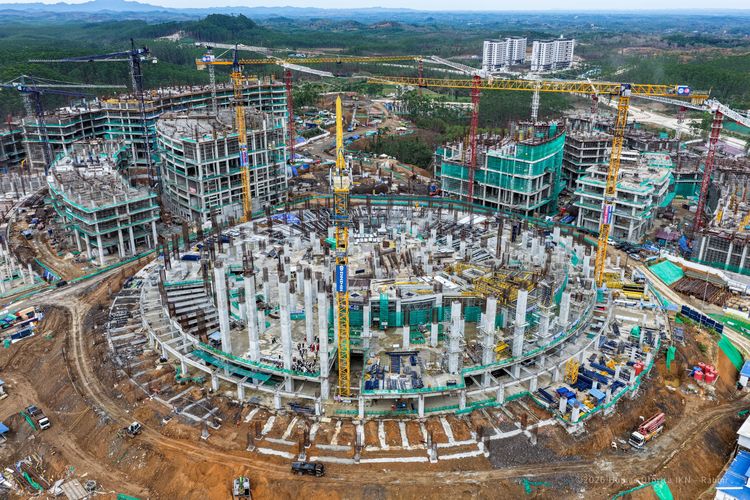
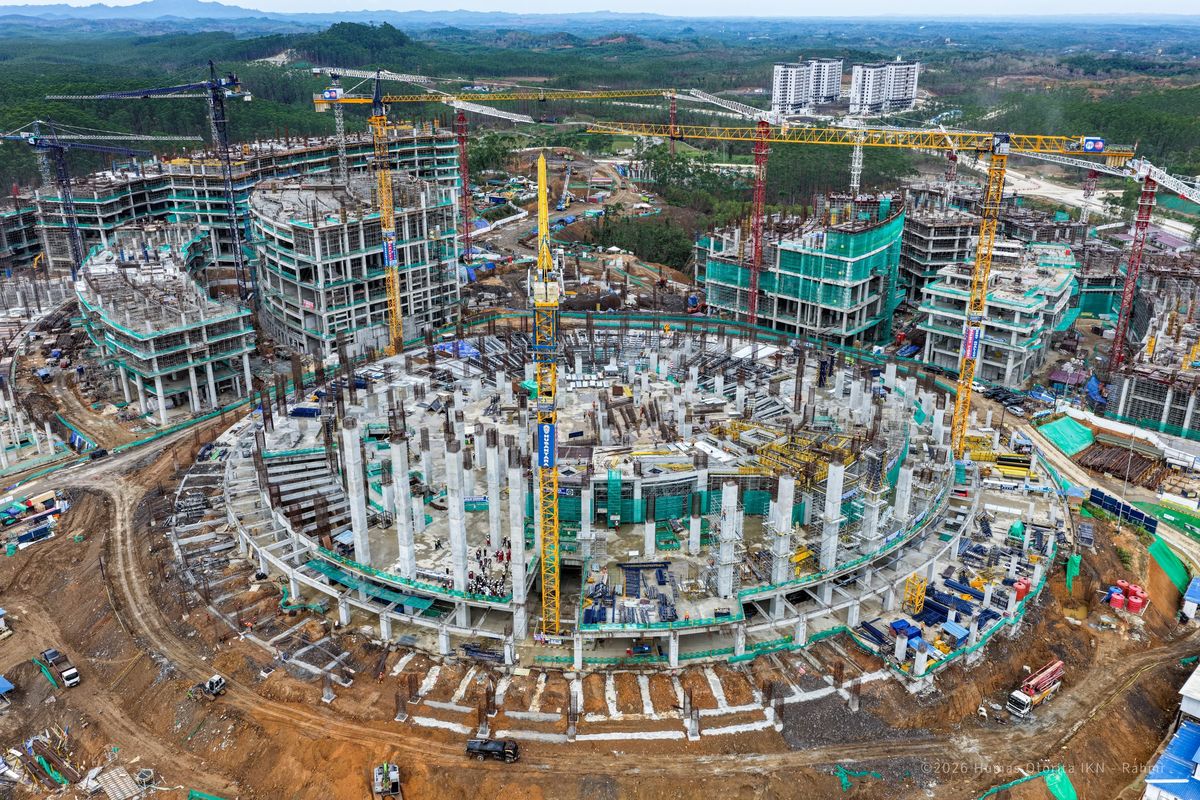
Indeed, the progress of physical projects can be concretely observed.
As of November 15, 2026, OIKN reported that the construction of legislative building and infrastructure has reached an average physical progress of 25.40 percent.
Meanwhile, the judicial area has reached 32.83 percent progress. Construction of retention ponds, road networks, and other supporting infrastructures is also ongoing.
OIKN's July 2026 report even noted that there were 40 physical work packages managed by OIKN, with 15 packages under construction and 16 packages in the bidding preparation stage.
The Ministry of Public Works is also handling 90 physical work packages, with 12 packages still under construction.
This data indicates that IKN development has not stalled.
Physical work continues through the OIKN budget as well as through ministries/agencies according to their mandates and authorities.
For the 2027 fiscal year, the House of Representatives' Commission II on September 16, 2026, approved the definitive ceiling for OIKN at IDR 6.72 trillion.
Additionally, there is a proposal for an additional IDR 15.80 trillion budget which will be discussed further.
This decision also demonstrates that OIKN financing continues to have a place in the national budgeting process.
Therefore, concluding that IKN is being abandoned based only on the absence of specific mention in the presidential address or changes in RKP priorities is a misreading.
I understand that changes in government priorities are a natural part of development administration.
President Prabowo has a different agenda from the previous administration.
The Free Nutritious Meals program, Red and White Village Cooperatives, housing development, and various social service programs require substantial fiscal support.
However, development priorities should not be perceived as mutually exclusive choices.
The government can place greater emphasis on social infrastructure development without having to stop physical infrastructure projects already underway.
Moreover, IKN development is not conducted through a single institution.
OIKN coordinates development, while ministries/agencies implement work according to their functions and responsibilities.