
General Listyo Sigit Refuses to Attend Ethics Hearing Despite Being Detained, What Are the Consequences?
-
News
-
9 minutes ago
This article was translated by AI. Read the original article on Kompas.com. See Original
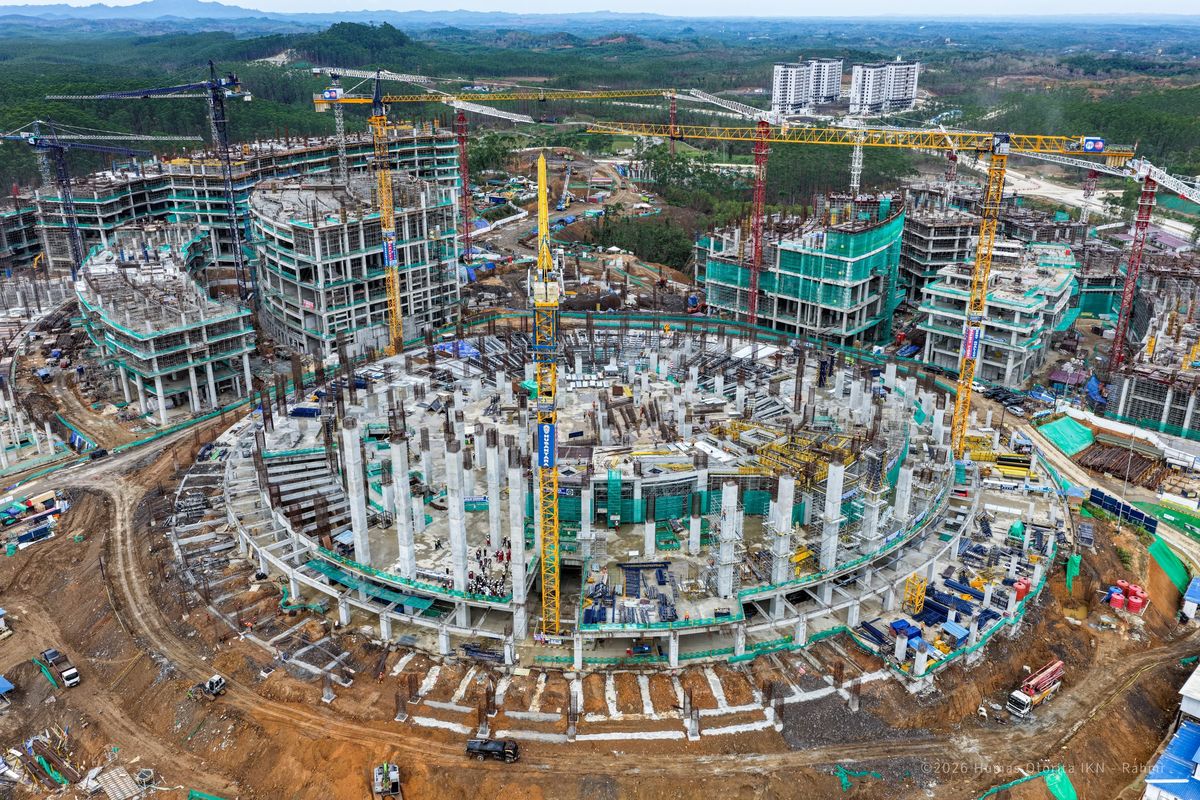
It is undeniable that the development of IKN gained significant political acceleration during Joko Widodo's administration.
Similarly, Gibran has, during his vice presidency, expressed his support for the continuation of IKN development.
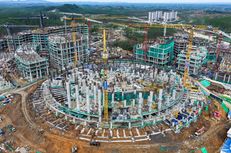
However, the construction of the national capital has a legal foundation, presidential regulations, master plans, budgeting documents, and government activities involving multiple ministries and agencies.
The status of this project does not solely depend on the will or political interest of a single individual.
Linking the future of IKN to whether the successor vice president is willing to occupy the Vice Presidential Palace oversimplifies the issue.
Office arrangement is part of governmental organization, while sustained development is a broader state responsibility.
The vice president is not the sole determinant of the success of the capital relocation.
There is also the president, ministries/agencies, OIKN, DPR, civil service apparatus, local governments, and the public, all of which play their respective roles.
IKN should not be positioned as a personal legacy of Jokowi that must be accepted or rejected by Prabowo.
Government transitions can indeed lead to policy corrections but should not cause strategic state development to be constantly tossed about by the political preferences of its leaders.
While I do not agree with the conclusion that IKN has been abandoned, that does not mean the development should be accepted without scrutiny.
On the contrary, while physical work is still ongoing and national budgets are still allocated, oversight of development effectiveness must be intensified.
The more important question is not merely whether IKN is still being built, but whether every rupiah spent yields corresponding benefits.
The government needs to explain the priorities of completing projects, the preparedness of public service facilities, operational requirements of the region, and the stages of relocating ministries/agencies and civil servants.
Likewise, private investments should be measured by the realized developments and economic activities that are truly operational, not just the value of commitments or cooperation agreements.
City development is not complete when the government buildings are erected.
A capital city needs residents, economic activities, healthcare, education, transportation, and a social ecosystem that enables it to function sustainably.
The government must be more transparent. How much funding is needed to complete the next development phase? What infrastructure is most urgent?
What are the operational and maintenance costs? How much private investment capacity supports regional economic activity? And when can the relocation of ministries/agencies actually take place?
These questions are far more productive than merely speculating if Prabowo still has political commitment to Jokowi's project.
We do not want IKN development to proceed recklessly, just as we do not want strategic state projects halted solely due to a change in government. Development continuity must go hand in hand with evaluation, efficiency, and accountability.
In my view, the issue surrounding IKN today is not about who will inherit or abandon the project.
The question is how the state ensures that the development already set in motion can be completed with better planning, measurable financing, and accountable benefits.
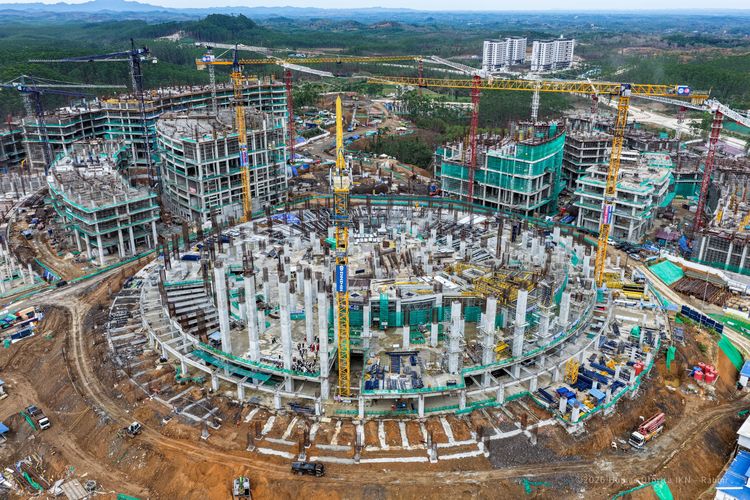
Official data shows that OIKN still possesses DIPA, development budgets remain available, and physical work is ongoing.
Meanwhile, the legal transfer of the capital is still awaiting the Presidential Decision as emphasized in the Court's ruling.
Therefore, the public needs a complete picture. We must avoid perceiving changes in government priority emphasis as halting development while physical work is still ongoing.
Conversely, the presence of budgets and construction activities should not be an excuse to suppress criticism of effective public funds utilization.
The government needs to maintain policy consistency while being brave enough to correct planning that is no longer relevant.
IKN is not the exclusive property of a single president, nor is it a monument for one family or political group.
IKN is a state project whose funding repercussions will be borne by the public.
Building a new capital is not just a bold initiative; its success is measured by the government's ability to complete the development, orderly transfer governmental functions, and make the city functional for the public interest.
Do not misinterpret changes in priorities as halting development. However, do not assume that the sustainability of development guarantees success.