
Choose Amran or Sugiono? Here’s the Current Support Map in the Indonesian Parliament
-
News
-
1 minute ago
This article was translated by AI. Read the original article on Kompas.com. See Original
IN political communication, an official statement from a high-ranking government official is supposed to reflect moral commitment and integrity.
However, the dynamics surrounding the investigation of illegal wiretapping involving former top police officials in November 2026 reveal ambiguous tendencies regarding that commitment.
The bending of legal interpretations was subtly detected. The public noted two official press conferences held by a minister of justice that contradicted each other within just a few days.
On the first day of the public announcement of the investigation, the minister, who is also recognized as a legal intellectual, categorically denied any elements of treason. He insisted that the charges being applied were solely about illegal wiretapping and unauthorized access.
However, the narrative changed drastically the next day when an official from the closest circle of power declared that the wiretapping of the head of state constituted a serious threat that could amount to treason.
Not long after, the minister's legal interpretation reversed by 180 degrees. He endorsed the narrative linking the case to treason charges under the Criminal Code.
Subsequent developments were predictable: the public was divided in its response to the treason narrative. On one hand, the police institution maintained, in its official stance at the House of Representatives Commission III, that the elements of alleged treason had not been confirmed and were still under the investigator's scrutiny.
At the same time, politicians in the parliament pressured for the investigation into the wiretapping of the head of state to be classified as treason, urging the police not just to invoke the Electronic Information and Transactions Law provisions.
In the latest phase of the investigation, the National Police also charged six high-ranking police officers with treason.
From the framing theory perspective introduced by Robert Entman, the drastic shift in statements from the aforementioned intellectual-politician is not merely a technical correction. It represents a redefinition of reality.
The framing of the case was suddenly shifted from a cybercrime to a crime against state security.
Abstract legal jargon, such as "preparation for an act" and "non-physical attack," was utilized as a space for strategic ambiguity.
As a result, in this case, the law was perceived by some as no longer a consistent guiding principle. Instead, it morphed into a rubber framework that could be manipulated at will.
This pattern of attitude reversal in a matter of hours is, in fact, not an isolated incident. The public recalls a red line drawn back to October 2023, when the Constitutional Court delivered a controversial ruling concerning the age requirements for presidential and vice-presidential candidates.
At that time, in an official press conference as an academic, the same individual unequivocally described the ruling as legally flawed and constitutionally problematic.
However, as the political coalition landscape shifted, the validity of the previously criticized ruling became a fiercely defended object.
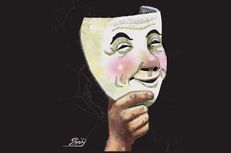
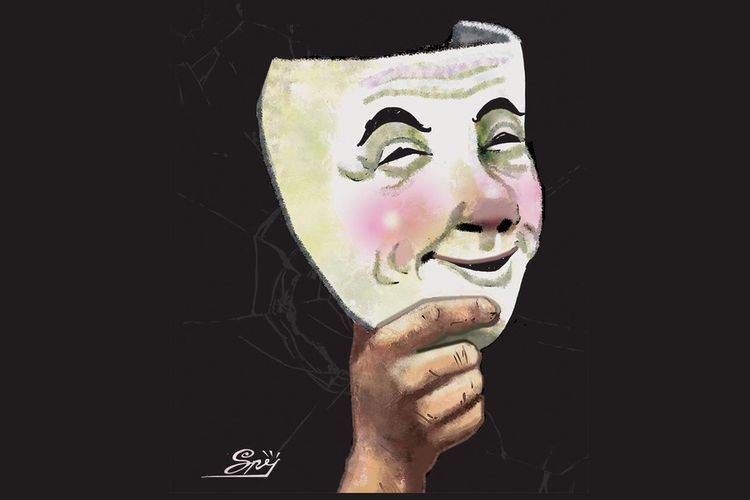
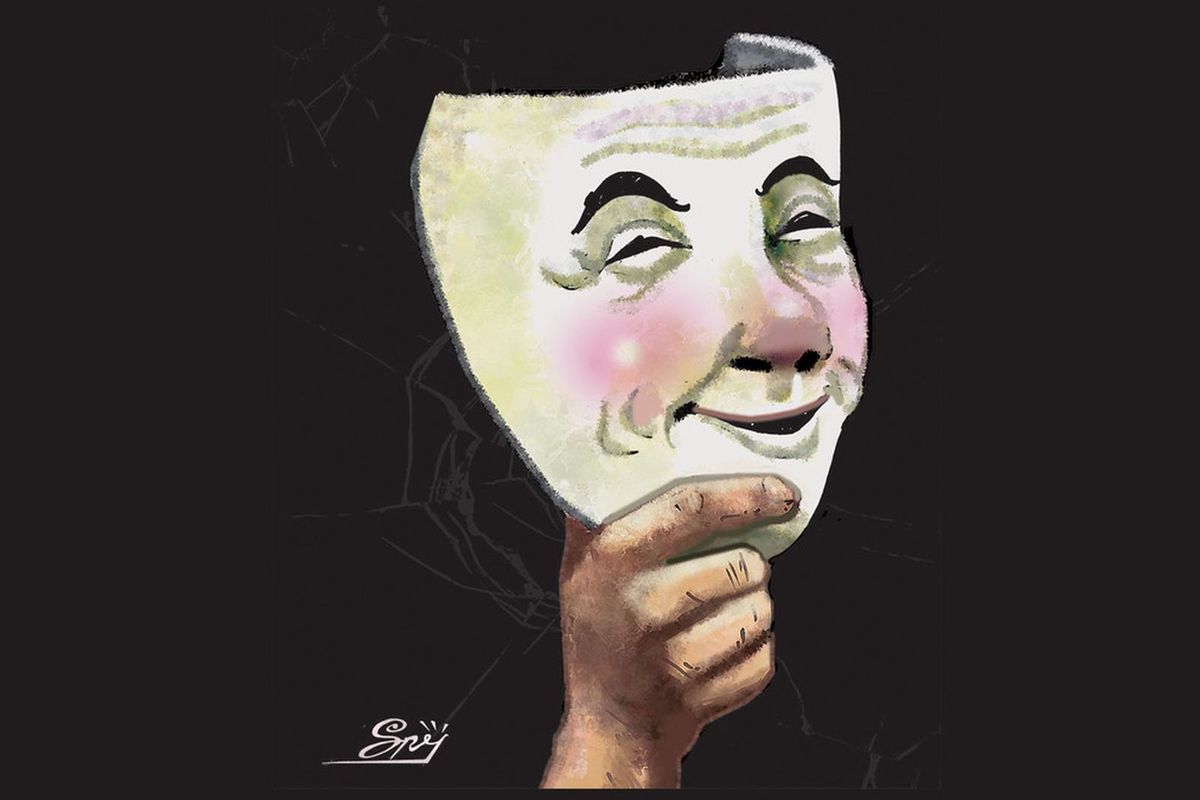
This recurring pattern illustrates what sociologist Erving Goffman referred to in his dramaturgical theory as backstage leakage.
The official press conference serves as the front stage where an intellectual plays out the ideal persona of a guardian of an objective and doctrinal constitution.
However, the sudden legal reinterpretation right after signals from stronger circles of power reveals the backstage curtain.
The public can infer that the legal script read before the cameras was actually crafted through compromise and a power hierarchy behind the scenes. At this point, the greatest political capital of a legal sage undergoes erosion.
Communication scholar Carl Hovland, in his source credibility theory, reminds us that a communicator's persuasive power relies on two main pillars: expertise and trustworthiness or consistency.
For decades, this figure's authority has been built on the pillar of expertise—often boasted about, especially when comparing their state's capacities with those of figures from non-legal backgrounds.
However, high expertise not supported by moral consistency will only yield a boomerang effect.
Legal rhetoric slips into a practice criticized by Aristotle since the Classical Greek era as sophism: intelligence in assembling arguments not to seek substantive truth, but as a rhetorical instrument to justify positions one wishes to validate.
The underlying question is: why would a well-known intellectual repeatedly sacrifice their doctrinal consistency?
The answer can be traced through three layers: sociological traces, philosophical perspectives on knowledge, and political survival calculations.
Sociologically, the career trajectories of such figures often mirror classic tales of wanderers who must penetrate the harsh power center of Jakarta without any heritage of economic capital or political aristocracy.
Within the framework of Pierre Bourdieu's habitus theory and capital conversion, actors who enter the political arena armed with academic intelligence often confront a bitter reality: ivory tower idealism is insufficient for survival.
To avoid being thrown back to the margins, legal expertise must be pragmatically converted into social and political capital. Compromise of principles becomes an adaptation mechanism to maintain a position within the elite circle.
This sociological adaptation aligns with a shifted perspective on legal science—from Kantian absolutism to legal pragmatism and utilitarianism.
While Kantian proponents view that anything constitutionally flawed remains wrong regardless of the consequences, utilitarians measure truth based on its practical usability for maintaining power stability.
This perspective becomes increasingly familiar among practitioners like advocates, who position law not as a singular rigid truth but as a compromise argumentative weapon to defend any of their clients.
This flexibility can also be seen as a strategy for political survival, as formulated by Bruce Bueno de Mesquita.
For someone without a strong political support base—for example, a political party with seats in parliament—the only way to remain within the core power coalition is to become an indispensable fixer.
This position as a legal ‘mechanic’ who can always find a constitutional way out for every regime, across governmental eras, becomes one form of survival mode.
At this point, it is already quite difficult to expect the steadfastness of a true intellectual who firmly adheres to their reasoning and scientific convictions.
On the contrary, as explained by Howard Giles' Communication Accommodation Theory, they must skillfully navigate through the foam, or as Giles describes it, converge upwards.
Upward convergence is a situation where someone with lower power consciously alters their language style, thought framework, and message substance to resemble those with greater power.
This convergence is carried out to gain social approval, build affiliations, and reduce psychological and political distance.
This explains why rapid attitude changes can occur: from speaking in the cold and rigid language of legal technocracy today to quickly adopting political-security language the next day.
The fact that such rapid shifts in attitude indicate a recurring pattern as an adaptive strategy shows this is not a reflexive or spontaneous action, but rather a well-prepared rhetorical skill.
They know when to diverge (to maintain distance from public opinion/criticism) and when to converge (to align with the center of power) for the continuity of their position.
It may sound utopian to expect an intellectual to steadfastly uphold their position when systemic pressures emerge.
In a cabinet or hierarchical government structure, control does not always take the form of direct orders.
According to Tompkins and Cheney, who proposed the Theory of Organizational Control, control often operates through unwritten norms, such as "all staff members must speak with one voice."
When a leader has made a statement, consensus must bow to that statement, even if there is intellectual rejection.
The longer someone is within an organization, the more they understand the decision-making premises at work.
Without needing explicit rebuke, they intuitively grasp signals that maintaining a certain narrative would isolate them from the decision-making circle.
The correction of narratives in a matter of hours is a form of compliance with organizational control to secure existence.
Various perspectives can be used to explain why sophism and inconsistency occur among intellectual-politicians.
However, one thing is certain: this issue raises ethical questions when echoed before a microphone and concerns human lives and dignity.
What an official says is often perceived by the public as a final verdict. The stigma of treason, for example, when stated without adequate emphasis on the fact that it remains a mere allegation, seeps and hardens in the public consciousness.
In the noisy public space, subsequent clarifications or legal revisions never possess a rectifying power commensurate with the damage to reputation and the social condemnation that has already occurred.
Legal history, both domestically and abroad, has repeatedly documented the dangers of premature labels of treason or national betrayal.
In Indonesia, during the Malari incident of 1974, Professor Sarbini Sumawinata and several other intellectuals were imprisoned for years under accusations of subversion and treason without ever being brought to trial to substantiate those claims.
Global precedents show similar destructive power—even for accusations that fall below the threshold of treason.
In recent dynamics in the United States in November 2026, Jensen Huang, founder and CEO of tech giant Nvidia, was forced to step down after allegations of threatening national security due to his personal ties with a suspected foreign intelligence asset.
Although the White House and the company’s internal audit later stated that he was cleared of national secret leaks and restored to his position, the market shock and public suspicion stigma left a permanent mark.
The impact multiplies when the label thrown is treason or betrayal of the state.
In the United States in 1807, former Vice President Aaron Burr was publicly accused by the government of treason.
Although Chief Justice John Marshall ultimately acquitted him because the allegation did not meet the stringent constitutional evidentiary standards, the stigma of being labeled a traitor permanently stuck in the public mind and forced him into self-imposed exile.
The similar fate befell Captain Alfred Dreyfus in France at the end of the 19th century, accused of leaking state secrets and socially and militarily condemned before eventually being proven innocent years later.
In all of these cases, the legal process may stop, clarify, or acquit the accused, but the social condemnation as "a threat to the state" has been ruthlessly operational since the very moment the authority uttered it.
At this point, the most fundamental ethical principle of Immanuel Kant—the categorical imperative or universal law—has been forgotten again.
Kant teaches a simple moral test: act only according to that maxim by which you can at the same time will that it should become a universal law applicable to yourself.
When the framework of treason accusations is so flexibly altered, policymakers are actually dismantling the barriers of legal protection for everyone, including themselves in the future.