
Judges Schedule Indictment Hearing for Additional Hajj Quota Corruption Case on November 30
-
News
-
Just now
This article was translated by AI. Read the original article on Kompas.com. See Original
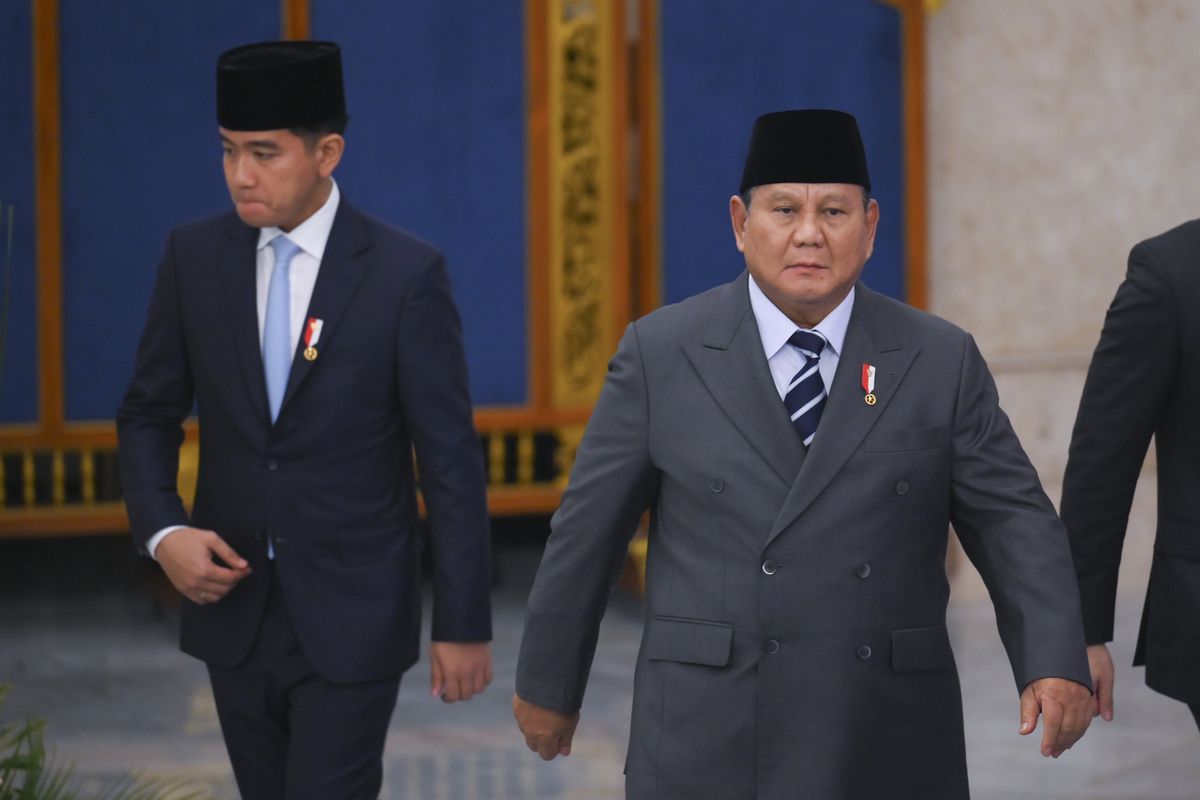
First, serving as a communication bridge between the government and the public, especially groups that require different approaches.
Second, acting as a connector among elites and institutions to ensure government communication does not become fragmented.
Third, strengthening policy communication through explanations that are closer to everyday issues faced by society.
Fourth, representing the government in building dialogue with the business world, civil society organizations, academics, communities, and professional groups.
Fifth, helping to identify emerging issues in society and ensuring these aspirations enter the policy-making process.
From a Political PR perspective, this role must not be reduced to merely a spokesperson or communicator relaying government successes.
Instead, the vice president needs to be part of a two-way communication mechanism: the government listens to the public while the public receives adequate explanations regarding government policies.
The selection of the vice president also illustrates that political processes unfold simultaneously in two arenas: the decision-making arena and the perception formation arena.
In the first arena, elites engage in communication, consolidation, negotiation, and the expression of aspirations.
In the second arena, support and political statements shape public perception regarding who is deemed deserving, accepted, and capable of fulfilling the vice presidency.
From a political public relations perspective, political communication is not just the activity of delivering messages after decisions are made.
Communication is also part of the legitimacy formation process and managing relationships with stakeholders.
Thus, the emergence of various supports can be interpreted as the initial legitimacy formation process.
However, political legitimacy does not stop at the number of support declarations. It must be tested through public acceptance, institutional capacity, and the ability to carry out government responsibilities.
Here lies the importance of distinguishing between popularity, acceptability, and capability. Popularity relates to the level of public recognition. Acceptability concerns the acceptance by diverse groups.
Capability pertains to the actual ability to carry out tasks and responsibilities. These are three distinct dimensions and do not automatically move in the same direction.
In the end, what is chosen is not merely a person but the design of power relationships.
The determination of the vice president is a decision with broader consequences than merely filling a position.
Constitutionally, Article 8, paragraph (2) of the 1945 Constitution states that in the event of a vacancy in the vice presidential position, the MPR must hold a meeting within 60 days to elect a vice president from two candidates proposed by the president.
Thus, the authority to propose lies with the president, while the election is conducted by the MPR.
This decision will determine how the executive leadership configuration operates, how the relationship between the President and coalition parties is managed, and how the government establishes communication with the public.
There are at least three challenges the vice-president figure must address.
First, they must maintain government solidity without substituting loyalty for capacity.
Second, they must effectively translate the president's strategic direction into coordination and implementation of programs.
Third, they must act as a communication bridge that connects the government with various societal groups, including those who hold differing views towards the government.
Hence, discussions about the vice-presidential contest should not stop at who receives the broadest support or who is closest to the president.
A more substantive question is: what kind of leadership design is needed by Prabowo's government?
From a Political PR perspective, successful leadership is not solely determined by who is within the circle of power but also by the ability to build trust outside that circle.
Indeed, the vice president must be capable of not only working alongside the president but also ensuring that the state functions and the public feels the government's presence.
What is at stake is not just the vice presidential seat, but how power is consolidated, governance is executed, and public trust is fostered.