
Judges Schedule Indictment Hearing for Additional Hajj Quota Corruption Case on November 30
-
News
-
Just now
This article was translated by AI. Read the original article on Kompas.com. See Original
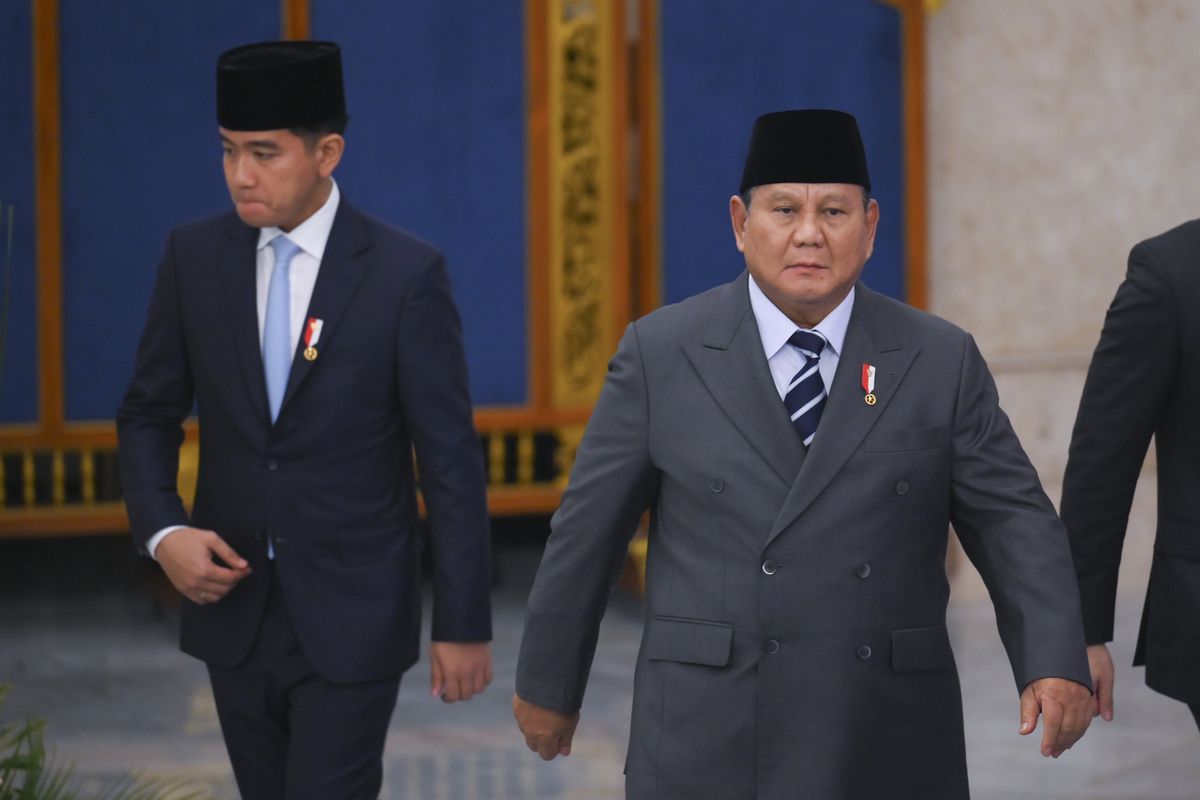
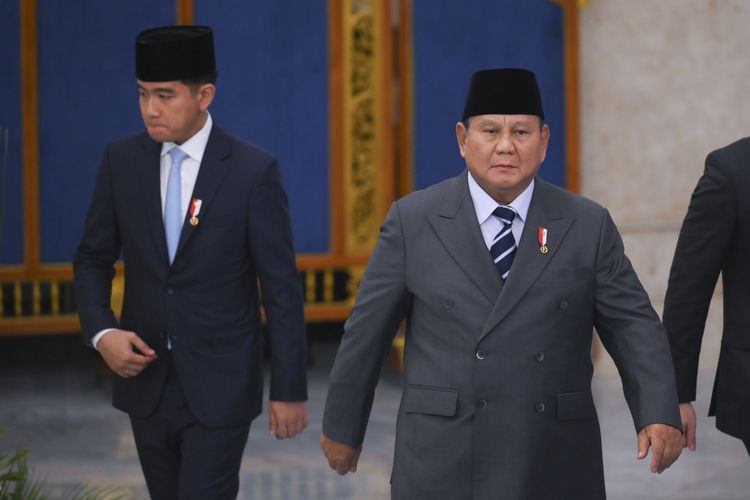
DISCUSSION regarding the replacement for the vice-presidential position after Gibran Rakabumi Raka's resignation reveals interesting political dynamics.
The conversation revolves not only around who will take the second-highest office in Indonesia but also how power is constructed, maintained, negotiated, and communicated to the public.
The emergence of several names from within the Gerindra Party, such as Sufmi Dasco Ahmad, Ahmad Muzani, and Sugiono, indicates that this contest has a strong internal party dimension.
Support for Dasco from various local Gerindra structures and figures is an intriguing political phenomenon to observe.
On the other hand, the appearance of other names in public discussions shows that the process of shaping opinions about vice-presidential candidates is underway.
Gerindra's Daily Chair Sufmi Dasco Ahmad mentioned Sugiono and Ahmad Muzani as the party's best cadres currently being discussed.
Meanwhile, support from several coalition parties appears to be directed towards President Prabowo's decision, leaning towards proposing candidates from within Gerindra.
This phenomenon cannot merely be interpreted as a personal competition among elites. There are at least three layers of dynamics occurring simultaneously: competition for influence within Gerindra, negotiation and consolidation among coalition parties, and the President's need to determine a leadership configuration capable of supporting his administration's sustainability.
Competition for influence: when support becomes a political message.
According to Robert A. Dahl's theory of power (1957), power can be understood through an actor's ability to make another actor do something they would not have otherwise done.
Power, therefore, is not solely a matter of formal position but also the capacity to influence decisions and behaviors of others.
Using this perspective, support from various party structures for specific figures can be interpreted as an effort to build influence in the decision-making process.
This support is not just an expression of preference, but also a political message to the center of power that there is a base of acceptance for the proposed figure.
This highlights the importance of understanding the concept of political signaling. In politics, statements of support, declarations, meetings, or pronouncements from figures can function as signals indicating an actor's position and preferences regarding a particular decision.
However, such signals do not automatically imply a final collective decision or guarantee that the supported figure will be chosen.
In this context, it is crucial to distinguish between three things: political support, the capacity to influence decisions, and the authority to make decisions. These three do not always reside in the same actor.
Internal competition and elite management
The emergence of several names from the same party can also be interpreted through intra-party competition theory.
Political parties are not organizations that always hold a single preference. Within them exist various interest groups, leadership networks, support bases, and distributions of political resources.
Elites may have different positions and interests even while belonging to the same organization.
From this perspective, the emergence of Dasco, Muzani, and Sugiono shows how political capital can come from different sources.
Dasco holds a strategic position within the party and parliament. Ahmad Muzani has leadership experience in the party and parliamentary institutions. Sugiono has both a position in the party structure and experience in government.
These differences in resources indicate that discussions about the vice-presidential figure are not merely related to popularity or personal closeness but also to the power configurations and political functions that each figure can bring.
Herein lies the challenge for Prabowo's leadership as both Chair of Gerindra and President. He must manage diverse elite aspirations without allowing this competition to develop into internal fragmentation.
Thus, internal competition need not always be understood as conflict. To some extent, it can become a mechanism for articulating aspirations and testing acceptance for a figure.
However, if not managed well, this competition poses the potential for frictions, political expectations, and tensions among groups.
Coalition that delegates decision-making: loyalty or a strategy for maintaining balance?
The second layer is evident in the positions of coalition parties that tend to delegate decision-making to President Prabowo.
Politically, this stance can be interpreted through coalition management theory. In a multi-party government, coalition stability is not only determined by program similarities but also by the leader's ability to manage the distribution of influence, interests, and expectations among political partners.
Coalition members certainly have their own interests. However, when these parties opt not to propose their own candidates and delegate decisions to the President, it sends a message that the stability of coalition relationships is seen as more important than displaying open competition among parties.
This stance can also be understood as a recognition of the centrality of presidential leadership in the governmental configuration.
Giovanni Sartori (1976), in his studies of parties and party systems, explains the importance of understanding inter-party interactions in shaping political competition structures.