
Restore the Spirit of Campus Democracy
-
News
-
Just now
This article was translated by AI. Read the original article on Kompas.com. See Original
RESTORING THE SPIRIT OF CAMPUS DEMOCRACY
The term democracy is frequently invoked as an inspiring narrative in the context of governance in Indonesia after the Reformation.
However, this stands in stark contrast to the current state of democracy, which has been hijacked by opportunistic political interests for purely political goals.
The Reformation appears to be a quick fix, yet today the breaches are severe and numerous.
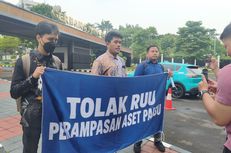
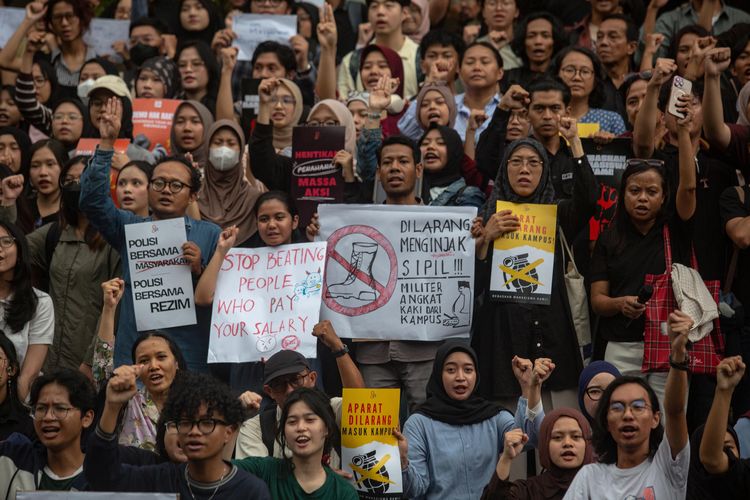
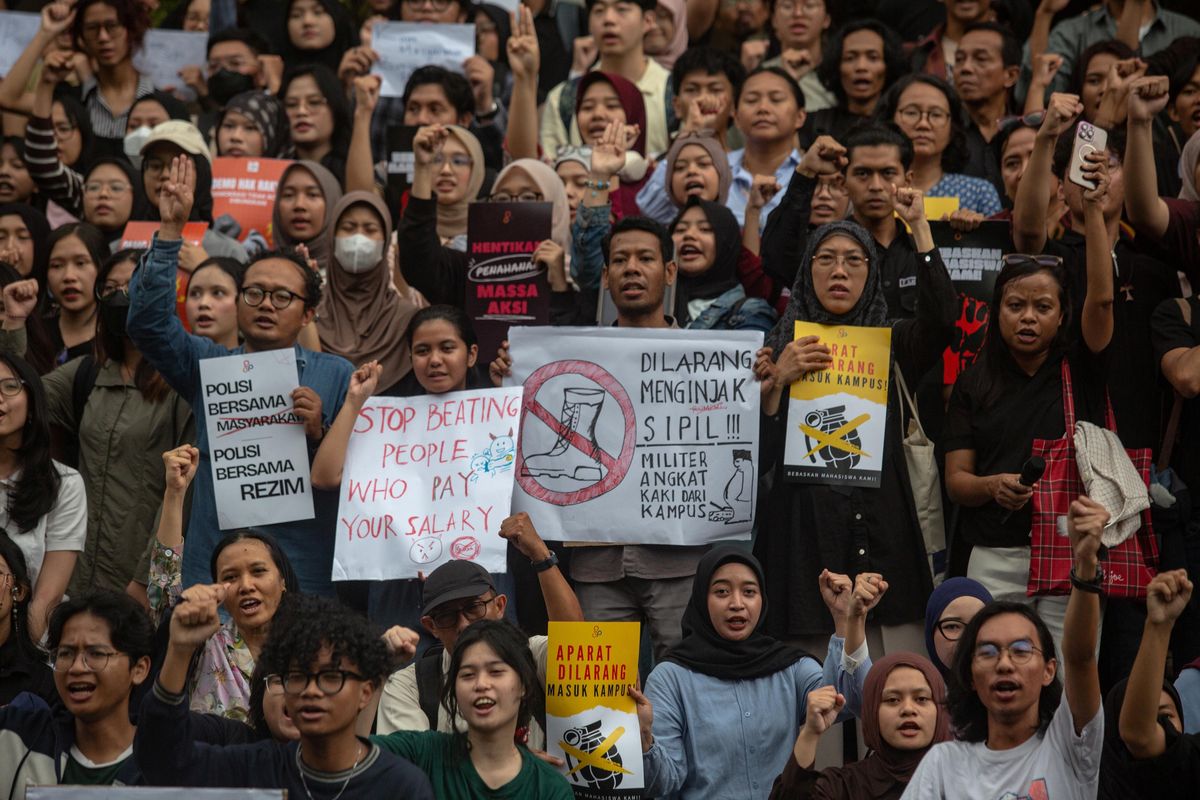
One such incident is the arrest of students from Gadjah Mada University (UGM) during a demonstration held in Yogyakarta on November 10, 2026; this is a clear reflection of the repressive actions by authorities and the retreat of democracy (democratic backsliding).
The arrests were followed by attempts to cordon off the UGM campus area by authorities.
This issue is deeply serious as it pertains to the protection of citizens' rights to express opinions in public.
Authorities' duty should be to protect students who are protesting and to ensure their safety, not to apprehend them or surround them with tactical vehicles, water cannons, and tear gas.
Demonstrations are legitimate activities with a strong legal foundation as mandated in Article 1, paragraph (3) of Law Number 9 of 1998 on Public Expression, which states that demonstrations are forms of expressing opinions and are citizens' rights.
Legally, the freedoms to associate, gather, and express opinions are also guaranteed in Article 28E, paragraph (3) of the 1945 Constitution, as well as in Articles 19 and 21 of the International Covenant on Civil and Political Rights, which was ratified through Law No. 12 of 2005.
Importantly, any use of force by authorities must be guided by legal principles based on legitimacy, necessity, and proportionality, as stipulated in Article 3 of Police Regulation No. 1 of 2009.
In analyzing the theoretical criticisms and constitutional processes of democratic backsliding, referring to the perspective of Fabio Wolkenstein (2023) in an article titled "What is democratic backsliding?" published in the journal Constellations, this phenomenon is divided into direct rights suspensions (rights-suspending) and is accompanied by structural hindrance of participatory rights (rights-obstructing).
Thus, the authorities who arrested UGM students and other participants in civil demonstrations are directly and openly committing acts of brutal democratic regression, especially in light of the siege on the campus, which serves as a space for academic freedom.
This aligns with the views of Steven Levitsky and Daniel Ziblatt (2018) in their book How Democracies Die, where they argue that democracy dies at the hands of elected officials who undermine institutional referees and marginalize political opponents step by step.
In this context, demonstrators are regarded as dangerous enemies of the state, when, in fact, it is the opposite.