
When Megawati Challenges Unethical Power
-
News
-
Just now
This article was translated by AI. Read the original article on Kompas.com. See Original
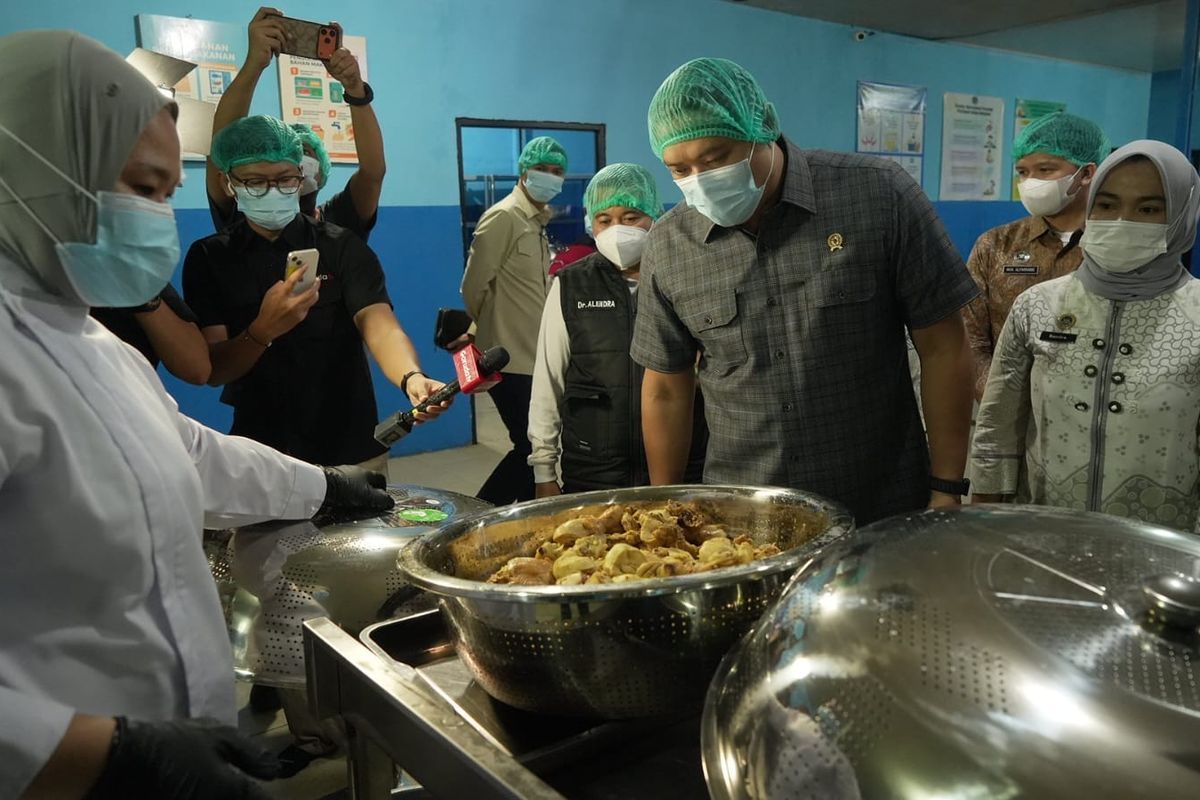
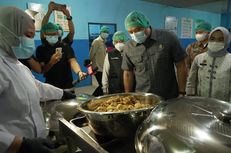
JAKARTA, KOMPAS.com - The National Nutrition Agency (BGN) has announced that approximately 3,400 MBG kitchen locations in underdeveloped, frontier, and outermost regions (3T) have entered the verification and validation stage as part of the preparation to expand the program.
BGN Chief Sudaryono stated that the expansion of MBG to hard-to-reach areas requires careful preparation to avoid problems during implementation.
"The total includes 480 from Eastern Indonesia, 980 from Central Indonesia, and the latest 1,900 in Sumatra and Java, bringing the total to around 3,400 that are now in the verification and validation stage," Sudaryono said in a press statement on Friday (20/11/2026).
Sudaryono explained that the verification and validation process is conducted to ensure the readiness of locations, the needs of beneficiaries, and the feasibility of program implementation.
BGN does not want to rush into activating kitchens without considering the geographical conditions and challenges in each region.
"The 3T regions and areas with high stunting rates must be prioritized because they have different needs compared to urban or agglomeration areas," Sudaryono emphasized.
He mentioned that the potential number of SPPG units to be activated in 3T areas nationwide is estimated to reach between 3,000 to 5,000 units.
In the Jambi region alone, there are nine locations currently undergoing verification and validation as part of the service expansion preparations in 3T areas.
"Our main focus is to address the needs of those who are far away first," said the politician from the Gerindra Party.
Sudaryono added that BGN is also preparing special technical guidelines for implementing MBG in 3T regions.
These rules are necessary because the operational schemes, financing, and incentives for kitchens in remote areas cannot be equated with those in urban areas.
Differences in the number of beneficiaries, distribution distance, geographical conditions, and transportation costs are all considerations in policy formulation.
"We are preparing the regulations; I predict that by next week, the 3T technical guidelines will be completed," he stated.
Moreover, for island regions and remote areas like Papua, a separate scheme is needed to ensure that partners developing the kitchens have certainty in running the program.
"For 3T areas, there must be special treatment. The pricing, budgeting, treatment, and incentives will definitely be different," Sudaryono said.