
Asset Forfeiture Law Seen as Unable to "Scratch Where It Itches"
-
News
-
Just now
This article was translated by AI. Read the original article on Kompas.com. See Original

JAKARTA, KOMPAS.com - The newly enacted Asset Forfeiture Law regarding Corruption Crimes and Other Crimes is predicted to miss its target objectives. Why?
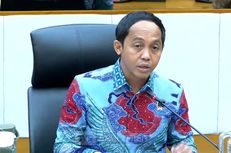
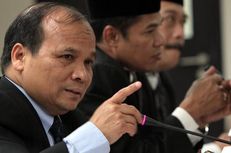
“The substance doesn't scratch where it itches,” said Yunus Husein, former head of the Financial Transactions Reports and Analysis Center (PPATK), during the Kompas.com Newsroom Talk program on Thursday (19/11/2026).
One of the initiators of the Asset Forfeiture Bill expressed disappointment with some of the provisions agreed upon by the DPR (House of Representatives). He feels the bill is more likely to serve as a political commodity to enhance the DPR's reputation.
"So I see that even though it has been enacted, we welcome it, but its content is still disappointing. They seem to consider it more of a political commodity,” he stated.
He is disappointed because the Asset Forfeiture Bill is deemed ineffective in recovering assets and minimizing crime.
“It has not optimized asset recovery, nor has it minimized crime,” he added.
One of the points of concern highlighted is the minimum threshold value of assets that can be traced and confiscated, which is set at Rp 1 billion.
According to a digital text accessed by Kompas.com from the official website dpr.go.id on Friday (20/11/2026), the minimum value of assets that can be seized is regulated in Article 6. Here’s the provision:
Article 6
(2) Asset forfeiture without a criminal verdict against the perpetrator of the crime, in addition to fulfilling the provisions referred to in paragraph (1), must also meet the criteria of assets valued at least Rp 1,000,000,000.00 (one billion rupiah).
(3) In the event of a change in the minimum asset value referred to in paragraph (2), changes in the minimum asset value shall be regulated by Government Regulation.
The minimum amount of Rp 1 billion is considered too high because it may leave assets derived from crimes below that threshold untouched.
According to Yunus, proceeds from crime should still be traced and recovered regardless of their value.
“Dirty money is dirty money, whatever the amount,” he said.
Yunus mentioned that the initial proposal he had submitted for the asset value threshold was much lower, at Rp 100 million.
He believes that the Rp 1 billion threshold risks narrowing the reach of the law in reclaiming the proceeds of crime.
In addition to the asset value threshold, Yunus also criticized the approach of the list of crimes used in the law.
He noted that the crimes covered are still limited to a few categories.
However, the types of crimes under criminal law are much broader and not all directly related to corruption.
“So its capability is very, very limited. Other crimes are also quite significant. For example, fraud and environmental crimes. There are many crimes outside that list that need to be eradicated by pursuing their assets. If it’s like this, it’s not maximized; it’s half-hearted,” Yunus assessed.
He opined that this approach may render assets derived from certain crimes unreachable via asset forfeiture mechanisms.
Another issue Yunus highlighted was the omission of provisions for illicit enrichment—the unjust and unexplained increase in wealth.
He argues that such provisions are crucial for the state to trace a person’s wealth that does not correspond with their income or wealth reports.
The absence of such provisions limits the state’s ability to engage with assets suspected of originating from criminal activities but are not directly linked to specific criminal cases.