
Judges Schedule Indictment Hearing for Additional Hajj Quota Corruption Case on November 30
-
News
-
Just now
This article was translated by AI. Read the original article on Kompas.com. See Original
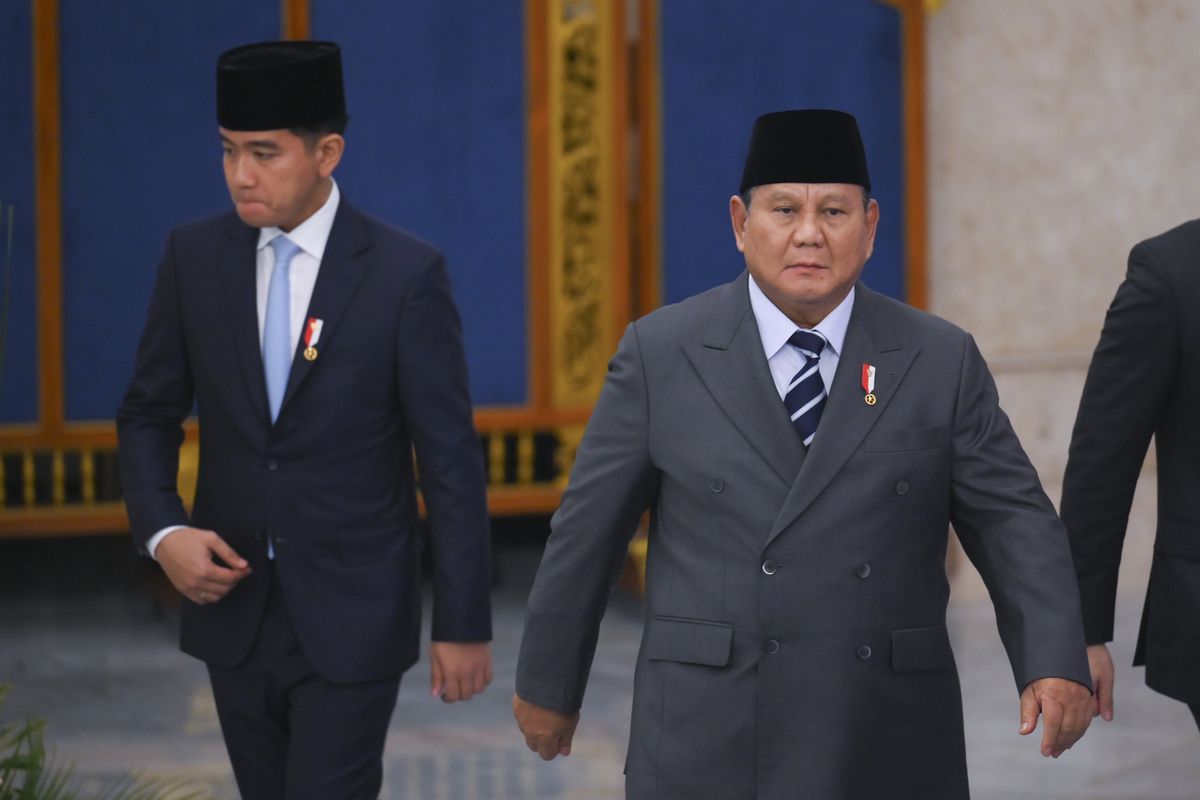
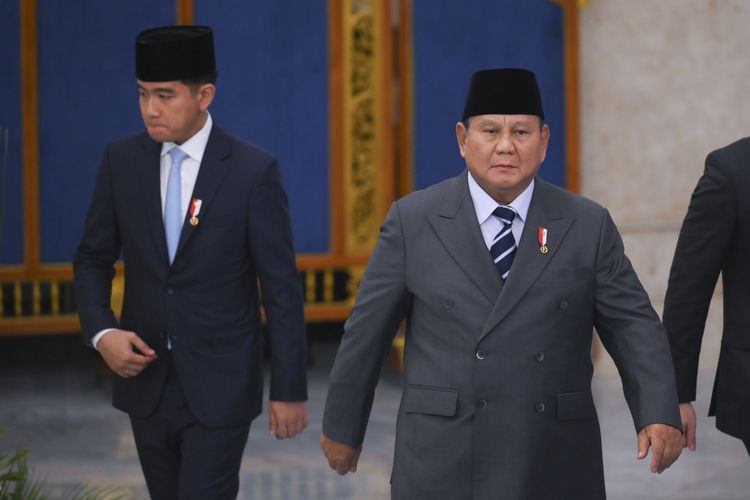
DISCUSSION regarding the replacement for the vice-presidential position after Gibran Rakabumi Raka's resignation reveals interesting political dynamics.
The conversation revolves not only around who will take the second-highest office in Indonesia but also how power is constructed, maintained, negotiated, and communicated to the public.
The emergence of several names from within the Gerindra Party, such as Sufmi Dasco Ahmad, Ahmad Muzani, and Sugiono, indicates that this contest has a strong internal party dimension.
Support for Dasco from various local Gerindra structures and figures is an intriguing political phenomenon to observe.
On the other hand, the appearance of other names in public discussions shows that the process of shaping opinions about vice-presidential candidates is underway.
Gerindra's Daily Chair Sufmi Dasco Ahmad mentioned Sugiono and Ahmad Muzani as the party's best cadres currently being discussed.
Meanwhile, support from several coalition parties appears to be directed towards President Prabowo's decision, leaning towards proposing candidates from within Gerindra.
This phenomenon cannot merely be interpreted as a personal competition among elites. There are at least three layers of dynamics occurring simultaneously: competition for influence within Gerindra, negotiation and consolidation among coalition parties, and the President's need to determine a leadership configuration capable of supporting his administration's sustainability.
Competition for influence: when support becomes a political message.
According to Robert A. Dahl's theory of power (1957), power can be understood through an actor's ability to make another actor do something they would not have otherwise done.
Power, therefore, is not solely a matter of formal position but also the capacity to influence decisions and behaviors of others.
Using this perspective, support from various party structures for specific figures can be interpreted as an effort to build influence in the decision-making process.
This support is not just an expression of preference, but also a political message to the center of power that there is a base of acceptance for the proposed figure.
This highlights the importance of understanding the concept of political signaling. In politics, statements of support, declarations, meetings, or pronouncements from figures can function as signals indicating an actor's position and preferences regarding a particular decision.
However, such signals do not automatically imply a final collective decision or guarantee that the supported figure will be chosen.
In this context, it is crucial to distinguish between three things: political support, the capacity to influence decisions, and the authority to make decisions. These three do not always reside in the same actor.
Internal competition and elite management
The emergence of several names from the same party can also be interpreted through intra-party competition theory.
Political parties are not organizations that always hold a single preference. Within them exist various interest groups, leadership networks, support bases, and distributions of political resources.
Elites may have different positions and interests even while belonging to the same organization.
From this perspective, the emergence of Dasco, Muzani, and Sugiono shows how political capital can come from different sources.
Dasco holds a strategic position within the party and parliament. Ahmad Muzani has leadership experience in the party and parliamentary institutions. Sugiono has both a position in the party structure and experience in government.
These differences in resources indicate that discussions about the vice-presidential figure are not merely related to popularity or personal closeness but also to the power configurations and political functions that each figure can bring.
Herein lies the challenge for Prabowo's leadership as both Chair of Gerindra and President. He must manage diverse elite aspirations without allowing this competition to develop into internal fragmentation.
Thus, internal competition need not always be understood as conflict. To some extent, it can become a mechanism for articulating aspirations and testing acceptance for a figure.
However, if not managed well, this competition poses the potential for frictions, political expectations, and tensions among groups.
Coalition that delegates decision-making: loyalty or a strategy for maintaining balance?
The second layer is evident in the positions of coalition parties that tend to delegate decision-making to President Prabowo.
Politically, this stance can be interpreted through coalition management theory. In a multi-party government, coalition stability is not only determined by program similarities but also by the leader's ability to manage the distribution of influence, interests, and expectations among political partners.
Coalition members certainly have their own interests. However, when these parties opt not to propose their own candidates and delegate decisions to the President, it sends a message that the stability of coalition relationships is seen as more important than displaying open competition among parties.
This stance can also be understood as a recognition of the centrality of presidential leadership in the governmental configuration.
Giovanni Sartori (1976), in his studies of parties and party systems, explains the importance of understanding inter-party interactions in shaping political competition structures.
In the context of Indonesia, governmental coalitions serve not just as vehicles for power formation but also as arenas for ongoing negotiations.
However, delegating decision-making to the President does not imply that coalition parties have lost their interests.
These interests can be conveyed through notes regarding criteria, governmental needs, and expectations for the figure who will accompany the President.
In other words, coalition parties may delegate personal choices to the President but continue to communicate institutional expectations regarding the vice-presidential function.
One of the most interesting issues is the criterion that the vice president selected should not possess ambitions or political agendas that could render them a competitor to the president in future contests. Ultimately, this criterion needs to be read more deeply.
In the relationship between the president and the vice president, there is always potential for tension between institutional cooperation and personal political competition.
The vice president is not only a companion in the government structure but also a national figure with access to power, political networks, and public visibility.
From the perspective of presidentialization of politics, Thomas Poguntke and Paul Webb (2005) explain the growing centrality of the presidential figure in party and governmental leadership.
This phenomenon makes the relationship between the executive leader and surrounding political actors increasingly significant.
In the context of Indonesia, Samuels and Shugart (2010) also illustrate how the presidential system shapes a unique relationship between the president and political parties.
Thus, the desire for the vice president not to become a new center of competition can be understood as an effort to maintain leadership concentration and reduce potential dualism of power.
However, there is an important difference between a vice president without ambitions to compete with the president and a vice president lacking independence in executing their constitutional responsibilities.
The vice president must still possess the capacity, integrity, and ability to fulfill state mandates.
Loyalty to the president should not be understood as the elimination of critical functions, public responsibilities, or professionalism in governance.
Therefore, what is needed is not merely a figure who does not compete with the president, but one who can work within a single executive leadership without creating a rival power center.
Another point raised within the dynamics of the coalition is the need for a vice president who can assist the President with strategic and technical issues.
This relates to the concept of political complementarity, which refers to the mutual enhancement of capacities and roles between two leaders within one executive structure.
Ideally, the president and vice president do not have to share all the same characteristics. Rather, differences in capacities, experiences, networks, and leadership styles can be a resource for governance.
The president bears the responsibility for leading the entire government and determining national policy directions.
Meanwhile, the vice president can be mandated to coordinate specific agendas, expedite resolution of inter-ministerial issues, oversee priority programs, and ensure that strategic decisions translate into technical implementations.
In that context, the ability to work systematically becomes essential.
The vice president is not merely a ceremonial figure or symbolic representation. They must act as a bridge between high-level political decisions and the realities of policy implementation at the ground level.
However, these divisions of tasks must still be framed within constitutional and presidential assignments.
Article 4, paragraph (2) of the 1945 Constitution states that the president is assisted by one vice president. Hence, the effectiveness of their relationship is also determined by clarity of mandate, division of responsibilities, and coordination mechanisms.
The next aspect is the need for a vice president who can bridge the president with various stakeholders. This dimension is highly relevant in the study of Political PR.
In general political communication, power relates not only to the ability to make decisions but also to the capacity to build acceptance, explain policies, listen to aspirations, and maintain public trust.
If there is a perception that the president's communication penetration is not evenly distributed across various segments of society, then the need for a vice president who can expand government communication reach becomes a consideration worth examining.
Of course, this perception must be validated through survey data, media monitoring, analysis of digital conversations, and public opinion research.
It is insufficient to conclude that the president's reception is weak based solely on impressions or a few communication events.
According to the agenda-setting theory introduced by Maxwell McCombs and Donald Shaw (1972), the media plays a role in shaping issues perceived as important by society.
Meanwhile, Robert Entman's framing approach (1993) explains how selecting specific aspects of an issue can influence how the public understands reality.
In this context, the vice president can play a complementary communication role alongside the President through various functions.
First, serving as a communication bridge between the government and the public, especially groups that require different approaches.
Second, acting as a connector among elites and institutions to ensure government communication does not become fragmented.
Third, strengthening policy communication through explanations that are closer to everyday issues faced by society.
Fourth, representing the government in building dialogue with the business world, civil society organizations, academics, communities, and professional groups.
Fifth, helping to identify emerging issues in society and ensuring these aspirations enter the policy-making process.
From a Political PR perspective, this role must not be reduced to merely a spokesperson or communicator relaying government successes.
Instead, the vice president needs to be part of a two-way communication mechanism: the government listens to the public while the public receives adequate explanations regarding government policies.
The selection of the vice president also illustrates that political processes unfold simultaneously in two arenas: the decision-making arena and the perception formation arena.
In the first arena, elites engage in communication, consolidation, negotiation, and the expression of aspirations.
In the second arena, support and political statements shape public perception regarding who is deemed deserving, accepted, and capable of fulfilling the vice presidency.
From a political public relations perspective, political communication is not just the activity of delivering messages after decisions are made.
Communication is also part of the legitimacy formation process and managing relationships with stakeholders.
Thus, the emergence of various supports can be interpreted as the initial legitimacy formation process.
However, political legitimacy does not stop at the number of support declarations. It must be tested through public acceptance, institutional capacity, and the ability to carry out government responsibilities.
Here lies the importance of distinguishing between popularity, acceptability, and capability. Popularity relates to the level of public recognition. Acceptability concerns the acceptance by diverse groups.
Capability pertains to the actual ability to carry out tasks and responsibilities. These are three distinct dimensions and do not automatically move in the same direction.
In the end, what is chosen is not merely a person but the design of power relationships.
The determination of the vice president is a decision with broader consequences than merely filling a position.
Constitutionally, Article 8, paragraph (2) of the 1945 Constitution states that in the event of a vacancy in the vice presidential position, the MPR must hold a meeting within 60 days to elect a vice president from two candidates proposed by the president.
Thus, the authority to propose lies with the president, while the election is conducted by the MPR.
This decision will determine how the executive leadership configuration operates, how the relationship between the President and coalition parties is managed, and how the government establishes communication with the public.
There are at least three challenges the vice-president figure must address.
First, they must maintain government solidity without substituting loyalty for capacity.
Second, they must effectively translate the president's strategic direction into coordination and implementation of programs.
Third, they must act as a communication bridge that connects the government with various societal groups, including those who hold differing views towards the government.
Hence, discussions about the vice-presidential contest should not stop at who receives the broadest support or who is closest to the president.
A more substantive question is: what kind of leadership design is needed by Prabowo's government?
From a Political PR perspective, successful leadership is not solely determined by who is within the circle of power but also by the ability to build trust outside that circle.
Indeed, the vice president must be capable of not only working alongside the president but also ensuring that the state functions and the public feels the government's presence.
What is at stake is not just the vice presidential seat, but how power is consolidated, governance is executed, and public trust is fostered.