



Cak Imin Says Government Needs Rp 110 Trillion to Ensure Health Coverage for the Poor
-
News
-
6 minutes ago
This article was translated by AI. Read the original article on Kompas.com. See Original

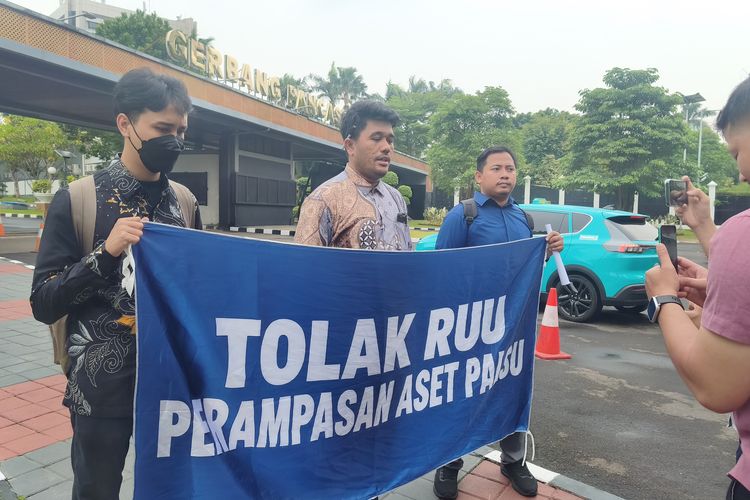
Yunus argued that the numerous hearings held by the DPR do not automatically prove that the principle of meaningful participation has been fulfilled.
He referred to Article 96 of the Law on the Formation of Legislation, which mandates public involvement in the legislative process.
Yunus explained that meaningful participation should encompass the public's right to be heard, have their opinions considered, and obtain responses or clarifications regarding their submissions.
Thus, public involvement cannot be limited to inviting a select few to voice their opinions during hearings.
"Was there any? They only hear things. Where is the ideal follow-up? Where is the feedback? And not everyone affected was invited," Yunus stated.
He also questioned the composition of those invited by the DPR to discuss the Asset Seizure Bill.
According to him, it needs to be ensured that individuals with differing viewpoints also receive the opportunity to present their opinions.
"Most of those invited shared similar opinions, agreeing with them. That’s my view. It looks good that those who agree are invited, and their views publicized as 'Wow, this is agreeable, this is agreeable.' It appears positive, while those invited align with the DPR's interests and opinions," Yunus commented.
He assessed that this condition does not meet the principle of meaningful participation as outlined in Article 96 of the Law on the Formation of Legislation.
Yunus lamented that the lengthy discussion of the bill, fought for over many years, lacked adequate stakeholder involvement.
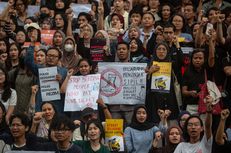
Criminal law expert from Trisakti University Abdul Fickar Hadjar remarked that a closed legislative discussion pattern, which includes the failure to disseminate the draft to the public, may provoke public resistance.
According to Fickar, the issue of transparency in the formation of laws should not be seen as merely an administrative matter.
Transparency is part of the democratic principles that must be effectuated in the legislative process.
He even suggested that a law formation pattern that does not adequately open up public participation could lead to a surge in legal challenges.
"Yes, a closed pattern that includes not disseminating the draft of the bill to the public will certainly create strong resistance. Law suits to the Constitutional Court are bound to proliferate," Fickar told Kompas.com.
Fickar assessed that such a law-making pattern is unhealthy in a democratic country.
He pointed out that such practices reflect characteristics of authoritarian governance.
In addition to the general public, objections may also arise from academics who should have the opportunity to contribute to the regulatory draft.
"Neglecting public participation will foster strong resistance, not only from the general public, especially from scholars," he asserted.