
Forestry Bill to Regulate Compensation Sanctions for Corporations Causing Forest Fires
-
News
-
3 minutes ago
This article was translated by AI. Read the original article on Kompas.com. See Original
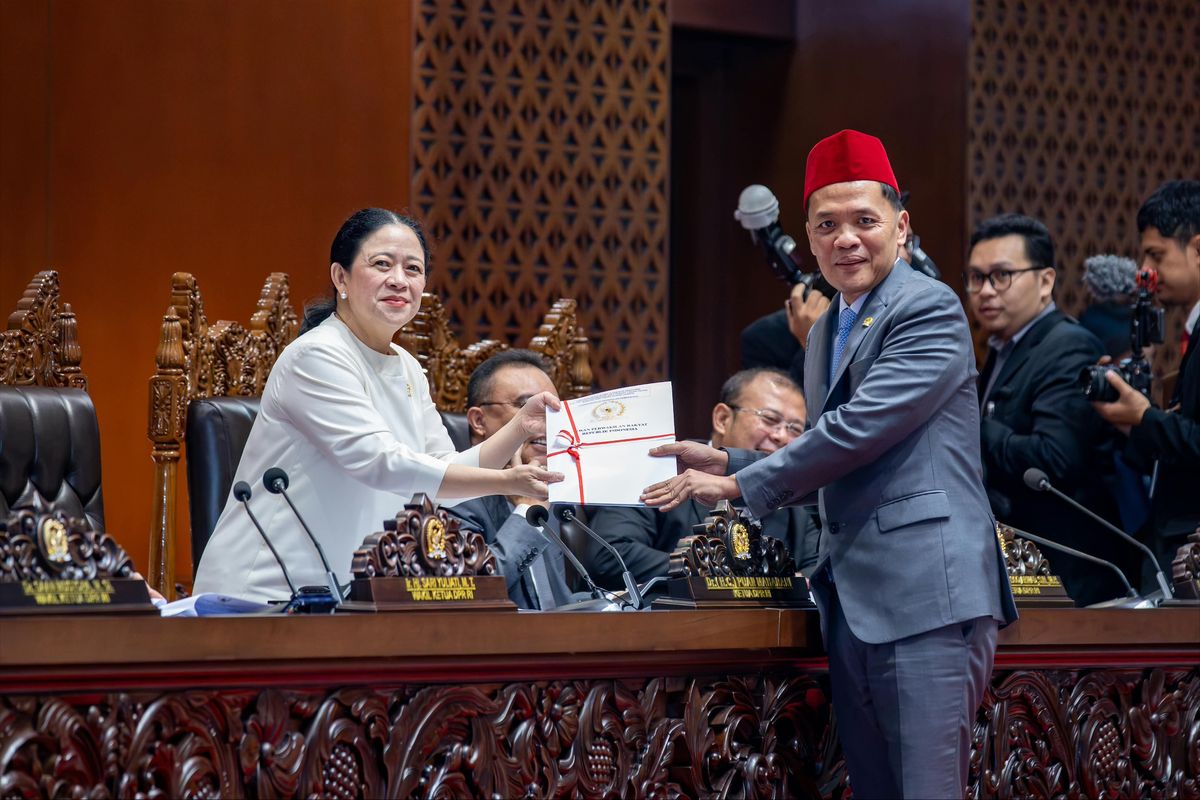
JAKARTA, KOMPAS.com - The draft of the Asset Seizure Bill has faced complaints for being elusive, with its digital document only appearing on the official DPR website after it was enacted into law. If that is so, how does that uphold the principle of transparency in the law-making process?
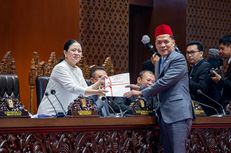
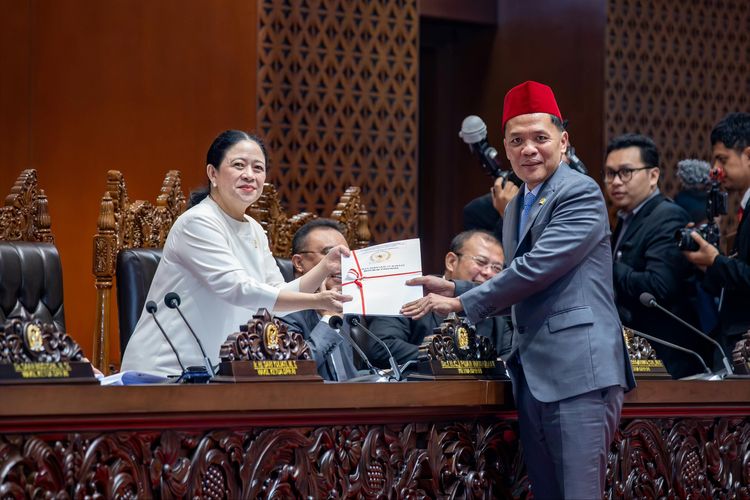
The Asset Seizure Bill was officially passed by DPR Chair Puan Maharani during a plenary session on Thursday (19/11/2026) around 10:30 AM WIB.
Half an hour later, Kompas.com attempted to access the official DPR website but could not find the draft of the bill, although DPR Commission III Chair Habiburokhman stated that the draft had already been uploaded.
Only shortly thereafter was the document for the now-legislated law made accessible to the public through the session document menu.
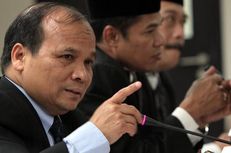
Agus Sarwono, a researcher from Transparency International Indonesia (TII), expressed disappointment over the discussion surrounding the Asset Seizure Bill, which he believes lacked orderly transparency regarding the draft's public disclosure.
According to Agus, openness should be a vital aspect of the regulatory discussions.
This is especially important since the Asset Seizure Bill grants significant authority to the state to confiscate assets derived from criminal activities.
"It's difficult to accept the logic that a regulation providing significant powers to the state to seize criminal assets could be discussed without adequate public access to its latest draft," Agus stated when contacted by Kompas.com, Wednesday (17/11/2026).
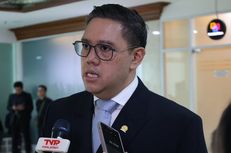
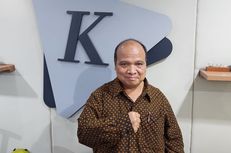
 Transparency International Indonesia (TII) researcher Agus Sarwono encountered in Cikini, Central Jakarta, Sunday (14/7/2024).
Agus emphasized that the expedited discussion of the Asset Seizure Bill should not result in a formal approval without sufficient public oversight.
He argued that civil society and academics need the opportunity to review all provisions in the bill's draft.
Key areas of concern include provisions on evidentiary standards, the protection of third-party rights in good faith, management mechanisms for seized assets, and oversight of authorities' powers.
"Have the provisions on evidence, protection of good faith third-party rights, asset management mechanisms, and authority oversight been adequately addressed?" he remarked.
Agus believes that substantive transparency is a crucial requirement to ensure that the Asset Seizure Bill does not leave room for future abuse of power.
He posited that the success of this law’s formation should not only be measured by the speed of its approval.
"The success metric should not be just how quickly this bill is passed, but how effectively it can close off impunity for corrupt actors, recover seized state assets, and build public trust that the legislative process is conducted transparently, accountably, and in favor of anti-corruption interests," Agus concluded.
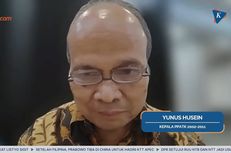
Criticism was also voiced by Yunus Husein, the former head of the Financial Transaction Reports and Analysis Center (PPATK) from 2002 to 2011.
Yunus, one of the initiators of the Asset Seizure Bill, stated that the discussion process has yet to reflect meaningful public participation.
He revealed that PPATK, an institution interested in asset seizure regulations, was never invited by the DPR to discuss the bill.
Despite having met with the Chair of the Legislative Body (Baleg) DPR Bob Hasan, who promised to invite him to discussions, he shared, "I remember PPATK was never invited by the DPR. I met the chairman of Baleg, Bob Hasan, and he said, 'I'll invite you later.' To this day I have not been invited," Yunus remarked in an interview with Kompas.com, Thursday.
Yunus argued that the numerous hearings held by the DPR do not automatically prove that the principle of meaningful participation has been fulfilled.
He referred to Article 96 of the Law on the Formation of Legislation, which mandates public involvement in the legislative process.
Yunus explained that meaningful participation should encompass the public's right to be heard, have their opinions considered, and obtain responses or clarifications regarding their submissions.
Thus, public involvement cannot be limited to inviting a select few to voice their opinions during hearings.
"Was there any? They only hear things. Where is the ideal follow-up? Where is the feedback? And not everyone affected was invited," Yunus stated.
He also questioned the composition of those invited by the DPR to discuss the Asset Seizure Bill.
According to him, it needs to be ensured that individuals with differing viewpoints also receive the opportunity to present their opinions.
"Most of those invited shared similar opinions, agreeing with them. That’s my view. It looks good that those who agree are invited, and their views publicized as 'Wow, this is agreeable, this is agreeable.' It appears positive, while those invited align with the DPR's interests and opinions," Yunus commented.
He assessed that this condition does not meet the principle of meaningful participation as outlined in Article 96 of the Law on the Formation of Legislation.
Yunus lamented that the lengthy discussion of the bill, fought for over many years, lacked adequate stakeholder involvement.
Criminal law expert from Trisakti University Abdul Fickar Hadjar remarked that a closed legislative discussion pattern, which includes the failure to disseminate the draft to the public, may provoke public resistance.
According to Fickar, the issue of transparency in the formation of laws should not be seen as merely an administrative matter.
Transparency is part of the democratic principles that must be effectuated in the legislative process.
He even suggested that a law formation pattern that does not adequately open up public participation could lead to a surge in legal challenges.
"Yes, a closed pattern that includes not disseminating the draft of the bill to the public will certainly create strong resistance. Law suits to the Constitutional Court are bound to proliferate," Fickar told Kompas.com.
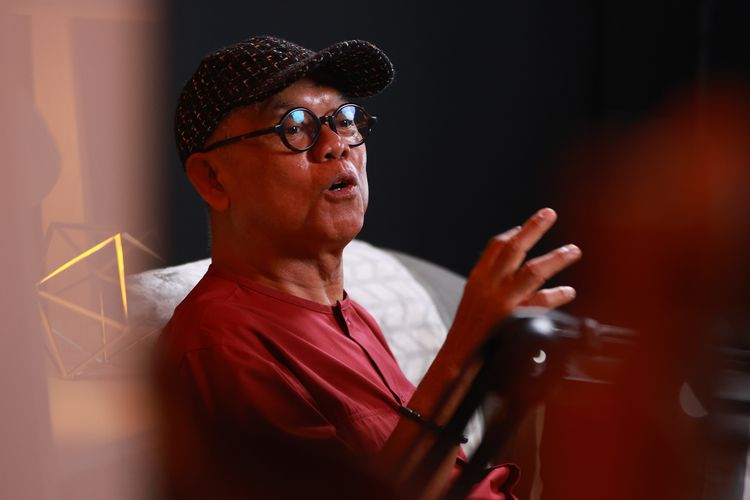 Criminal law expert from Trisakti University Abdul Fickar Hadjar highlights justice issues in handling common criminal offenses committed by Indonesian National Army (TNI) personnel.
Fickar assessed that such a law-making pattern is unhealthy in a democratic country.
He pointed out that such practices reflect characteristics of authoritarian governance.
In addition to the general public, objections may also arise from academics who should have the opportunity to contribute to the regulatory draft.
"Neglecting public participation will foster strong resistance, not only from the general public, especially from scholars," he asserted.
Fickar urged the government and the DPR to provide extensive socialization opportunities to help the public understand and critique the substance of the laws being formed.
Widespread socialization of the draft bill, he added, could help achieve meaningful public participation.
"That is what should be done. Aggressive promotion of the bill will help achieve meaningful public participation, a fundamental principle in the democratic process of drafting a law that serves the public interest," Fickar stated.
He affirmed that transparency is a foundational principle of democracy, including in drafting laws.
"Transparency is a foundational principle of democratic governance in any administration, including in law formation, as democracy is a government by and for the people," he concluded.
The issue of openness relating to the draft of the Asset Seizure Bill has also led to a complaint against the DPR leadership to the Honorary Council of the DPR (MKD).
Indonesia Corruption Watch (ICW), along with a coalition of civil society, reported DPR Chair Puan Maharani and DPR Commission III Chair Habiburokhman on Thursday.
The complaint concerns alleged ethical violations due to the inadequate dissemination of the Asset Seizure Bill draft prior to its approval.
ICW's Legal and Investigation Division Head Ibrahim stated that the DPR has overlooked the principle of meaningful participation in the formation of this law.
He added that even up until the bill’s approval, ICW was unable to access the latest draft of the Asset Seizure Bill.
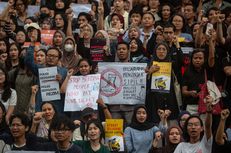
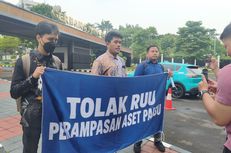
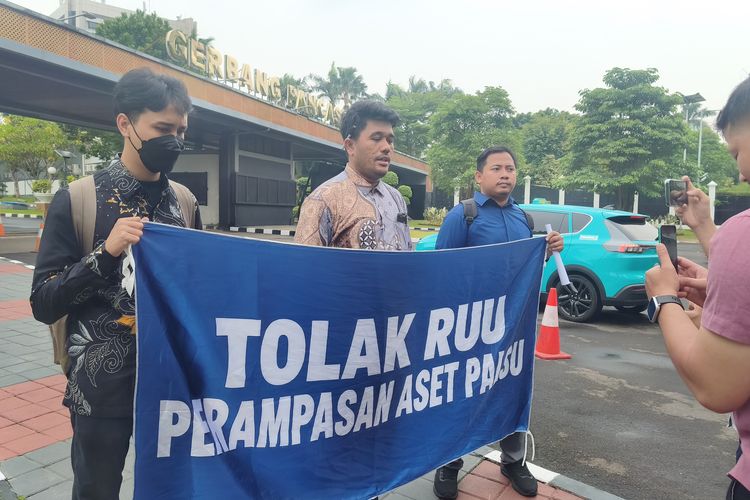 Indonesia Corruption Watch (ICW) holds a protest against the Asset Seizure Bill in front of the Pancasila Gate at the Senayan Parliament Complex, Jakarta, Thursday (19/11/2026).
Ibrahim also countered claims made by the DPR and Commission III leadership that discussions have occurred transparently and involved the public.
"To this moment, in filing the complaint to the MKD, ICW has not been invited to discuss the formulation of this law," Ibrahim firmly stated during an interview at the Parliament Complex in Senayan, Jakarta, on Thursday.
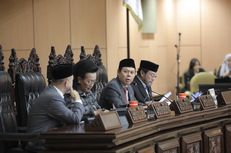
DPR Commission III Chair Habiburokhman stated in his speech prior to the approval of the Asset Seizure Bill that the draft is accessible to the public on the official DPR website.
“And the draft has been uploaded on the DPR’s site,” Habiburokhman declared from the podium in the plenary meeting room, Nusantara II DPR building, on Thursday (19/11/2026) before noon.
Habiburokhman asserted that the legislative process of the Asset Seizure Bill has involved meaningful public participation.
Commission III of the DPR has held 87 public hearings and discussions, involving experts, academics, community organizations, and students.
Socialization through work visits has also been conducted by legal representatives.
The proceedings have consistently been posted on the DPR website, the DPR’s YouTube channel, and Parliament TV.
"We prioritize meaningful public participation," said Habiburokhman.