Malaysian Parties Await Ethics Hearing for Kombes Fahrurozi Regarding Investment
-
News
-
3 minutes ago
This article was translated by AI. Read the original article on Kompas.com. See Original

Indonesia's struggles through the UN, international negotiations, and the establishment of maritime law norms demonstrate how institutions and international law can be leveraged to advocate national interests.
While in the early years of independence, Indonesia's diplomatic challenges primarily included gaining international recognition and maintaining sovereignty, modern challenges have become increasingly complex.
The geopolitical rivalry between the United States and China, armed conflicts in various regions, global economic competition, climate change, and cyber security threats demand that Indonesian diplomacy be increasingly adaptive and outcome-oriented.
In this context, the active and independent foreign policy legacy of the nation’s founders remains relevant.
However, this principle must be translated into the ability to maintain independent decision-making, build mutually beneficial partnerships, and avoid excessive dependence on particular powers.
Economic diplomacy is also increasingly significant. Trade, investment, technology, energy competition, and mastery of strategic resources necessitate that Indonesia advocate national interests through international cooperation that offers tangible benefits for development.
On the other hand, the protection of Indonesian citizens abroad has become a pressing dimension of diplomacy.
Issues surrounding migrant workers, human trafficking, and armed conflict require diplomacy supported by inter-agency coordination and the ability to provide effective protection.
Furthermore, advancements in digital technology present new challenges to national sovereignty.
Threats of cyber attacks, data theft, surveillance, and dependence on foreign digital infrastructure illustrate that the struggle to maintain sovereignty now also takes place in cyberspace.
Therefore, the exemplary nature of diplomatic heroes must be translated into professionalism, integrity, mastery of strategic issues, and the ability to make diplomatic decisions that favor national interests.
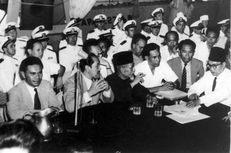
The endeavor to continue the struggle of diplomacy must persist. Awarding the National Hero title to Ali Sastroamidjojo, Mohamad Roem, and Frans Seda is not merely a tribute to the lives of these three national figures.
This moment also serves as a reminder that diplomacy is a crucial part of Indonesia's struggle history.
If past generations fought for Indonesia to be recognized as a free and sovereign nation, today's diplomats face the responsibility of ensuring that sovereignty is upheld amid global changes.
The contemporary struggle in diplomacy may not always yield historic agreements like Roem-Royen, the monumental AAC conference, or international conventions such as maritime law.
However, success can be reflected in the protection of citizens, the safeguarding of national interests, the enhancement of societal welfare, and the strengthening of Indonesia's position in the international community.
In the end, heroism does not always emerge from the battlefield.
There is also heroism that arises from the courage to negotiate, the intelligence to read the interests of other nations, and the steadfastness in defending national interests.
Because in Indonesia's history, struggle has not only been waged with arms but also through the elevation of the nation’s dignity at the diplomacy table.