Malaysian Parties Await Ethics Hearing for Kombes Fahrurozi Regarding Investment
-
News
-
3 minutes ago
This article was translated by AI. Read the original article on Kompas.com. See Original

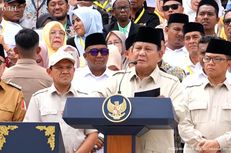
AWARDING the National Hero title to 19 figures by President Prabowo Subianto on November 10, 2026, marks an interesting note in the history of Indonesian diplomacy.
Among those receiving the award, three individuals have previously held diplomatic roles: Ali Sastroamidjojo, Mohamad Roem, and Franciscus Xaverius Seda, also known as Frans Seda.
The award serves as a reminder that the struggle to maintain Indonesia’s independence and sovereignty did not only occur on the battlefield, but also through diplomacy at the negotiation table and in various international forums to achieve global recognition, face pressures from other nations, and advocate for national interests.
The Proclamation of Independence on August 17, 1945, was a political declaration for the Indonesian nation to determine its own fate.
However, that independence still needed to be defended against attempts by the Dutch to re-establish colonial rule.
In such circumstances, armed struggle and diplomacy went hand in hand and mutually reinforced each other.
The armed struggle demonstrated the nation's resolve to retain its independence, while diplomacy sought to garner international support and strengthen the Republic's position.
International recognition was not the source of Indonesia's independence, but it became a crucial factor in solidifying the existence of this newly independent nation.
In this context, the roles of the three National Heroes awarded in 2026 come to life and serve within a distinct historical framework.
Nonetheless, they share a commonality in using diplomacy as a means to advocate for national interests.
Ali Sastroamidjojo was a pivotal figure in multilateral diplomacy and the development of Asian-African solidarity.
He was a member of Indonesia's delegation at the Round Table Conference (RTC) in 1949, served as Indonesia's Ambassador to the United States, Canada, and Mexico, and was Indonesia's Permanent Representative to the United Nations (UN).
During his tenure as Prime Minister, Ali played a significant role in organizing the Asian-African Conference (AAC) in Bandung in April 1955.
This conference was a landmark event in Indonesia's diplomatic history, bringing together Asian-African nations in a spirit of anti-colonialism, solidarity, and global peace.
Through the AAC, Indonesia showcased that a relatively newly independent nation could play a vital role in international political discourse, especially amidst the rivalry between the Western and Eastern blocs during the Cold War.
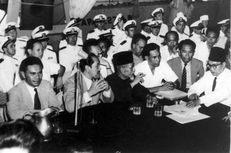
In contrast, Mohamad Roem is renowned for his efforts in negotiation diplomacy and sovereignty recognition.
His role as the head of Indonesia’s Delegation in the Roem-Royen negotiations in 1949 illustrated how negotiations could pave the way for conflict resolution with the Dutch.
These negotiations resulted in agreements that facilitated the restoration of the Republic of Indonesia's government in Yogyakarta and the organization of RTC in The Hague.
This sequence of diplomatic processes ultimately culminated in the transfer of sovereignty by the Dutch on December 27, 1949.
Unlike the two aforementioned figures, Frans Seda primarily contributed to economic diplomacy and international relations during the era of national development.