Malaysian Parties Await Ethics Hearing for Kombes Fahrurozi Regarding Investment
-
News
-
3 minutes ago
This article was translated by AI. Read the original article on Kompas.com. See Original
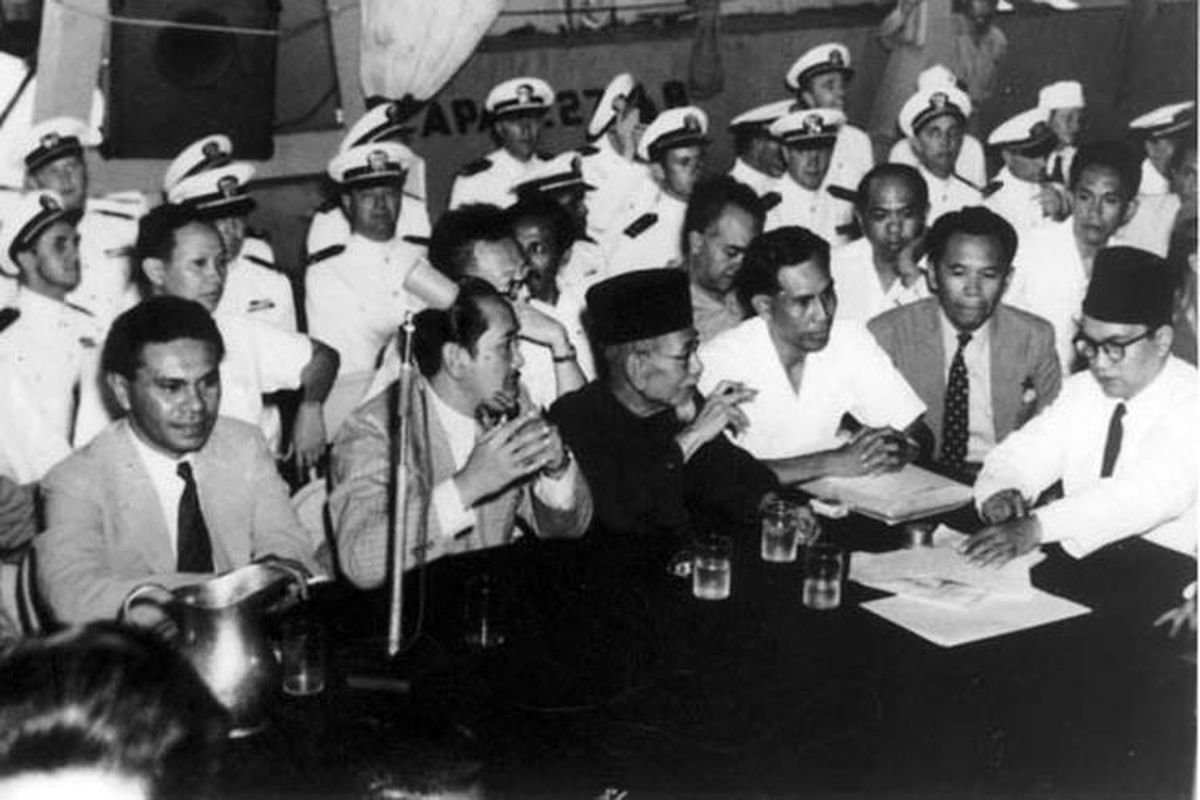
He served as Indonesia's Ambassador to Belgium and Luxembourg and represented Indonesia in the European Economic Community (EEC) in Brussels from 1973 to 1976.
His dedication illustrates that diplomacy did not cease after obtaining international recognition of independence.
Diplomacy is also essential for expanding economic cooperation, opening trade and investment opportunities, and supporting national development.
Looking back at Indonesia's history, the awarding of the National Hero title to these three figures is not unprecedented for those who have made significant contributions in diplomacy, such as Mohammad Hatta, Haji Agus Salim, Sutan Sjahrir, Lambertus Nicodemus Palar, and Mochtar Kusumaatmadja.
Mohammad Hatta has already received the National Hero title. In addition to leading Indonesia's delegation in the RTC of 1949, Hatta is recognized as a key architect of the independent and active foreign policy principle that remains a cornerstone of Indonesia's diplomacy today.
Haji Agus Salim played an essential role in advocating for Indonesia's independence recognition, particularly through diplomatic relations with Arab nations.
Sutan Sjahrir was also instrumental in garnering international support for the Republic, including through diplomacy that brought Indonesia's issues to the UN's attention.
Another noteworthy figure, Lambertus Nicodemus Palar, championed Indonesia's interests at the UN and became the first Permanent Representative of Indonesia after the country joined the organization in 1950.
In subsequent developments, Mochtar Kusumaatmadja was awarded the National Hero title in 2025.
As an expert in international law and a former Minister of Foreign Affairs, Mochtar contributed significantly to advocating the archipelagic state concept, which later gained recognition through the UN Convention on the Law of the Sea in 1982.
Interestingly, not all of these figures were career diplomats.
Many were statesmen, politicians, and legal scholars. However, they performed diplomatic functions that significantly contributed to the nation's trajectory.
From the perspective of classical realism as developed by Hans J. Morgenthau, diplomacy is a vital instrument for advocating national interests.
A country’s power is not solely determined by military capability but also by proficiency in managing international relations.
Mohamad Roem's struggle illustrates how diplomacy was utilized when the Republic of Indonesia faced military disadvantage against the Dutch.
Through negotiations and international support, Indonesia sought to strengthen its political position without solely relying on armed might.
Meanwhile, the concept of soft power developed by Joseph S. Nye Jr. describes a nation's ability to influence others through attraction, legitimacy, values, and policies, rather than mere coercion.
In this perspective, the AAC of 1955, significantly spearheaded by Ali Sastroamidjojo, can be understood as an example of diplomacy relying on Indonesia's political and moral influence.
Through leadership and Asian-African solidarity, Indonesia was able to gain international attention despite its limited economic and military capabilities.
As for Hedley Bull in The Anarchical Society (1977), he positioned diplomacy as one of the crucial institutions that allow nations to manage relationships and maintain international order.