

Former Aide to Prabowo, Ahrie Sonta Dismissed, Habiburokhman: Wiretapping Scandal is the Darkest Incident
-
News
-
9 minutes ago
This article was translated by AI. Read the original article on Kompas.com. See Original
To achieve this, at least four prerequisites must be in place.
First, meritocracy must be the foundation for promotions. Advancements and strategic positions must be determined by competence, track record, achievements, and integrity, not closeness, patronage, or the ability to please superiors.
Second, oversight must be independent and carry real consequences. There should be no double standards between low-ranking members and high-ranking officials. A sharp law downwards but blunt upwards will only prolong the legitimacy crisis.
Third, the institution must protect whistleblowers and provide space for internal criticism.
A healthy organization is not one that never has problems, but one that dares to identify and fix its issues.
Fourth, exemplarity must start from the pinnacle of leadership. A leader who demands simplicity from below while enjoying excessive privilege above is teaching organizational hypocrisy.
These four prerequisites should ideally be implemented consistently and not just remain as topics in bureaucratic reform seminars.
Robert K. Greenleaf, through the concept of servant leadership, reminds us that the essence of leadership is to serve, not to be served.
A leader gains legitimacy not solely from the formal power they possess, but from their willingness to place others' interests above their personal interests.
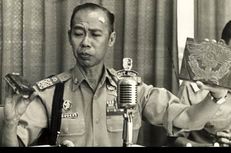
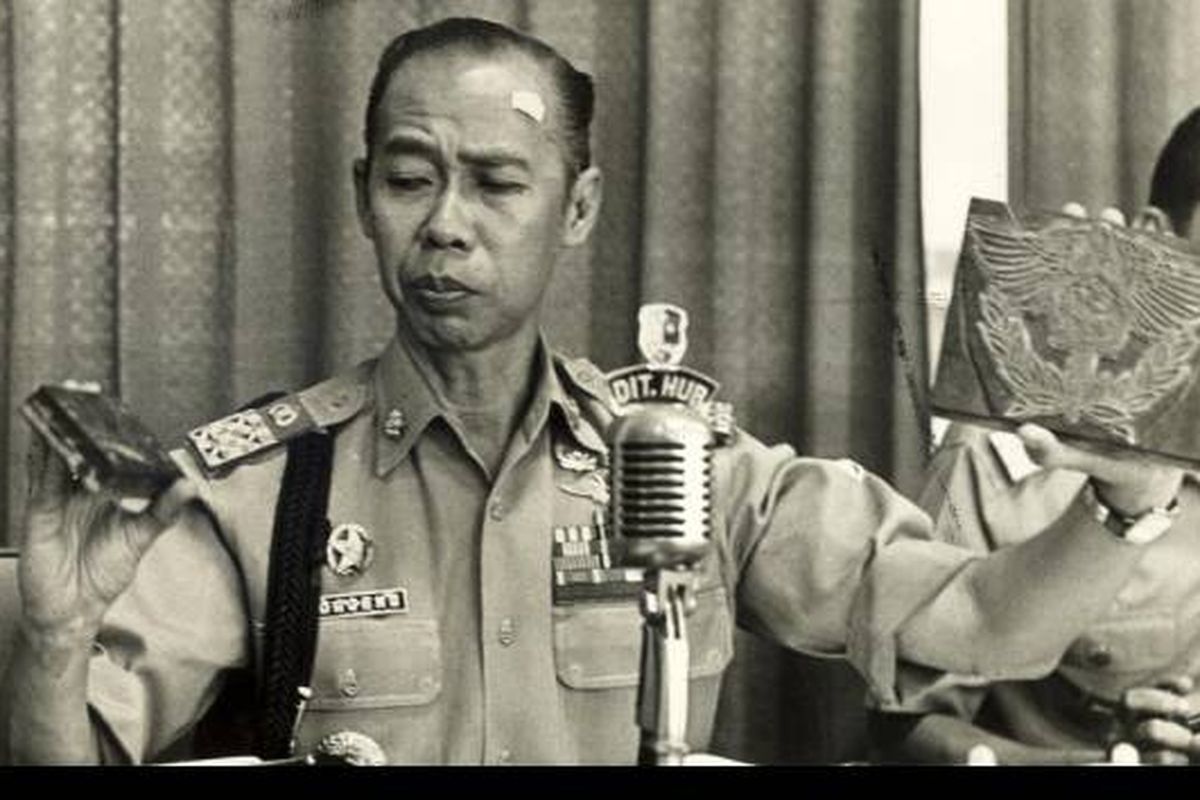
Hoegeng is an important representation of that spirit. He reminds us that a police uniform is not a symbol of power to instill fear, but a mandate to protect the community.
Of course, the National Police today face challenges far more complex than those during Hoegeng's tenure.
Cybercrime, transnational drug trafficking, financial crime, terrorism, and geopolitical dynamics require a modern, professional, and adaptive police force.
Therefore, giving birth to a new Hoegeng does not mean replicating all past methods. What must be inherited are his moral principles, while his professional capacity must respond to the challenges of the times.
The awarding of the National Hero title to Hoegeng should become a moment of reflection, not just a ceremony to boast about the corps.
For an institution does not become great merely because it has many generals, but because the public trusts the people wearing its uniform.
The National Police need not wait decades to find the next Hoegeng. He might already be serving in remote areas, working as an investigator at a precinct, or a young officer quietly refusing to compromise on dishonesty.
The question is, will the institution allow such people the space to grow into leaders?
When an honest police officer is no longer regarded as an anomaly, when refusing a bribe is no longer considered a heroic act, and when resisting deviations does not jeopardize someone's career, only then will Hoegeng's spirit truly live on.
For the best legacy of a hero is not a statue, a title, or a name immortalized on a street. His greatest legacy is when the values he fought for become the habits of future generations.