

Discourse on Right to Express Opinions Against Gibran Rolls Out in DPR
-
News
-
1 minute ago
This article was translated by AI. Read the original article on Kompas.com. See Original
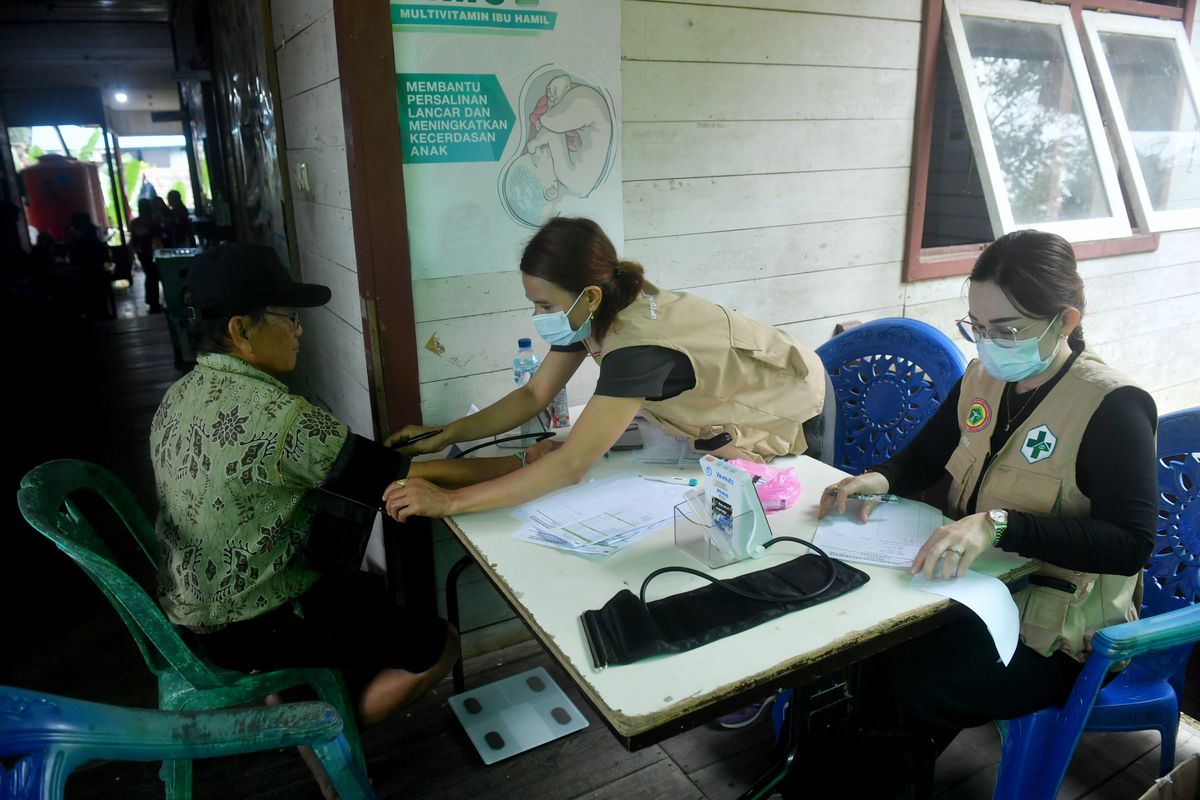
WHAT is the appropriate price to pay someone responsible for safeguarding human lives?
For doctors and healthcare workers, this question is more intricate than calculating working hours or patient numbers. It involves a lengthy education, professional competencies, clinical risks, legal responsibilities, and decisions that must sometimes be made in seconds.
However, discussions about their welfare often stop at the state's financial capacity.
This reasoning then evolves into debates about the health budget size, hospitals' dependence on subsidies, and the need to increase tax revenue.
It’s as if healthcare workers' welfare is a final outcome that can only be enjoyed once the country reaches a certain level of prosperity.
Fiscal capacity does dictate government spending space, but state revenue does not automatically determine healthcare workers' earnings.
Between these two lies budget allocation policies, payment systems for services, distribution of professional staff, and remuneration governance.
Ignoring this relationship is a causal oversimplification, reducing issues with multiple determinants to a single cause.
Indonesia already has a National Health Insurance system established through Law No. 40 of 2004 on the National Social Security System and Law No. 24 of 2011 on BPJS.
The funding combines participant contributions, employer contributions, and government payments for qualifying groups.
This means health financing is fundamentally an issue of resource mobilization and distribution.
According to the WHO's Indonesia Health Accounts 2024, published in February 2026, Indonesia's health expenditure reached IDR 639.9 trillion or 2.9 percent of GDP.
Public financing contributes 58.5 percent, while out-of-pocket expenses from individuals still account for 28.3 percent.
This figure indicates that Indonesia's healthcare issues involve financing adequacy, financial protection for the public, and spending effectiveness.
The size of the budget alone does not explain how the benefits reach patients or professionals.