

Minister of Defense Sjafrie Gathers Kemhan Officials at Unhan
-
News
-
9 minutes ago
This article was translated by AI. Read the original article on Kompas.com. See Original
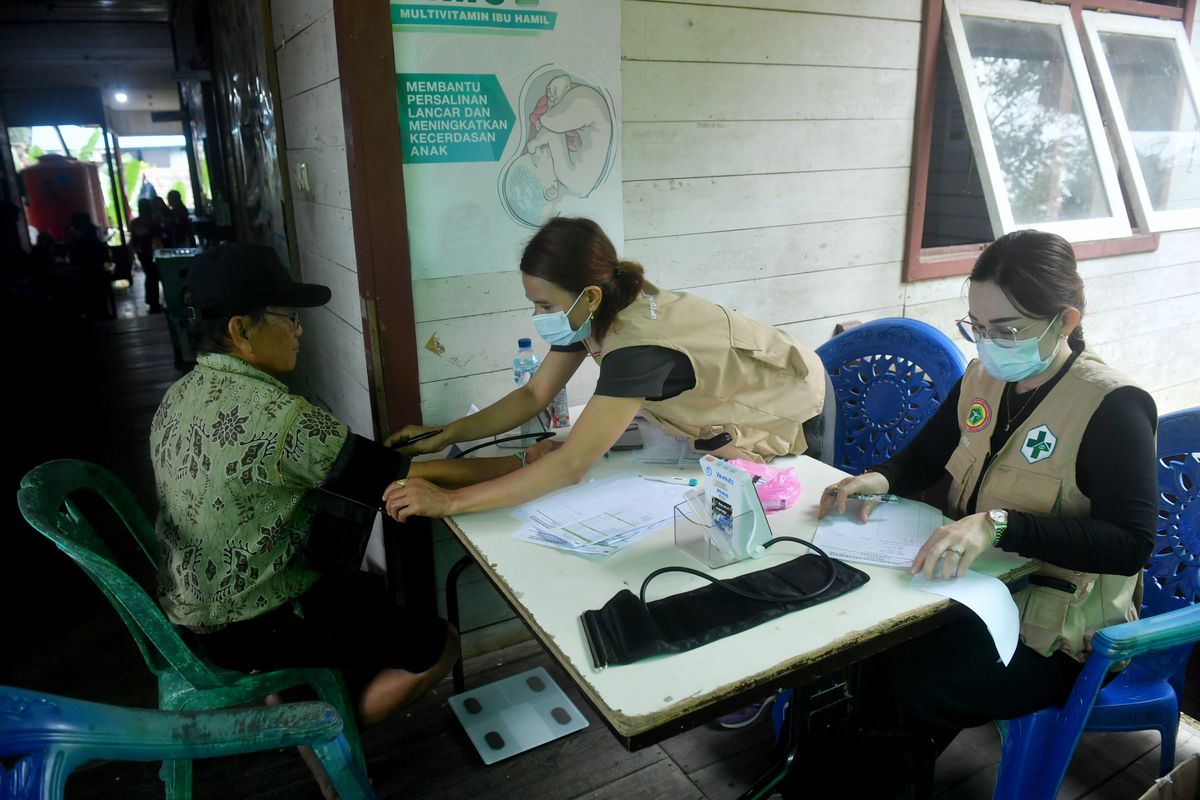
WHAT is the appropriate price to pay someone responsible for safeguarding human lives?
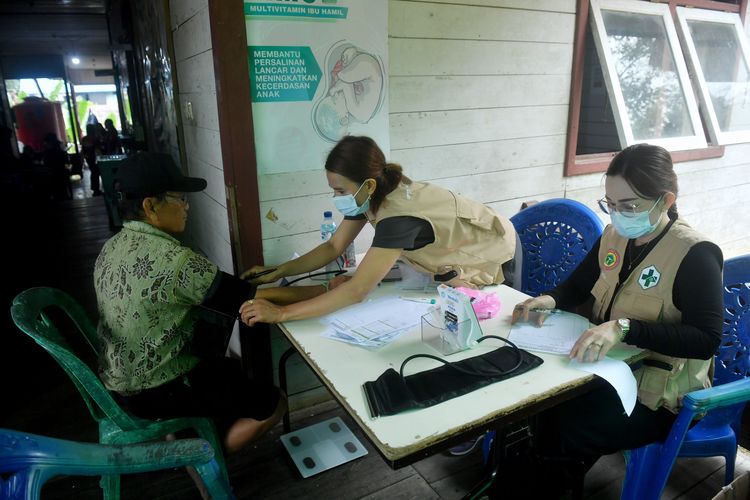
For doctors and healthcare workers, this question is more intricate than calculating working hours or patient numbers. It involves a lengthy education, professional competencies, clinical risks, legal responsibilities, and decisions that must sometimes be made in seconds.
However, discussions about their welfare often stop at the state's financial capacity.
This reasoning then evolves into debates about the health budget size, hospitals' dependence on subsidies, and the need to increase tax revenue.
It’s as if healthcare workers' welfare is a final outcome that can only be enjoyed once the country reaches a certain level of prosperity.
Fiscal capacity does dictate government spending space, but state revenue does not automatically determine healthcare workers' earnings.
Between these two lies budget allocation policies, payment systems for services, distribution of professional staff, and remuneration governance.
Ignoring this relationship is a causal oversimplification, reducing issues with multiple determinants to a single cause.
Indonesia already has a National Health Insurance system established through Law No. 40 of 2004 on the National Social Security System and Law No. 24 of 2011 on BPJS.
The funding combines participant contributions, employer contributions, and government payments for qualifying groups.
This means health financing is fundamentally an issue of resource mobilization and distribution.
According to the WHO's Indonesia Health Accounts 2024, published in February 2026, Indonesia's health expenditure reached IDR 639.9 trillion or 2.9 percent of GDP.
Public financing contributes 58.5 percent, while out-of-pocket expenses from individuals still account for 28.3 percent.
This figure indicates that Indonesia's healthcare issues involve financing adequacy, financial protection for the public, and spending effectiveness.
The size of the budget alone does not explain how the benefits reach patients or professionals.
Government hospitals, including those applying a BLUD financial management format, have obligations to provide public services while maintaining financial sustainability.
The Minister of Home Affairs Regulation No. 79 of 2018 gives BLUD financial management flexibility to support effective and accountable service delivery.
Meanwhile, JKN payments through INA-CBG represent bundled hospital service payments. The value must cover various needs, including medications, medical devices, supplementary examinations, actions, treatments, and operational costs.
Hospital claims are not identical to doctors' earnings. When the real cost of services exceeds payments received, financial pressure can affect a facility's ability to fund services and remuneration.
Conversely, increased hospital revenues do not necessarily improve employee welfare if the revenue-sharing mechanisms are not proportional.
This issue highlights the need to distinguish between state revenue, healthcare facility income, and professional earnings. While interrelated, they operate under different regulatory mechanisms.
Furthermore, labeling hospital financing as a burden on the state without measuring the benefits produced ignores health economic evaluation principles.
Successfully preventing disabilities due to stroke can reduce the need for long-term care.
Timely cancer treatment can increase survival chances and maintain patient productivity.
Effective healthcare services yield social and economic benefits that are not fully recorded as hospital income.
This is why health expenditures need to be evaluated based on service outcomes, efficiency, and community benefits, not just how much facilities generate revenue.
So, should healthcare workers' welfare wait until tax revenue increases?
Strong government revenues indeed expand public financing capacity. However, income tax rates, tax-to-GDP ratios, and government spending capacity are different measures.
There is no universal tax rate threshold that guarantees fair remuneration for healthcare workers.
Framing high taxes as the only pathway to healthcare workers' welfare represents a false dilemma.
The government still has policy space through expenditure priority evaluations, financing efficiency, adequate service tariff setting, and remuneration system improvements. Moreover, healthcare workers' rights have been legally recognized.
Article 273, paragraph 1, letter c of Law No. 17 of 2023 on Health stipulates that healthcare professionals and workers are entitled to a fair salary or wage, compensation, and performance bonuses as per statutory regulations.
Regulation No. 28 of 2024 details income arrangements. Article 725 stipulates income according to position and work relationship.
Meanwhile, Article 726 includes remuneration considerations at public healthcare facilities, including competencies, specializations, work duration, workload, job risks, and placement.
This provision holds significant consequences. The appropriateness of healthcare workers' income has become part of legal norms requiring implementation, supervision, and evaluation.
For regional hospitals, this issue is more pressing. Specialist and sub-specialist doctors undergo long education with significant competency investments.
When facilities are limited, workloads high, and professional rewards inadequate, hospitals' ability to retain competent staff may be compromised.
The impact is directly felt by the public through limited specialist services, long wait times, and increased referral needs to other facilities.
Building hospitals without policies capable of retaining professional staff risks producing physical investments that are not optimally utilized.
Therefore, improving healthcare workers' welfare requires evaluating real service costs against JKN tariffs, transparency in revenue sharing, competency-based remuneration, and placement incentives considering geographic challenges and service needs.
Article 28D, paragraph 2 of the 1945 Constitution guarantees fair and just compensation and treatment within working relationships.
Article 28H, paragraph 1 ensures the right to health services, while Article 34, paragraph 3 emphasizes the state's responsibility to provide adequate healthcare facilities.
All three place the rights of professionals and patients as interconnected parts in healthcare service provision.
Fiscal ability must still be respected. The government cannot set expenditures without considering funding sources and their sustainability.
However, fiscal discipline also demands distinguishing between resource limitations and prioritizing issues and usage efficiency.
Ultimately, healthcare workers' welfare becomes a broader measure than professional income. This issue illustrates how a state values competencies, manages service risks, and maintains the sustainability of the health system.