

New Developments in Prabowo's Wiretapping Case: Witnesses Protected, Ahrie Sonta Dismissed
-
News
-
1 minute ago
This article was translated by AI. Read the original article on Kompas.com. See Original
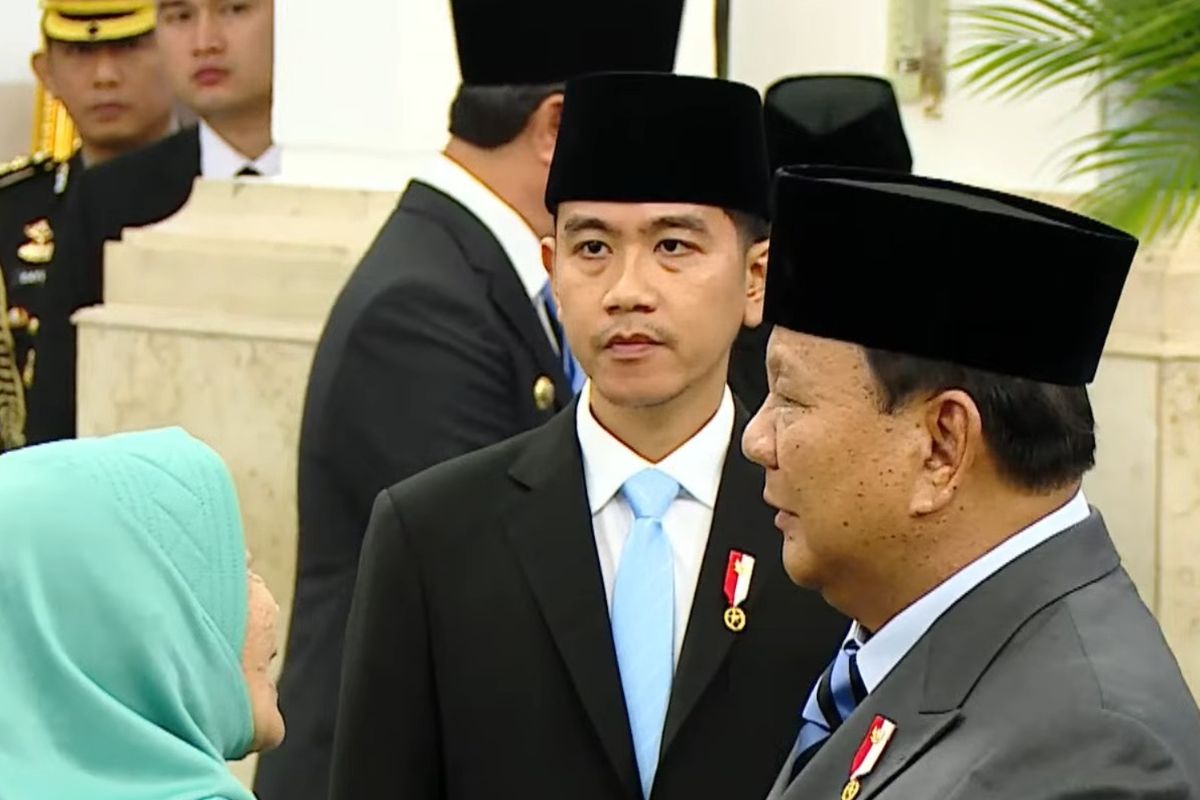
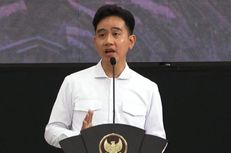
MEETING between President Prabowo Subianto and Vice President Gibran Rakabuming Raka is essentially a routine gathering within the framework of institutional relations between the executive positions.
However, the meeting quickly drew public attention as the discussion touched upon the fate and continuity of the Vice President's position.
In essence, Gibran is incorrect in addressing the President regarding his stance to resign from the Vice President's seat.
Constitutionally, the President has no function or authority to address political or legal controversies related to the validity of degrees or formal requirements for presidential or vice-presidential candidates.
If Gibran were to approach the DPR (People's Consultative Assembly) and inquire whether he should resign or not, that course of action would be constitutionally justified. All matters in this regard are to be deliberated in the DPR.
The issues related to the eligibility criteria, which have entered the legal dispute realm and legislative body, do not fall under the policy domain of the President as the head of the executive.
The President indeed leads the government, but does not serve as an arbiter regarding the validity of formal requirements established by the judiciary.
Politically, the President could potentially offer a personal opinion. However, this degree issue has shifted entirely from the executive sphere to the legislative and judicial spheres.
These two branches are not constitutionally under the coordination or subordination of the President.
The DPR has an oversight function (Article 20A of the 1945 Constitution), while the Constitutional Court and the Supreme Court are authorized to adjudicate constitutional and administrative matters concerning the validity of eligibility criteria.
Both institutions actually function to oversee and assess the actions of the President as head of the executive, not the other way around.
Presidential intervention in the processes of these two institutions could potentially violate the principle of judicial independence guaranteed by Article 24 of the 1945 Constitution.
The principle of separation of powers adhered to by Indonesia demands that the executive refrain from interfering in the judicial and legislative domains, particularly when matters have already resulted in binding decisions.
Following the Constitutional Court Decision Number 01/PHPU.PRES-XXIV/2026, which found no convincing evidence that Gibran possesses a diploma equivalent to a high school graduation as referred to in Article 169 letter r and Article 227 letter l of the Electoral Law, the constitutional matter regarding his diploma is now clear.
Since the Constitutional Court cannot assess the validity of the Vice Presidential candidacy after inauguration, it has delegated this issue regarding fulfilling requirements to the competent authority as per the 1945 Constitution.