

Former Aide to Prabowo, Ahrie Sonta Dismissed, Habiburokhman: Wiretapping Scandal is the Darkest Incident
-
News
-
9 minutes ago
This article was translated by AI. Read the original article on Kompas.com. See Original
THERE is an interesting irony in the trajectory of an institution. An organization can have grand buildings, advanced technology, a large budget, thousands of personnel, and a lineup of generals adorned with stars on their shoulders.
However, this does not necessarily mean that the organization is capable of producing a leader who earns the public's trust without first needing to read an image management report.
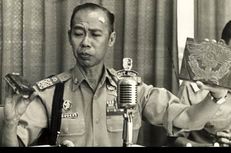
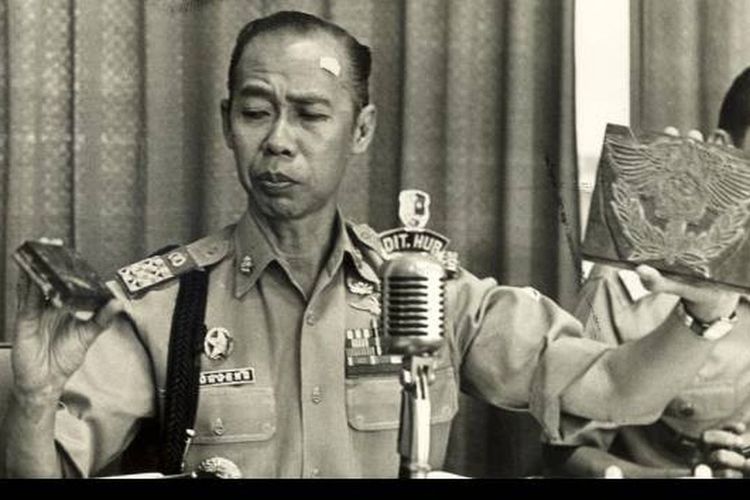
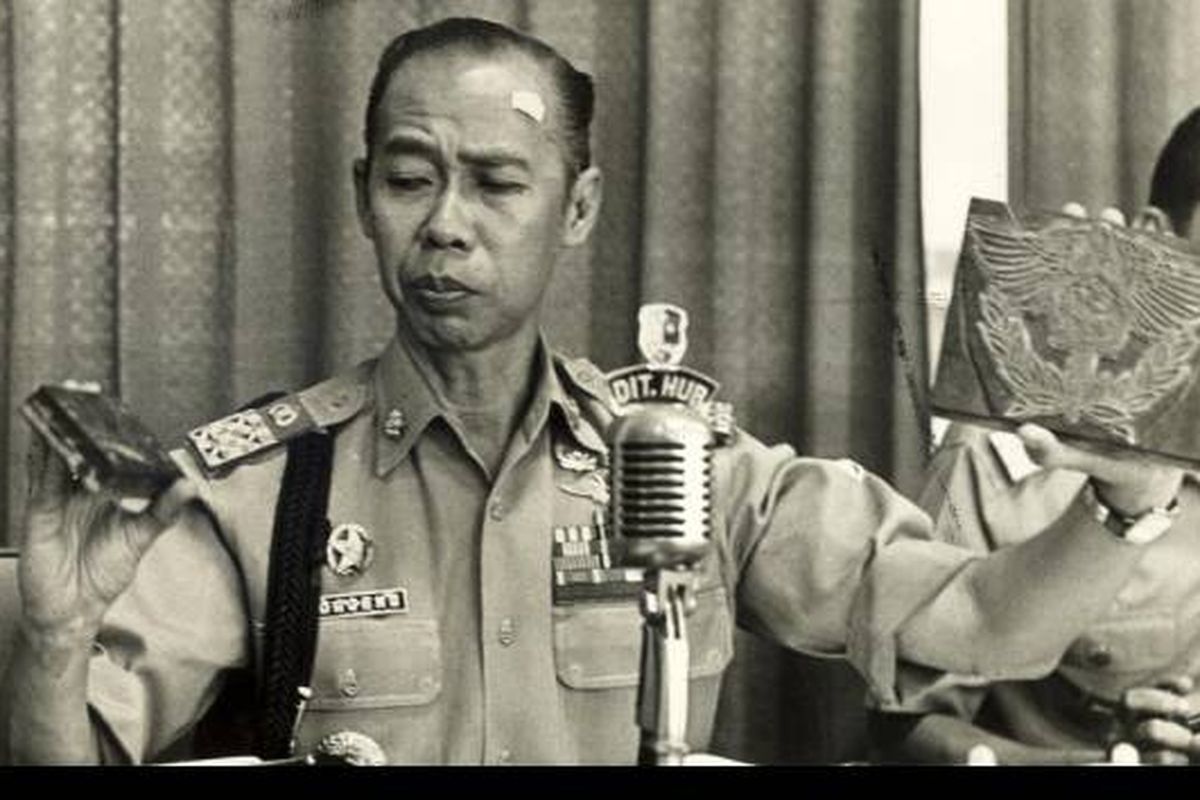
This is the intriguing paradox when discussing former National Police Chief General (Ret.) Hoegeng Iman Santoso.
The former Police Chief from 1968 to 1971 was posthumously awarded the title of National Hero on November 10, 2026. The state recognizes his contributions and exemplary conduct, particularly in bureaucratic reform, honesty, and integrity in service to the nation.
This award is not just a tribute to a police officer who long departed from his institution. More than that, this recognition acts as a mirror intentionally placed in front of the National Police today: to what extent does the police institution continue to uphold the values that once made Hoegeng so highly respected?
Hoegeng's reputation was not built on numerous press conferences, service slogans, or institutional awards. Instead, his reputation grew from the consistency between his words, decisions, and actions.
He became a symbol that power need not strip someone of simplicity, and that a position should not be a red carpet to privilege.
From the perspective of organizational behavior, Hoegeng represents what Brown, Treviño, and Harrison (2005) refer to as ethical leadership.
Ethical leadership is not merely the leader's ability to distinguish right from wrong. Furthermore, it involves a willingness to make moral values the guiding principle of decisions while communicating and enforcing ethical standards across the organization.
A leader with integrity must be more than just squeaky clean personally; they must also have the courage to create a system that leaves no room for deviant behavior.
This is where Hoegeng's exemplary conduct gains organizational meaning. A leader's honesty should not become just an inspiring tale in police education.
It should transform into a standard of behavior that lives within recruitment processes, job promotions, disciplinary enforcement, and internal oversight mechanisms.
The issue is that organizations often find it easier to produce compliance than integrity. Members may comply with superiors out of fear of transfers, losing their positions, or missing out on promotions.
However, compliance born from fear is fundamentally different from compliance that grows from moral awareness.
In such organizations, a member may have the courage to report societal errors but may not be brave enough to correct their superior's mistakes.
Edgar H. Schein, through his theory of organizational culture, explains that the behavior of organizational members is profoundly influenced by the underlying assumptions, values, and norms that develop within it.
This means that an organization’s character is determined not only by its leadership but also by the habits that are continually reproduced and passed down.
If an organization rewards those who are both high achievers and maintain integrity, the value of honesty will flourish.
Conversely, if loyalty to superiors is valued more than the courage to speak truth, the organization is building a culture of silence.
In the context of the National Police, the issue is not merely finding a new Hoegeng. The more fundamental question is whether the organizational environment allows for a Hoegeng to grow, endure, and have the opportunity to lead.
Imagine an officer who refuses intervention, does not accept gratification, and courageously exposes misconduct in their work environment.
Will they be rewarded for their integrity? Or will they instead be labeled uncooperative, difficult to work with, or even viewed as a threat to organizational cohesion?
Such questions matter because integrity will not thrive in an environment that punishes honest individuals and protects those skillful in maintaining group interests.
Amy Edmondson (1999), through the concept of psychological safety, emphasizes the importance of a work environment that allows organizational members to express opinions, acknowledge mistakes, and question erroneous practices without fear of reprisal.
The National Police needs a culture like that—not one that tolerates defiance against the law, but rather a professional environment where subordinates can correct superiors when a superior's decision contradicts the law and ethics.
Organizational cohesion should not be misconstrued as an obligation to always justify fellow members.
Is it still possible for the National Police to produce a leader of Hoegeng's caliber? The answer: absolutely.
However, do not expect different results if the organizational mechanisms continue to perpetuate the same habits.
James MacGregor Burns and Bernard Bass, through their theory of transformational leadership, explain that transformational leaders can elevate followers beyond personal interests toward a higher collective goal and values.
In a police organization, transformational leadership means shifting power orientation to service, changing personal loyalty to institutional loyalty, and placing the supremacy of the law above group interests.
To achieve this, at least four prerequisites must be in place.
First, meritocracy must be the foundation for promotions. Advancements and strategic positions must be determined by competence, track record, achievements, and integrity, not closeness, patronage, or the ability to please superiors.
Second, oversight must be independent and carry real consequences. There should be no double standards between low-ranking members and high-ranking officials. A sharp law downwards but blunt upwards will only prolong the legitimacy crisis.
Third, the institution must protect whistleblowers and provide space for internal criticism.
A healthy organization is not one that never has problems, but one that dares to identify and fix its issues.
Fourth, exemplarity must start from the pinnacle of leadership. A leader who demands simplicity from below while enjoying excessive privilege above is teaching organizational hypocrisy.
These four prerequisites should ideally be implemented consistently and not just remain as topics in bureaucratic reform seminars.
Robert K. Greenleaf, through the concept of servant leadership, reminds us that the essence of leadership is to serve, not to be served.
A leader gains legitimacy not solely from the formal power they possess, but from their willingness to place others' interests above their personal interests.
Hoegeng is an important representation of that spirit. He reminds us that a police uniform is not a symbol of power to instill fear, but a mandate to protect the community.
Of course, the National Police today face challenges far more complex than those during Hoegeng's tenure.
Cybercrime, transnational drug trafficking, financial crime, terrorism, and geopolitical dynamics require a modern, professional, and adaptive police force.
Therefore, giving birth to a new Hoegeng does not mean replicating all past methods. What must be inherited are his moral principles, while his professional capacity must respond to the challenges of the times.
The awarding of the National Hero title to Hoegeng should become a moment of reflection, not just a ceremony to boast about the corps.
For an institution does not become great merely because it has many generals, but because the public trusts the people wearing its uniform.
The National Police need not wait decades to find the next Hoegeng. He might already be serving in remote areas, working as an investigator at a precinct, or a young officer quietly refusing to compromise on dishonesty.
The question is, will the institution allow such people the space to grow into leaders?
When an honest police officer is no longer regarded as an anomaly, when refusing a bribe is no longer considered a heroic act, and when resisting deviations does not jeopardize someone's career, only then will Hoegeng's spirit truly live on.
For the best legacy of a hero is not a statue, a title, or a name immortalized on a street. His greatest legacy is when the values he fought for become the habits of future generations.