

Testing the Vice President's Capacity Amid Global Geopolitics: Amran or Sugiono?
-
News
-
16 minutes ago
This article was translated by AI. Read the original article on Kompas.com. See Original
One of Hatta's exemplary qualities is his ability to separate personal interests from public needs.
He did not use his position as an instrument of self-enrichment but rather as a mandate to advocate for the welfare of the community.
His simplicity was not just a matter of appearance or lifestyle but a manifestation of ethical governance.
The story of Hatta, who had to postpone his desire to purchase Bally shoes due to financial constraints, serves as a metaphor that one can hold a high position without treating power as a source of luxury.
More importantly, Hatta had the intellectual courage to differ in opinion from Soekarno.
These differences were not always easy but illustrated that leadership partnerships are not synonymous with uniformity of thought.
Hatta understood that a nation is built not by a single mind but by institutions, arguments, and exchanges of ideas.
For Indonesia to command respect in the world, such character is essential. International diplomacy cannot rely solely on the courage to speak loudly or close ties with leaders of powerful nations.
Diplomacy requires knowledge of history, international economics, law, culture, an ability to assess the national interests of other countries, and skills to build trust.
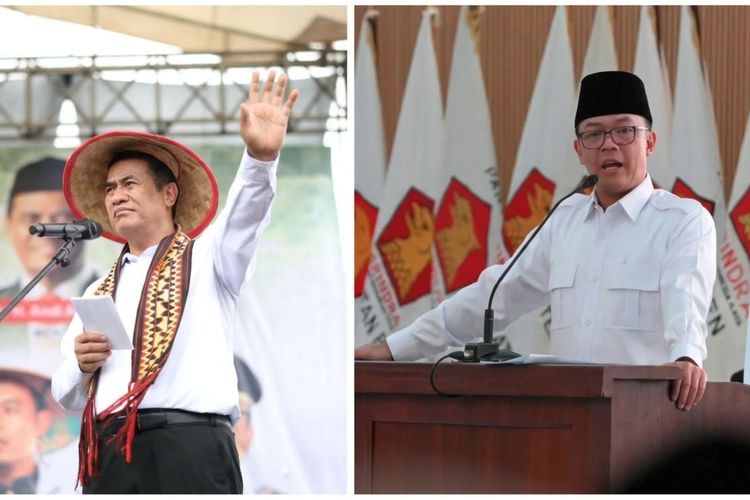
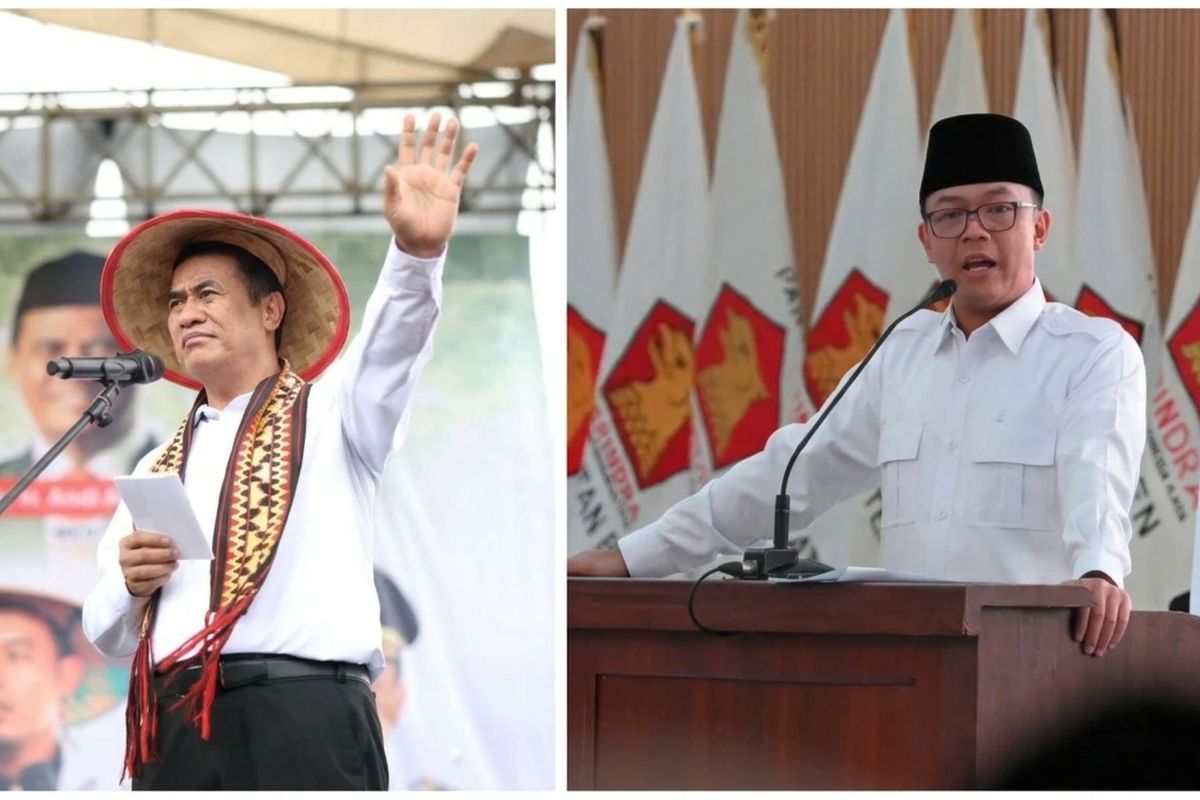
Amran represents a results-oriented leadership character.
His experience as a businessman and manager in the agricultural sector provides the capital to understand issues related to production, efficiency, investment, supply chains, and food security.
In the theory of transformational leadership developed by Bernard Bass, a transformational leader must be able to build a vision, drive change, encourage innovation, and achieve performance that surpasses organizational routines.
In this context, Amran has the capital to reinforce the agenda for national economic independence.
Food security, for instance, is not merely about rice and fertilizers; it involves social stability, inflation, poverty, import dependency, and Indonesia's bargaining position in international trade.
However, being vice president requires a broader spectrum of capabilities than managing technical ministries.
Success in executing agricultural programs does not automatically validate diplomatic skills, inter-agency relationships, fiscal policy, and geopolitics.
The challenge is to expand the orientation from sectoral leadership to national strategic leadership. Amran needs to demonstrate cross-sectoral thinking, listen to criticism, build consensus, and manage conflicting interests.
Herein lies the value of Hatta: economic success must be built on knowledge, ethics, and a commitment to the people's interests, not just production figures.
Sugiono offers a different leadership character. His military experience, political organizations, parliamentary work, and diplomacy give him the capital to understand organizational discipline, strategy, coordination, and international relations.
From a perspective of strategic leadership, a leader is not only required to solve today’s issues but must also anticipate environmental changes and prepare the organization for future challenges.