

Testing the Vice President's Capacity Amid Global Geopolitics: Amran or Sugiono?
-
News
-
13 minutes ago
This article was translated by AI. Read the original article on Kompas.com. See Original
THE CHANGE of the vice president is not merely about filling a vacant seat in the power structure. It should serve as a moment to reevaluate the true meaning of the second-in-command's role in the republic.
Is the vice president merely needed as a companion to the president, a guardian of political stability, and a task executor when the head of state is incapacitated?
Or should they be a statesman with intellectual capacity, moral courage, diplomatic skills, and deep thinking to help determine the nation's direction?
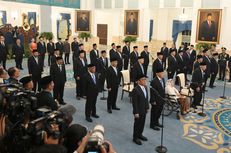
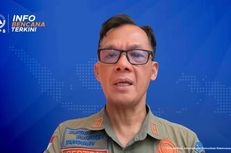
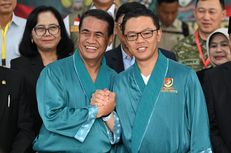
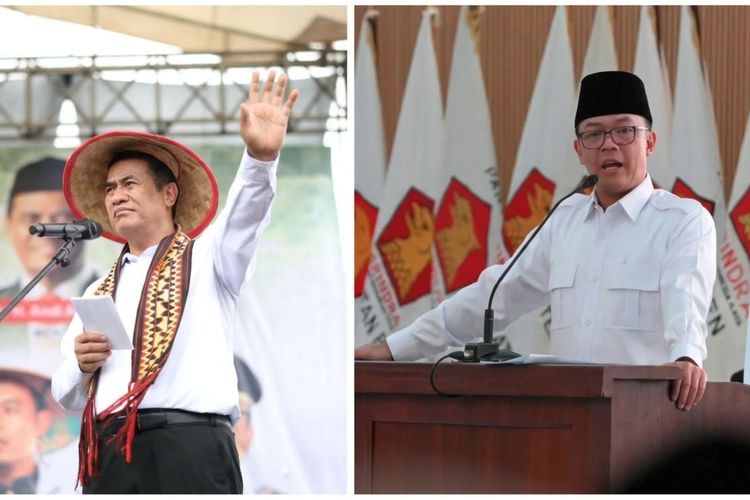
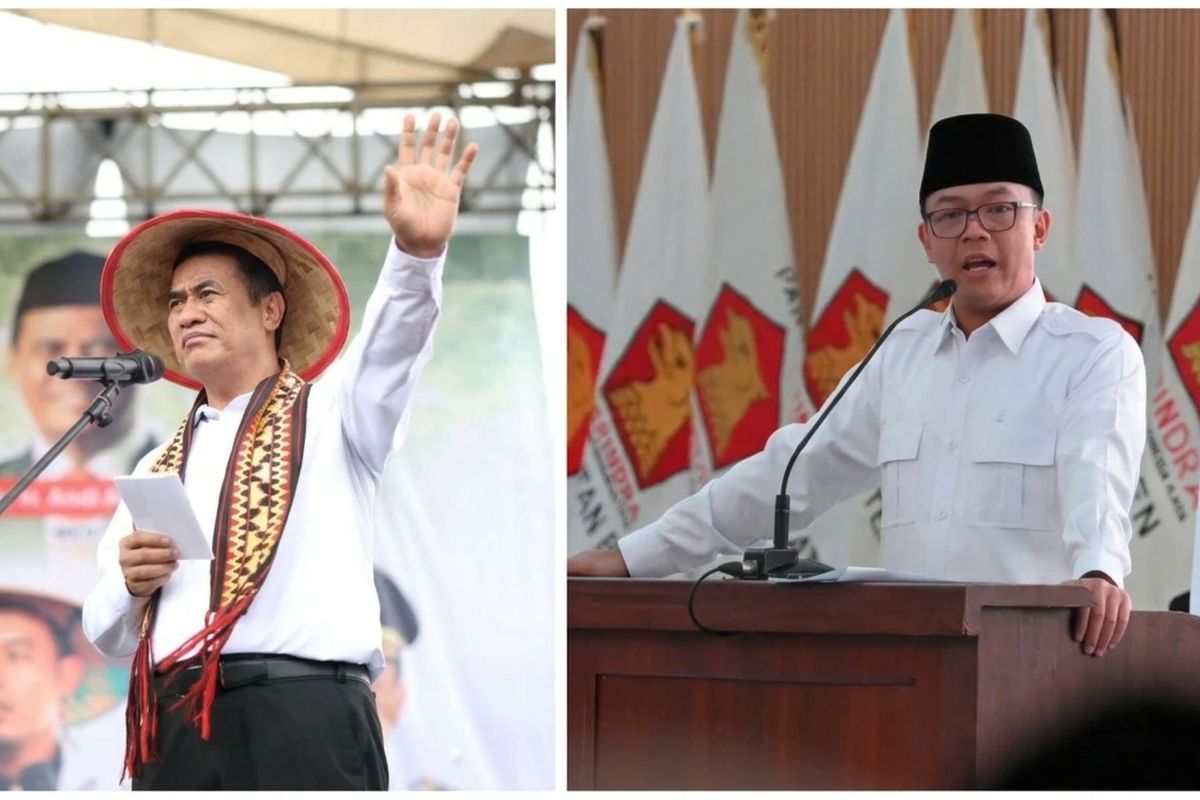
The resignation of Gibran Rakabuming Raka and the emergence of two names proposed by President Prabowo Subianto to the MPR, namely Andi Amran Sulaiman and Sugiono, have opened a more substantive discussion on the quality of national leadership.
These two names were officially communicated on November 23, 2026, with the MPR scheduling a plenary session for the vice presidential election on December 11, 2026.
However, the most important issue is not who is closest to the president, most loyal to the power, or enjoys the strongest political support.
This raises a critical question: who possesses the capacity to be a statesman when the nation's interests clash with the interests of power?
In this context, the figure of Mohammad Hatta becomes relevant to revisit. Not to find another Bung Hatta, as history never produces individuals in an identical mold, but to find the values of leadership that a vice president should embody.
Constitutionally, Article 4 paragraph (2) of the 1945 Constitution states that in performing their duties, the president is assisted by a vice president.
This wording is often interpreted administratively as if the vice president is merely a helper to the president.
In fact, Article 8 paragraph (1) imposes a much greater consequence: if the president passes away, resigns, is dismissed, or cannot perform their duties, the vice president replaces them until the end of the term.
This means that the vice president is not just a spare tire stored away in the power trunk, only to be pulled out when the vehicle breaks down.
They must possess leadership capacity that allows the state to continue operating during political, economic, security crises, or even international geopolitical conflicts.
From a perspective of leadership and organizational behavior, the vice presidential role requires what is referred to as leadership complementarity, the ability to complement the president's leadership with competencies, perspectives, and character that may not be fully possessed by the primary leader.
The president does not need a follower who simply nods their head. They need a strategic partner who can provide different insights, challenge decisions, issue warnings when policies have the potential to be wrong, while also maintaining government solidity.
This is where leadership is put to the test. Loyalty to the president must not outshine loyalty to the constitution and the people's interests.
Discussing the vice president of Indonesia is almost impossible without recalling Mohammad Hatta. Bung Hatta was not only the first vice president but also a representation of an intellectual understanding that political freedom must be followed by economic independence, social intelligence, and national self-reliance.
Hatta had a combination of qualities that are relatively rare in political leadership: academic depth, personal integrity, simplicity of life, steadfast principles, and the ability to read international relations.
His education at the Nederlandsch Handelshogeschool in Rotterdam shaped his understanding of economics, trade, and governance.
His extensive experience in the independence movement in Europe also provided him with a strong international perspective.
One of Hatta's exemplary qualities is his ability to separate personal interests from public needs.
He did not use his position as an instrument of self-enrichment but rather as a mandate to advocate for the welfare of the community.
His simplicity was not just a matter of appearance or lifestyle but a manifestation of ethical governance.
The story of Hatta, who had to postpone his desire to purchase Bally shoes due to financial constraints, serves as a metaphor that one can hold a high position without treating power as a source of luxury.
More importantly, Hatta had the intellectual courage to differ in opinion from Soekarno.
These differences were not always easy but illustrated that leadership partnerships are not synonymous with uniformity of thought.
Hatta understood that a nation is built not by a single mind but by institutions, arguments, and exchanges of ideas.
For Indonesia to command respect in the world, such character is essential. International diplomacy cannot rely solely on the courage to speak loudly or close ties with leaders of powerful nations.
Diplomacy requires knowledge of history, international economics, law, culture, an ability to assess the national interests of other countries, and skills to build trust.
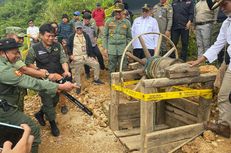
Amran represents a results-oriented leadership character.
His experience as a businessman and manager in the agricultural sector provides the capital to understand issues related to production, efficiency, investment, supply chains, and food security.
In the theory of transformational leadership developed by Bernard Bass, a transformational leader must be able to build a vision, drive change, encourage innovation, and achieve performance that surpasses organizational routines.
In this context, Amran has the capital to reinforce the agenda for national economic independence.
Food security, for instance, is not merely about rice and fertilizers; it involves social stability, inflation, poverty, import dependency, and Indonesia's bargaining position in international trade.
However, being vice president requires a broader spectrum of capabilities than managing technical ministries.
Success in executing agricultural programs does not automatically validate diplomatic skills, inter-agency relationships, fiscal policy, and geopolitics.
The challenge is to expand the orientation from sectoral leadership to national strategic leadership. Amran needs to demonstrate cross-sectoral thinking, listen to criticism, build consensus, and manage conflicting interests.
Herein lies the value of Hatta: economic success must be built on knowledge, ethics, and a commitment to the people's interests, not just production figures.
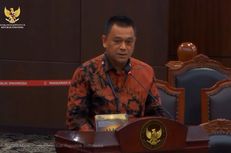
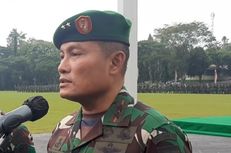
Sugiono offers a different leadership character. His military experience, political organizations, parliamentary work, and diplomacy give him the capital to understand organizational discipline, strategy, coordination, and international relations.
From a perspective of strategic leadership, a leader is not only required to solve today’s issues but must also anticipate environmental changes and prepare the organization for future challenges.
His experience as Foreign Minister is a significant asset. Indonesia needs a vice president capable of reading the shifting balance of world power, especially the rivalry between the United States and China, tensions in the Middle East, changes in trade architecture, and the competition for strategic resources.
However, formal diplomatic experience must be further tested. Being a diplomat is not just about attending bilateral meetings, delivering speeches, or building closeness with leaders of other countries.
Diplomacy is the ability to advocate for national interests without losing independence.
This is where the relevance of an active foreign policy comes into play. Indonesia must not be a mere spectator that follows the rhythm of great powers, let alone become a passenger in the geopolitical vehicle of another country.
Sugiono has the opportunity to develop these diplomatic skills into statesmanship.
However, personal and ideological closeness to the president must be balanced with independent thinking.
A vice president must not lose the courage to express differing views simply because those differences might create political discomfort.
Hatta taught us that being the president's companion does not mean losing intellectual identity.
Amran and Sugiono must be tested through a combination of both: competence, integrity, independent thinking, diplomatic skills, and a commitment to the people.
We are not looking for a vice president who is merely capable of replacing the president when they are unavailable.
We are seeking a statesman who can assist the president when the nation faces historic crossroads.
There is an important lesson from Bung Hatta: a vice president does not always need to be in the limelight to demonstrate their leadership qualities.
Sometimes, the bravest thing to say is something the main leader does not want to hear; this is the highest form of service.
Because the nation needs more than just a second-in-command. The nation needs thinkers, moral guardians, power balances, and architects of the future.
We cannot afford to have a vice president who is merely adept at holding the seat without being capable of guiding the nation’s journey.
Bung Hatta left a legacy about how power should be exercised with intelligence and simplicity.
The question now is, can Amran or Sugiono continue that spirit?
History does not demand that either become another Bung Hatta. History merely requires them to understand that the vice presidential position is a mandate of statehood, not a political gift.