

Testing the Vice President's Capacity Amid Global Geopolitics: Amran or Sugiono?
-
News
-
16 minutes ago
Writer
This article was translated by AI. Read the original article on Kompas.com. See Original
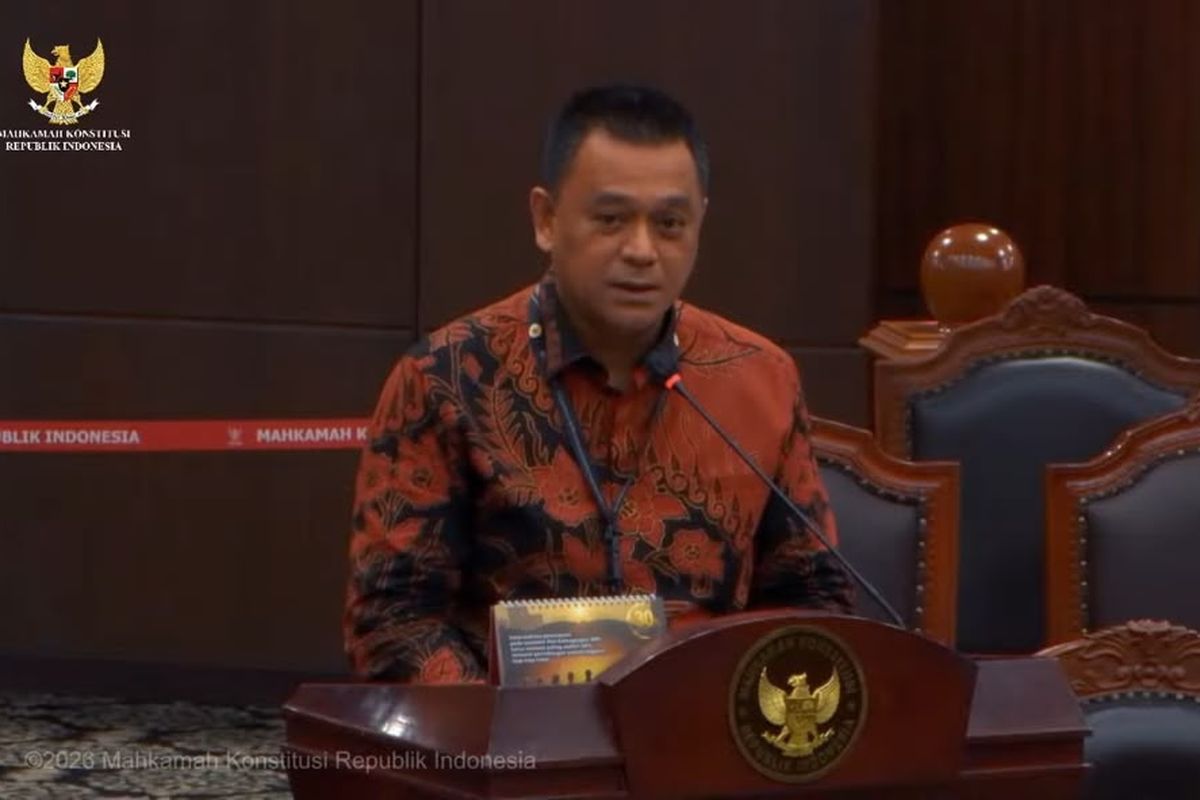
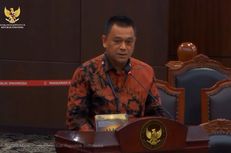
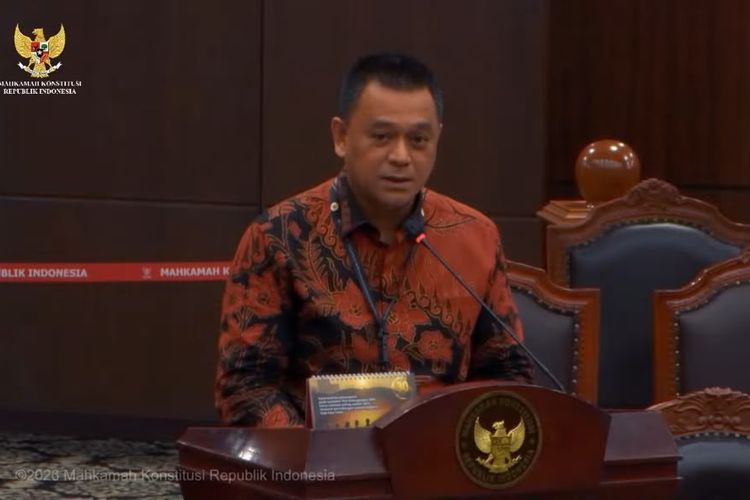
JAKARTA, KOMPAS.com - The Expert Staff of the Minister of Law and Human Rights on Economic and Social Affairs, Romi Yudianto, explained that the financing of the members of the Presidential Advisory Council (Wantimpres) is subject to the mechanisms of state financial management.
This is already regulated under Article 23, paragraph (1) of the Constitution, which governs principles of transparent and accountable state financial management.
"The implementation is conducted openly, responsibly, and is monitored through budget oversight mechanisms by the House of Representatives (DPR) and audits by the Supreme Audit Agency (BPK)," said Romi, representing the government during the court session for Case Number 389/PUU-XXIV/2026, at the Constitutional Court (MK) in Jakarta on Thursday (26/11/2026), as quoted from MKRI's YouTube broadcast.
He explained that the President's authority in determining the number of Wantimpres members operates alongside the authority of the Minister of Finance (Menkeu).
This arrangement aims to maintain the effectiveness and efficiency of state financial management. The determination of the number of Wantimpres members is also based on the President's needs and the effectiveness of government administration.
Meanwhile, from a budgeting perspective, any additional budgetary needs go through assessments of real requirements, performance outputs, programs and activities, as well as the state’s fiscal capacity.
"Thus, the President's flexibility in determining the number of members (of Wantimpres) does not imply that all budgetary needs are automatically approved without a control process," Romi clarified.
Regarding the Petitioner's claim about budget inefficiency or wastefulness due to the number of Wantimpres members, he explained that this should not be measured solely by the increase in budget load or based on individual assumptions.
Rather, it must also consider the outputs or results derived from the increased budgetary needs in accordance with applicable laws and regulations.
"The government believes that Article 7 paragraph (1) of Law 24 of 2024 concerning Amendments to Law Number 19 of 2006 on the Presidential Advisory Council does not create legal uncertainty as argued by the Petitioner. Therefore, it is appropriate for the Court to reject the Petitioner's request for a judicial review of the Article in its entirety, or at least declare the Petitioner's request inadmissible," Romi stated.
Previously, constitutional activist Muhamad Riziq Maulana challenged the lack of limitations on the number of Wantimpres members within the Presidential Advisory Council Law at the Constitutional Court.
He argued that the absence of limitations on the number of Wantimpres members could burden the state budget (APBN).
"The absence of a cap on the number of Wantimpres members directly results in an unmeasured burden on the APBN," Riziq noted during the preliminary examination of Case Number 389/PUU-XXIV/2026, on Monday (27/10/2026).
Riziq himself is challenging Article 7 paragraph (1) of the Presidential Advisory Council Law, which states, "The Presidential Advisory Council of the Republic of Indonesia comprises a Chair who also serves as a member and several other members whose number is determined by the President's needs while considering the effectiveness of government administration".
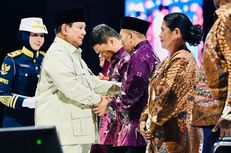
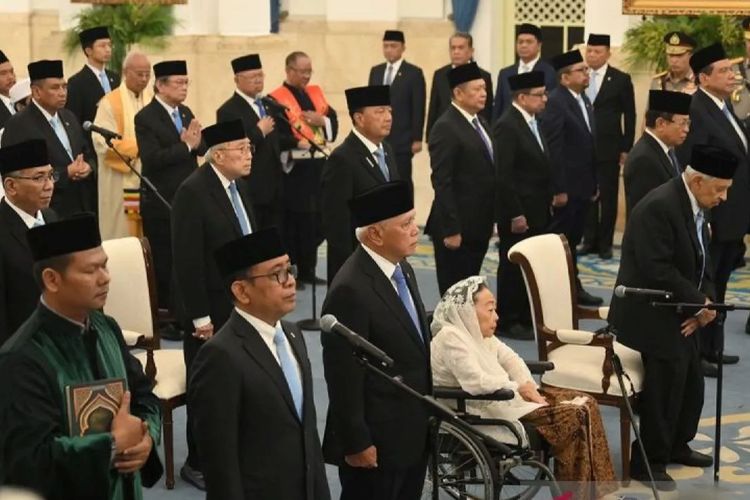 The new officials, including Chairman of the Presidential Advisory Council Pratikno (second from left), Vice Chairman Hatta Rajasa (third from left), and other members, taking part in the inauguration led by President Prabowo Subianto at the State Palace, Jakarta, Friday (2/10/2026).
He explained that the salaries, facilities, and other benefits obtained by the Wantimpres members are borne by the state budget.
"The more members there are in the Wantimpres, the greater the burden on the APBN. Therefore, considerations regarding the number of Wantimpres members in relation to the state budget are necessary," Riziq asserted.
In addition, he argued that the detriment centers on violations of the principles of power limitation and efficiency in state budget management, which are inherent in the practice of filling Wantimpres positions without limits.
"The Petitioners, who actively study, advocate, and campaign for constitutionalism, view the absence of a cap on the appointment of Wantimpres members as justifying unlimited power. This substantively undermines and negates the advocacy efforts for constitutional governance that the Petitioners have collectively fought for," Riziq concluded.