
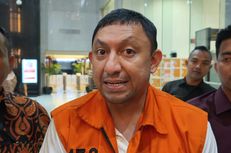
Fahd Arafiq Challenges Suspect Status from KPK in South Jakarta District Court
-
News
-
6 minutes ago
This article was translated by AI. Read the original article on Kompas.com. See Original
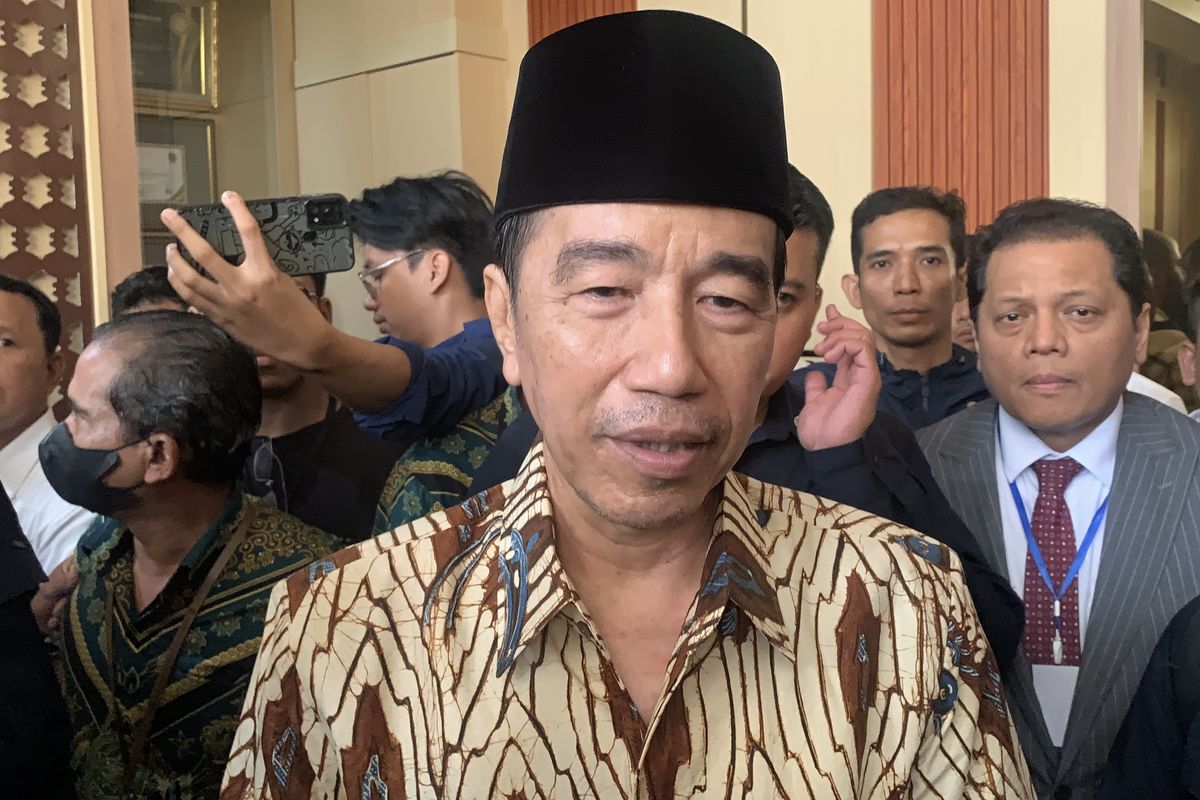
So far, the vice presidency has been a crucial instrument linking Jokowi's family influence with Prabowo's government.
With Gibran no longer in that position, the political configuration is certainly changing.
On the other hand, Jokowi still retains a network of volunteers and a close connection with the Indonesian Solidarity Party (PSI).
However, is this network genuinely a solid political force, or is it too reliant on Jokowi as a figure?
This is a critical issue that cannot be overlooked. The success of building a network while in power does not automatically guarantee the ability to maintain influence after leaving formal office.
Moreover, dynasty politics and the personalization of power often raise questions about sustainability and political legitimacy.
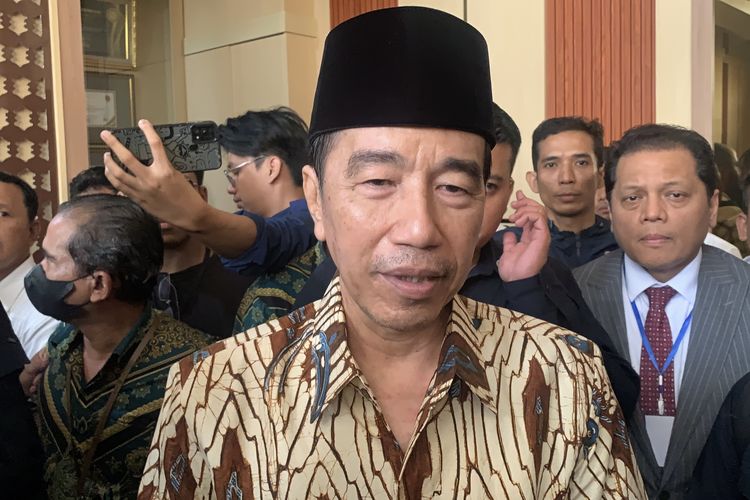
Interestingly, following Gibran's resignation, Jokowi has shown a relatively restrained attitude.
During a meeting with Willem Frans Ansanay, the Chairman of the Change Road Volunteers (BaraJP), on November 18, 2026, the volunteers conveyed that they continue to support Prabowo's government and do not wish to make statements contradicting the administration.
The message about preserving government stability until 2029 resurfaced during Jokowi's meeting with Mardiansyah Semar, the Chairman of Rampai Nusantara, on November 25, 2026.
At least, this is what the volunteers described after meeting with the former president.
The question arises: why is Jokowi urging his supporters to restrain themselves when his family’s political position is undergoing changes?
In the field of strategy and tactics (stratak), there is an essential principle: not every response must be given immediately.
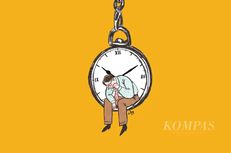
Delaying a response strategically can be a choice to avoid traps set by opponents, maintain maneuvering room, and read changing situations.
In this context, this could be termed the policy of calculated delay.
Sun Tzu, in The Art of War, particularly Chapter IV on tactical disposition, explains the importance of concealing arrangements and strategic intentions so that opponents cannot easily read the steps being prepared.
Meanwhile, Robert Greene, in The 48 Laws of Power (1998), through Law 3, Conceal Your Intentions, and Law 4, Always Say Less Than Necessary, discusses the crucial nature of controlling information and not revealing too much intent.
Of course, this thinking does not automatically prove that Jokowi is preparing a political maneuver.
However, both perspectives provide insights into understanding that a restrained stance can be part of power calculation.