Rafael Alun Files Judicial Review in Corruption and Money Laundering Case
-
News
-
Just now
This article was translated by AI. Read the original article on Kompas.com. See Original
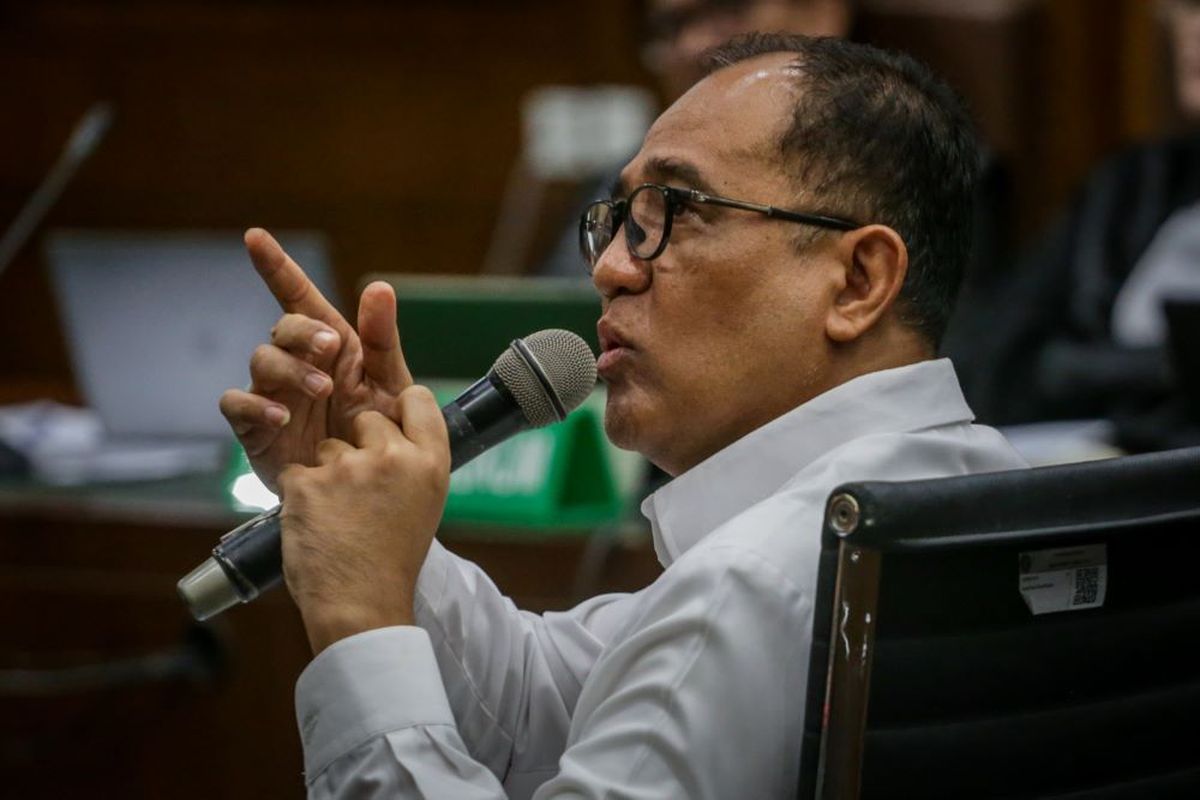
JAKARTA, KOMPAS.com - Rafael Alun Trisambodo, a former official of the Directorate General of Taxes at the Ministry of Finance, has filed a petition for judicial review (PK) regarding his case of corruption and money laundering (TPPU).
According to information from the Central Jakarta District Court's Case Tracking Information System (SIPP), the PK request was officially submitted on Wednesday (25/11/2026).
In the case data, Rafael is listed as both the petitioner and the defendant.
Meanwhile, the public prosecutor on record for this case is Yoga Pratomo.
The PK request is filed under case number 75/Pid.Sus-TPK/2023/PN Jkt.Pst.
Data from SIPP indicates that several administrative stages of the PK process, including notification of the request to the prosecutor, submission of the PK memorandum, and reception of the counter-memorandum, have not yet recorded specific dates for their execution.
Previously, the Central Jakarta Corruption Court panel sentenced Rafael Alun to 14 years in prison on January 8, 2024.
Rafael was also fined 500 million rupiah or three months of imprisonment as a substitute.
The judges stated that Rafael was proven to have accepted gratification and committed money laundering (TPPU).
In addition to imprisonment and fines, Rafael is also required to pay restitution amounting to 10,079,095,519 rupiah.
If he fails to pay the restitution, his assets may be confiscated and auctioned to cover his obligations.
If the seized assets are insufficient, Rafael could face an additional three years in prison.
The judge indicated that Rafael violated Article 12B in conjunction with Article 18 of the Law on the Eradication of Corruption Crimes in conjunction with Article 55 paragraph 1 of the Criminal Code, and Article 3 paragraphs 1a and c of Law Number 25 of 2003 on Money Laundering in conjunction with Article 55 paragraph 1 section 1 of the Criminal Code, in conjunction with Article 64 paragraph 1 of the Criminal Code, as well as Article 3 of Law Number 8 of 2010 on the Prevention and Eradication of TPPU.