
Fahd Arafiq Challenges Suspect Status from KPK in South Jakarta District Court
-
News
-
6 minutes ago
This article was translated by AI. Read the original article on Kompas.com. See Original
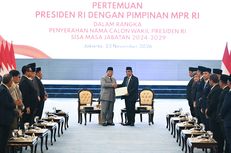
THE RESIGNATION of Gibran Rakabuming Raka from his position as Vice President on November 12, 2026, stands out as one of the most intriguing political events of the year.
This decision came amidst a polemic concerning education requirements and growing political pressures that led to proposals for using the right to express opinions in the People’s Consultative Assembly (DPR).
President Prabowo Subianto indicated that he accepted Gibran's decision.
Meanwhile, the resignation letter submitted by Gibran to the President and the MPR did not specify any particular reasons other than prioritizing the interests of the nation and the smooth operation of the government.
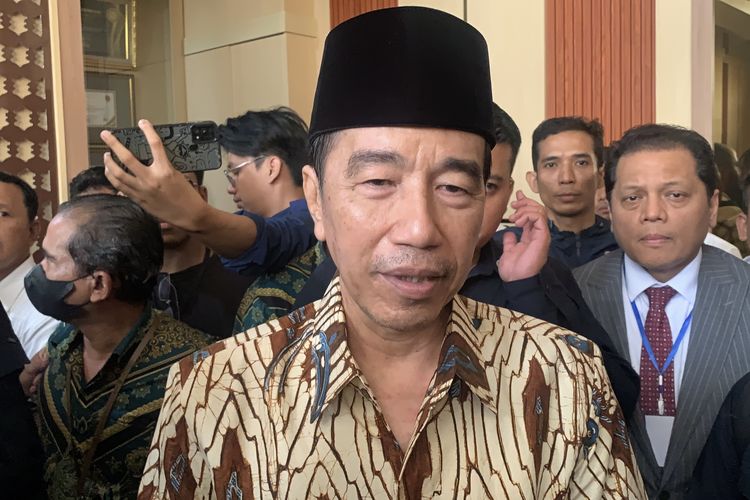
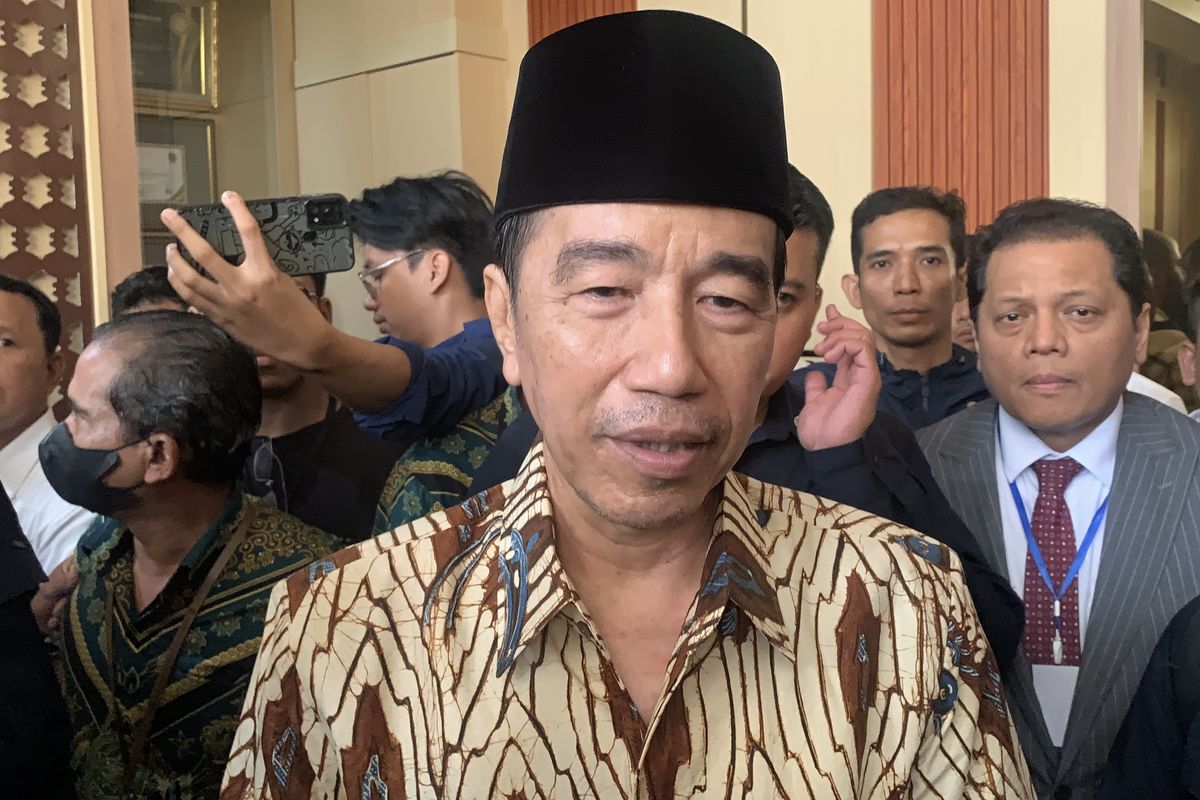
However, there is an interesting aspect to observe: how will Joko Widodo, Gibran's father and former president, who has been seen as having significant influence in the national political landscape, respond?
Jokowi did not engage in open confrontation with Prabowo.
In fact, during several meetings with volunteers in Solo, his messages emphasized the importance of maintaining government stability and supporting Prabowo until 2029.
Does this stance indicate that Jokowi has accepted the shift in power dynamics? Or is there a broader political calculation behind his silence?
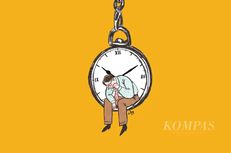
In interpersonal psychology, silent treatment refers to the behavior of ignoring or withholding communication during conflict or tension.
In this context, the term is used as a political metaphor to interpret an actor's choice to withhold responses and avoid open confrontation.
In politics, silence does not necessarily equate to a lack of stance. It could well imply strategic calculations behind the decision not to react.
Jokowi is not a president who emerged from a political elite family or was raised through large political party structures.
However, during his two terms in office, he successfully built a power network that could rival the influence of the party he belongs to, PDIP.
Jokowi's political journey is intriguing. He once served as a cadre labeled as a party worker, only to later establish a relatively independent political strength.
The pinnacle of this was Gibran’s candidacy for vice president in the 2024 presidential election, showcasing how political influence can be transmitted through familial ties.
Yet, this success also leaves serious questions regarding democracy.
The controversy over changes in age requirements through a Constitutional Court decision, followed by debates over Gibran's educational qualifications, illustrates that political succession through family cannot be easily separated from ethical and institutional democratic issues.
Gibran's resignation now poses a unique challenge for Jokowi's political legacy.
So far, the vice presidency has been a crucial instrument linking Jokowi's family influence with Prabowo's government.
With Gibran no longer in that position, the political configuration is certainly changing.
On the other hand, Jokowi still retains a network of volunteers and a close connection with the Indonesian Solidarity Party (PSI).
However, is this network genuinely a solid political force, or is it too reliant on Jokowi as a figure?
This is a critical issue that cannot be overlooked. The success of building a network while in power does not automatically guarantee the ability to maintain influence after leaving formal office.
Moreover, dynasty politics and the personalization of power often raise questions about sustainability and political legitimacy.
Interestingly, following Gibran's resignation, Jokowi has shown a relatively restrained attitude.
During a meeting with Willem Frans Ansanay, the Chairman of the Change Road Volunteers (BaraJP), on November 18, 2026, the volunteers conveyed that they continue to support Prabowo's government and do not wish to make statements contradicting the administration.
The message about preserving government stability until 2029 resurfaced during Jokowi's meeting with Mardiansyah Semar, the Chairman of Rampai Nusantara, on November 25, 2026.
At least, this is what the volunteers described after meeting with the former president.
The question arises: why is Jokowi urging his supporters to restrain themselves when his family’s political position is undergoing changes?
In the field of strategy and tactics (stratak), there is an essential principle: not every response must be given immediately.
Delaying a response strategically can be a choice to avoid traps set by opponents, maintain maneuvering room, and read changing situations.
In this context, this could be termed the policy of calculated delay.
Sun Tzu, in The Art of War, particularly Chapter IV on tactical disposition, explains the importance of concealing arrangements and strategic intentions so that opponents cannot easily read the steps being prepared.
Meanwhile, Robert Greene, in The 48 Laws of Power (1998), through Law 3, Conceal Your Intentions, and Law 4, Always Say Less Than Necessary, discusses the crucial nature of controlling information and not revealing too much intent.
Of course, this thinking does not automatically prove that Jokowi is preparing a political maneuver.
However, both perspectives provide insights into understanding that a restrained stance can be part of power calculation.
On the other hand, we must also consider a different possibility.
Perhaps Jokowi is genuinely opting to avoid conflict because he realizes that his position is no longer the same as when he was president.
Thus, silence may represent a strategy but could also be an adaptation to limitations of power.
When examining the relationship between Prabowo and Jokowi, we must not fall into the assumption that Prabowo’s entire victory in the 2024 presidential election was solely a result of the Jokowi Effect.
Prabowo has a long political journey, with Gerindra Party, support networks, and his own political power base.
Nonetheless, it cannot be denied that Jokowi’s support and Gibran’s candidacy contributed to the configuration of their victory in 2024.
The two have overlapping interests, although it does not mean their political calculations are always aligned.
Now, Prabowo holds formal power as president, while Jokowi is outside the government.
This distinction is important because formal authority and political influence are not always identical.
Prabowo certainly has the right to consolidate the government and determine who he believes can carry out his political agenda.
However, power consolidation should also be measured by how it strengthens institutions, not just by rearranging the elite surrounding the government.
In contrast, Jokowi must prove that his political influence does not solely rely on personal popularity, familial connections, or the volunteer networks established during his time in power.
Ultimately, Gibran's resignation is not merely about the end of a vice presidency.
This event also serves as a test for the sustainability of Jokowi's political legacy and the dynamics of power relations with Prabowo's government.
As we approach 2029, it is too early to conclude that Jokowi is preparing a counteroffensive.
Yet, it is also premature to assume that all his political influence has waned.
In politics, power is not only held in positions but also through networks, communication, and the ability to read the moment.
Silence does not always mean surrender. Yet silence does not guarantee that one still possesses the same strength as before.