

Rafael Alun Files Judicial Review in Corruption and Money Laundering Case
-
News
-
Just now
This article was translated by AI. Read the original article on Kompas.com. See Original
In public official selection, these costs can even expand into social, economic, and political costs.
Prolonged administrative debates can divert public attention, drain institutional energy, create uncertainty, and shift focus from national development agendas.
Time that should be used to discuss job creation, poverty alleviation, enhancing competitiveness, and accelerating economic growth is instead consumed by administrative debates.
This phenomenon can also be explained through the concept of blame avoidance, which is the tendency of organizations or individuals to avoid the risk of blame by increasing control mechanisms.
The more documents are examined, the safer the examiner feels.
However, it does not necessarily mean that the public reaps corresponding benefits.
In management science, every organizational activity should provide added value (value creation). The same principle can be applied in managing the selection of public officials.
Every administrative requirement must have a clear function.
Does the requirement enhance legal certainty, ensure the validity of information, or reduce the risk of fraud?
If it does not add value, the requirement should be evaluated.
Utilizing technology, integrating data across agencies, and direct verification with the document-issuing institutions can be part of simplifying administration without compromising accountability.
Of course, simplification does not mean relaxing legal regulations. In fact, with more effective verification mechanisms, legal requirements can be enforced more convincingly.
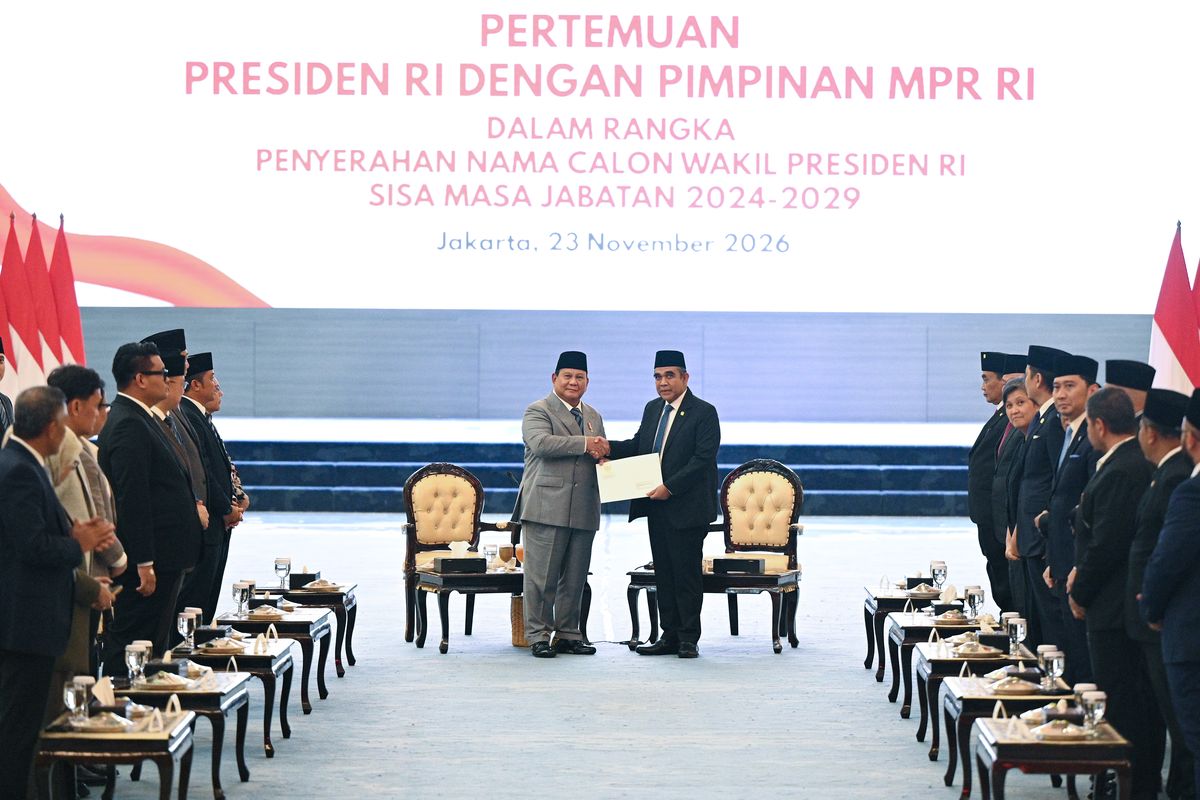
Choosing a vice president is a strategic process for selecting a leader who can assist the president in achieving national development goals.
Therefore, once the legal and administrative requirements are met, attention should shift to integrity, competence, vision, the ability to coordinate various interests, and the candidate's capacity to address national issues.
Administration remains important but needs to be positioned according to its function: as an instrument to ensure the quality of the process, not as a substitute for evaluating leadership quality.
Let us not be so meticulous in examining the files of a leadership candidate that we forget to assess their ability to lead the nation.