
BI Reports Money Changer Transactions by Don Ritto Totaling Rp 220 Billion Since 2020
-
News
-
3 minutes ago
This article was translated by AI. Read the original article on Kompas.com. See Original
The phrase wisdom reflects deep philosophical meaning. Wisdom encompasses qualities such as intelligence, clarity of understanding, and depth of moral consideration.
Meanwhile, deliberation reflects the ability to make decisions while considering the common interest, justice, and long-term impacts.
This means that Pancasila democracy is not only about the power of the majority vote but also about the quality of thought and moral responsibility underlying a decision.
In international relations, the principle of consensus deliberation is akin to the consultation and consensus mechanisms characteristic of ASEAN diplomacy.
This mechanism is part of what is known as the ASEAN Way—an approach to diplomacy that prioritizes consultation, dialogue, compromise, respect for sovereignty, and the search for a common agreement.
Article 20, Paragraph (1) of the ASEAN Charter explicitly places consultation and consensus as the foundation for ASEAN decision-making.
However, ASEAN also recognizes that consensus is not always achievable.
Article 20, Paragraph (2) grants the ASEAN Summit the authority to determine specific decision-making mechanisms if consensus cannot be reached.
As one of ASEAN's founding nations, Indonesia has a long-standing tradition of diplomacy emphasizing dialogue and searching for common ground amid the differing national interests of member states.
In diplomatic practice, reaching consensus often takes longer than voting.
Diplomats must consult, understand each party’s position, identify common interests, and formulate compromises that are acceptable.
Consensus does not always imply that every party obtains all of their wishes.
In fact, consensus often emerges from each party's willingness to accept some views of others for the sake of a greater interest.
Herein lies the intersection between international diplomacy and the philosophy of deliberation in Pancasila.
Both contain the values of willingness to listen, respect for differences, self-restraint, and ease in accepting joint decisions.
Nonetheless, the ASEAN consensus mechanism cannot be entirely equated with deliberation in the MPR.
ASEAN is an organization of sovereign states, whereas the MPR is a state institution operating under Indonesia's constitution.
The similarity lies in the philosophy of decision-making, not in the legal standing or the mechanisms involved.
In international relations theory and negotiations, the concepts of zero-sum game and positive-sum game are known.
In the zero-sum game approach, one party’s gain is viewed as another party’s loss.
Conversely, in the positive-sum game approach, parties seek to create mutual agreements that benefit everyone.
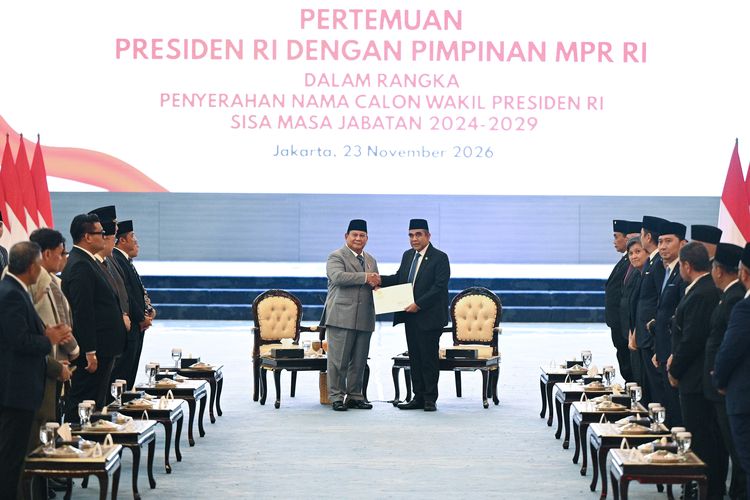
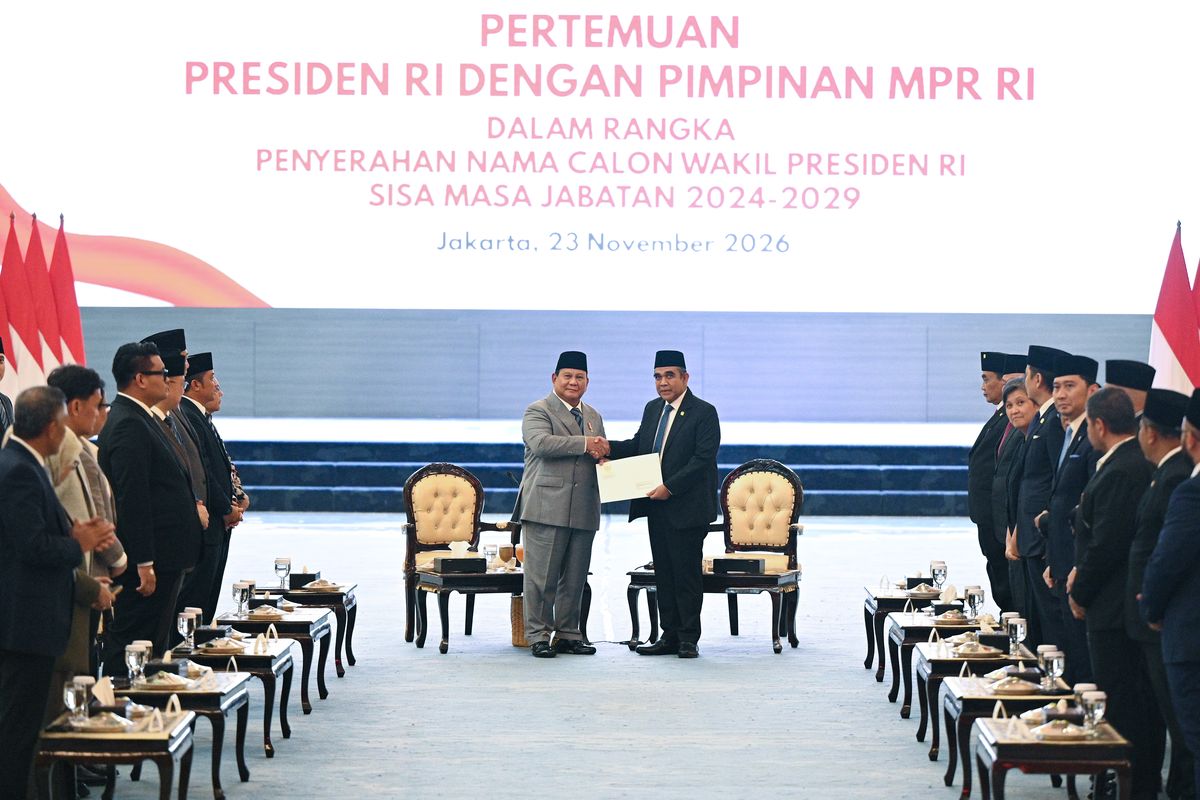
In the selection of the vice president, ultimately, only one candidate will be elected.
However, the selection process does not have to render the losing candidate as politically defeated in all respects.
Deliberation provides space to build a shared understanding of the nation's needs, governmental challenges, and the leadership quality required to navigate developments in the national and international strategic environment.