
The Tragedy of National Police Law Legislation: When Will the DPR Reform?
-
News
-
1 minute ago
This article was translated by AI. Read the original article on Kompas.com. See Original
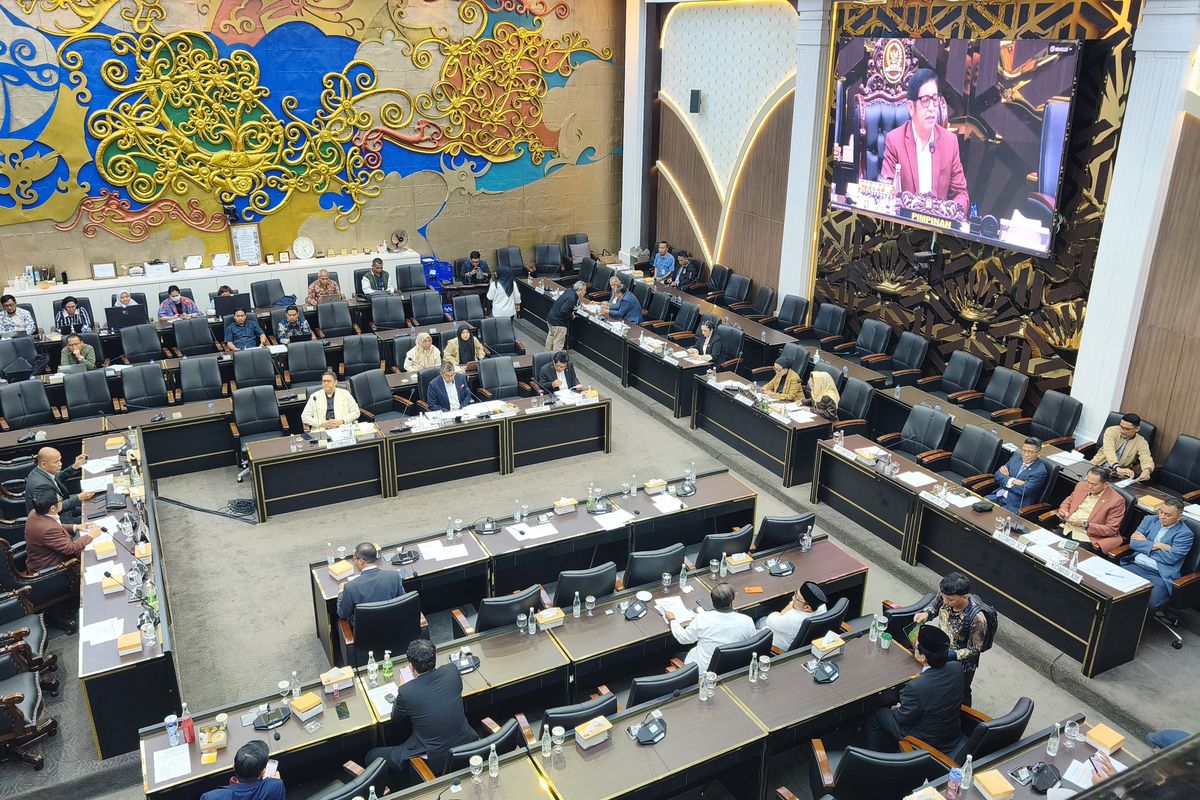
MEMBERS of the People's Representative Council, or parliament, within a parliamentary system are expected to express themselves abundantly.
Etimologically, the term parliament originates from the French word 'parler', meaning to speak—a verb.
In our country, members of the DPR are also referred to as representatives of the people. This is fundamentally true, although recently it has been conflated with the notion that DPR members are representatives of political parties.
Decades ago, Iwan Fals reminded representatives to 'speak up loudly, do not just remain silent.'
The song "Letter to the Representatives" is iconic, embodying the hopes of the people represented by members of the DPR.
Representatives sometimes do speak loudly. Most recently, the public witnessed members from various factions not only talking but also lobbying to initiate a declaration regarding the diploma scandal of Vice President Gibran Rakabuming Raka.
This 'speaking' effort successfully pressured Joko Widodo’s eldest son to resign from his position as vice president.
However, in their eagerness to speak, the members of the DPR sometimes forget to listen.
Neglecting the crucial task of 'listening' has repercussions.
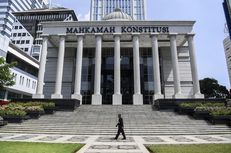
On November 23, 2026, the Constitutional Court ruled that the establishment of Law No. 5 of 2026 concerning the National Police did not meet the provisions as stipulated in the 1945 Constitution, thus it must be declared formally defective.
The Court gave a one-year deadline from the date of the ruling for corrections to be made.
Otherwise, the hasty revision of the National Police Law will be deemed unconstitutional and devoid of binding legal force.
The Court accepted part of the petition from Zulfikar Putra Utama, a researcher at the parliamentary monitoring institution, Indonesia Parliamentary Center (IPC).
He challenged Law No. 5 of 2026 on grounds that it violated the constitution and Law No. 12 of 2011 concerning Legislative Procedure.
The urgency for representatives to listen more was evident from the considerations stated by Constitutional Judge Ridwan Mansyur.
To uphold the principle of transparency, according to the Court, lawmakers must ensure public access to information related to the formation of the law a quo.
Additionally, they must "guarantee maximal and meaningful public participation as realization of Article 22A of the 1945 Constitution,” explained Ridwan (mkri.id, 23/11/2026).
Maximal or broad and meaningful participation from the public is a necessity in the legislative process within the DPR.