
Results of Verification of Sugiono and Amran to Be Presented at MPR Joint Meeting
-
News
-
5 minutes ago
This article was translated by AI. Read the original article on Kompas.com. See Original
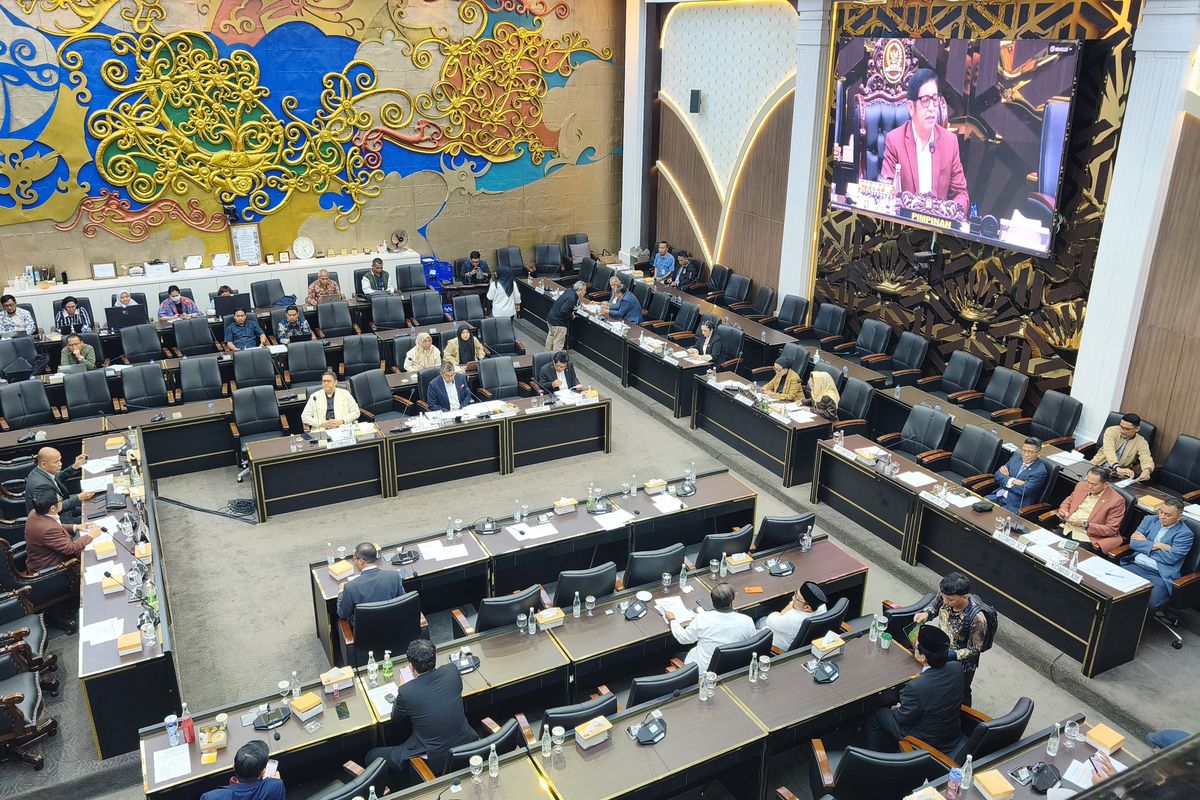
If we dissect what content and substance were added in Law No. 5 of 2026, we would engage in an intense debate.
One positive point mentioned is in Article 32A. Paragraph 1 of this article states, "In the organization and development of professional education, the National Police must create an educational curriculum that includes provisions for the protection of human rights, democracy, and the application of humanitarian principles in every police action".
The obligation to develop a curriculum that addresses human rights, democracy, and humanism signifies progress.
Moreover, Article 19 paragraph 1 was amended to read, "In carrying out their duties and authority, members of the National Police must always act based on legal norms and adhere to religious norms, propriety, ethics, and uphold human rights".
Subsequently, Article 19 paragraph 2 states, "In emergency situations that threaten personal safety, life, and/or public interest while executing their duties and authority, members of the National Police may take necessary actions proportionate to the threat and minimally cause harm to others."
In addition to this, there are also “benefits” for police members, increasing the pension age to 56 years.
Moreover, police members who are 57 years old when this law comes into effect will have their retirement age extended until they reach 59 years old.
Police members who will turn 58 this year (2026) may also have their retirement extended until they reach 59 years of age.
Article 30 paragraph 5 has also been revised to specify: enlisted personnel and non-commissioned officers’ maximum retirement age is 59 years; while first lieutenants, middle-ranking officers, and high-ranking officers have a maximum retirement age of 60 years.
Specifically for four-star generals, the maximum retirement age is 60 years but can be extended by one year based on needs determined by Presidential Decree.
All materials and substantive results from the revision of Law No. 5 of 2026 could be rendered void or annulled if the legislative body does not make corrections within one year from the date the ruling was read by the Constitutional Court. The revoked articles will be reinstated.
Legislative output from the DPR has been sluggish. In 2025, 52 draft laws entered the National Legislative Program.
The DPR claims to have completed 21 draft laws. However, according to PSHK records, by the end of the session on December 9, 2025, only 9 draft laws were enacted into law.
The year 2025 was a grim year in the history of the DPR. In late August 2025, a massive demonstration erupted over the housing allowance for DPR members reaching Rp 50 million per month.
This facility was ultimately canceled even though funds that had already been disbursed since October 2024 were not returned to the state.
Moreover, there was an incident involving a DPR member speaking crudely and lacking empathy, which incited public outrage. The DPR has continuously faced various problems.
Nevertheless, every day is a learning opportunity. The incidents that occurred at the end of August 2025 and the Constitutional Court's ruling regarding the formation of Law No. 5 of 2026 being formally defective are too important to overlook.