
Results of Verification of Sugiono and Amran to Be Presented at MPR Joint Meeting
-
News
-
5 minutes ago
This article was translated by AI. Read the original article on Kompas.com. See Original
This requires a willingness to listen and consider ideas, input, suggestions, and criticisms.
Members of the DPR and the institution itself must legowo (open-minded) to consider the diverse aspects within society.
Therefore, once again quoting Iwan Fals, "Please listen to our voices, and then convey them. Do not hesitate, do not be afraid of obstacles."
This seems to be a consistent issue; on matters as critical as listening, the DPR frequently falters.
Indonesia Corruption Watch (ICW) reported they were not invited to discuss the Asset Forfeiture Bill.
The response from the Legal Commission of the DPR reflected an administrative problem.
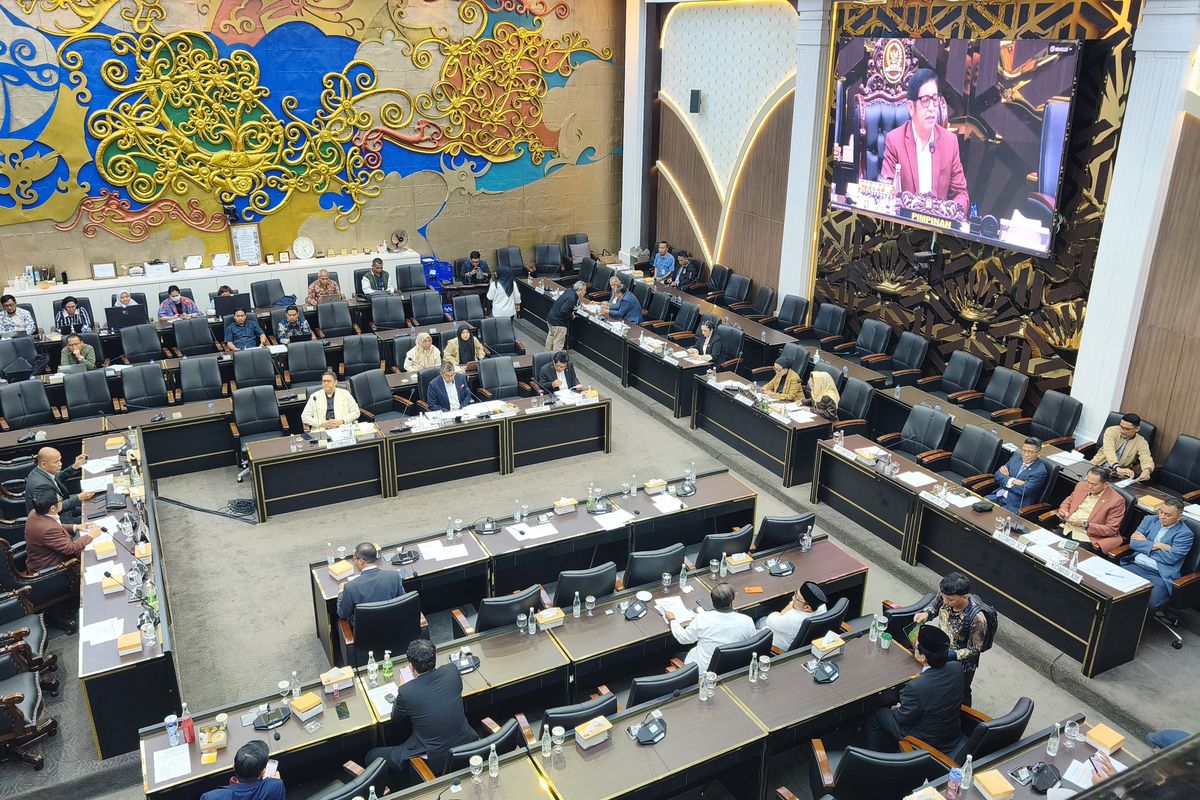
"ICW has never offered themselves as a resource person. If we invite them, it would not be fair to other members of the public who have requested to engage but haven't been invited yet. They didn't send any written input," said the Chairman of the DPR's Legal Commission, Habiburokhman (Kompas.com, 20/11/2026).
This issue of not being invited and not proposing engagement, as mentioned by ICW and DPR, is not merely an administrative matter but highlights the disconnect between political organizations (parties and the DPR) and civil society.
Both are constrained by high-status concerns.
Law No. 5 of 2026 concerning the National Police was passed on June 9, 2026. This is a revised law on the National Police, marking another amendment since Law No. 2 of 2002 was introduced.
The formation of Law No. 5 of 2026 was remarkably swift. The DPR initiated the bill on May 20, requiring just three weeks for the DPR to pass the revised National Police Law.
Looking back, this revision responded to recommendations from the Police Reform Acceleration Commission (KPRP) delivered to President Prabowo on May 6, 2026.
This means that the law was finalized within 33 days from the time the recommendations were made by the Commission led by Jimly Asshiddiqie.
The legislative process for Law No. 5 of 2026 was quicker than that of the capital city relocation law during Joko Widodo's era.
From the time President Joko Widodo sent the letter on September 19, 2021, the draft bill on the new capital was approved as law on January 18, 2022, taking approximately 3.5 months.
Due to its speed, questions about meaningful public participation in the formation of Law No. 5 of 2026 have also arisen.
According to the Chairman of the DPR's Legal Commission, Habiburokhman, the legislative process for Law No. 5 of 2026 was undertaken through a lengthy approach, involving various elements of society, academics, professional organizations, and student groups.
The DPR's Legal Commission claims to have held at least 12 public hearings, visited various regions, invited legal experts and civil society groups, and received over a hundred written inputs from the public.