
Dasco Affirms No Interest in Vice Presidency: I Only Want to Support Prabowo's Victory
-
News
-
10 minutes ago
This article was translated by AI. Read the original article on Kompas.com. See Original
What has been articulated here is not merely rhetorical expression; rather, it is the most honest portrayal of how sacred the President's final decision must be kept secret within the framework of upholding the dignity of presidentialism.
On the other hand, it must also be contextualized within the framework of upholding the constitution—where under constitutional governance, the proposal of a vice presidential candidate in the event of a vacancy mid-term is an exceptional authority (prerogative right) of the President.
This is regulated in Article 8, Paragraph (2) of the 1945 Constitution, Law Number 17 of 2014 concerning MD3 (specifically Article 46), and MPR Regulation Number 1 of 2024 on MPR Procedures.
However, while the appointment of a vice president to replace Gibran Rakabuming Raka falls within the President's prerogative, administratively, it remains bound by applicable regulations.
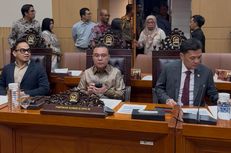
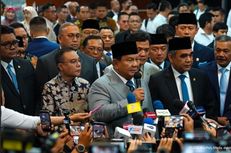
In this context, the President's silence in front of a crowd of journalists upon arriving in Senayan should also be interpreted as part of measured political communication.
In the tradition of governance, silence at the right moment can often serve as a more straightforward answer than a lengthy verbal response.
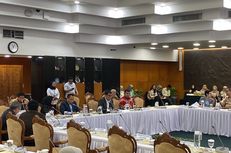
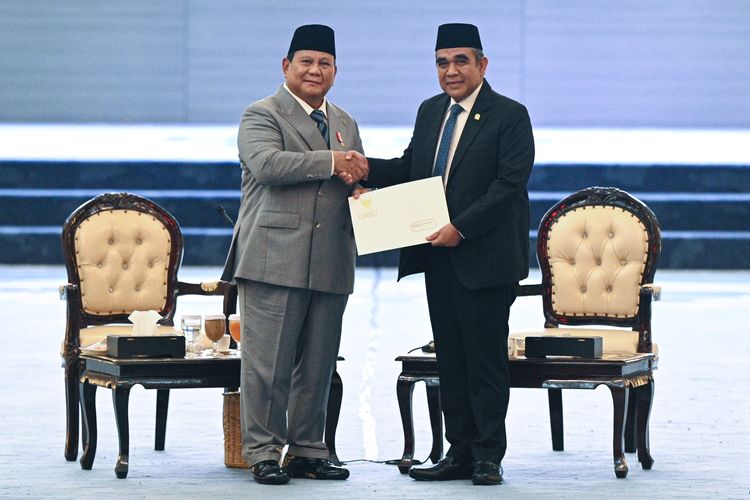
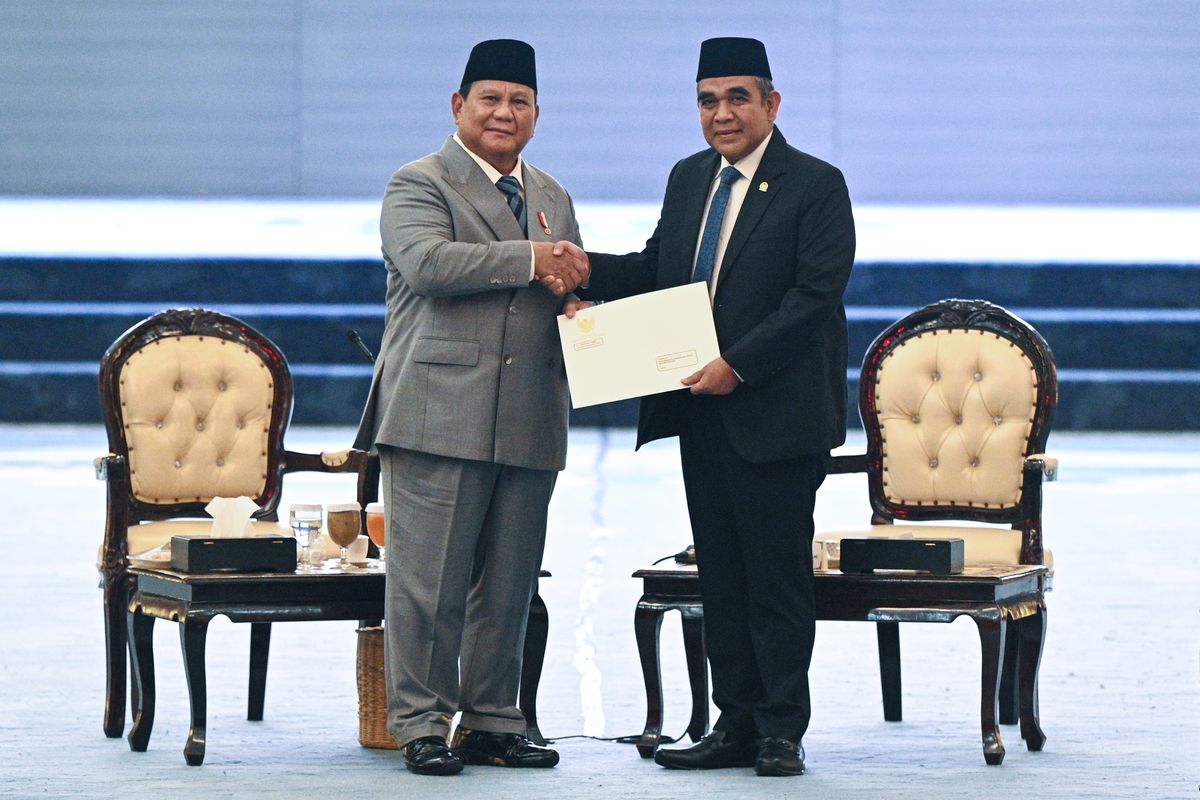
By declining to answer media inquiries—both before and after the documents were officially submitted during the MPR forum—the President was indirectly upholding the MPR's dignity as a high state institution, which ought to be placed in a respected position as stipulated by the constitution.
In this regard, the MPR is respected not merely as the institution for submitting administrative documents but also for its authority and esteem as the guardian of the constitution and the four pillars of the nation: Pancasila, Bhinneka Tunggal Ika, the Unitary State of the Republic of Indonesia (NKRI), and the 1945 Constitution (PBNU).
Now, as the ceremonial event at Nusantara V has concluded and the contents of the proposed documents have passed hands to MPR leadership and been revealed to the public, the next chapter of the mystery begins: which of the two candidates, Sugiono or Amran Sulaiman, is most likely to be selected by the MPR?
Once these names are opened and processed according to constitutional mechanisms in the parliament, the public will no longer assess how closely the secret has been kept, but rather how accurately the choices made by the MPR serve the national interest.
At this juncture, the prerogative finds its true meaning.
The President's complete independence in selecting two candidates, who somewhat fall outside the scrutiny of public opinion, should be appreciated for successfully minimizing intervention from dominant political factions or pressure groups.
Ultimately, the constitutional event that afternoon in Senayan leaves an important note for the course of our democracy.
In an environment often drowned out by ambition and power struggles, the silent space within the President's grasp proves that the sovereignty of presidential decision-making remains intact.
Now, the public awaits the verification and thorough examination of the two names within the framework of applicable legislation.
That these two names, representative of the nation’s best sons—previously known only to God and President Prabowo—have now truly emerged, are accessible, and can be audited based on their track record by the public.
Thus, the public can now engage in scrutiny, provide input, and present corrective notes regarding the qualifications of the two vice presidential candidates put forth by the President.
And from this public commentary, it is hoped that it could form the basis for the MPR's decision-making, considering the leadership aspects of the figure, rather than a narrow calculation of power.