
Dasco Affirms No Interest in Vice Presidency: I Only Want to Support Prabowo's Victory
-
News
-
10 minutes ago
This article was translated by AI. Read the original article on Kompas.com. See Original
JAKARTA, KOMPAS.com - The DPR (People's Consultative Assembly) will re-evaluate the latest Police Law (UU Polri) following its declaration by the Constitutional Court (MK) as formally flawed.
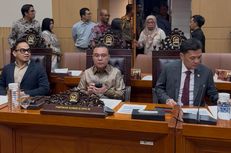
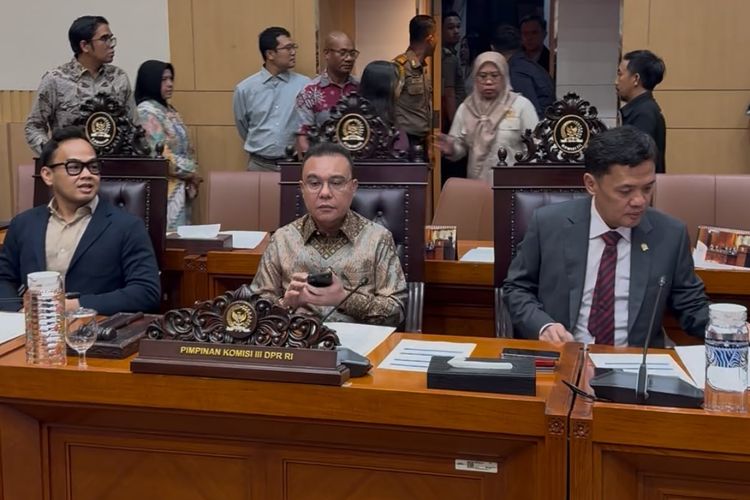
"Yes, the Police Law that was judicially reviewed is deemed conditionally constitutional with the stipulation that improvements must be made within a year," said Deputy Chairman of the DPR, Sufmi Dasco Ahmad, during an interview at the Parliamentary Complex in Senayan, Jakarta, on Tuesday (24/11/2026).
The MK directed that Law Number 5 of 2026 concerning the Third Amendment to Law Number 2 of 2002 on the Indonesian National Police must be amended within a maximum period of one year.
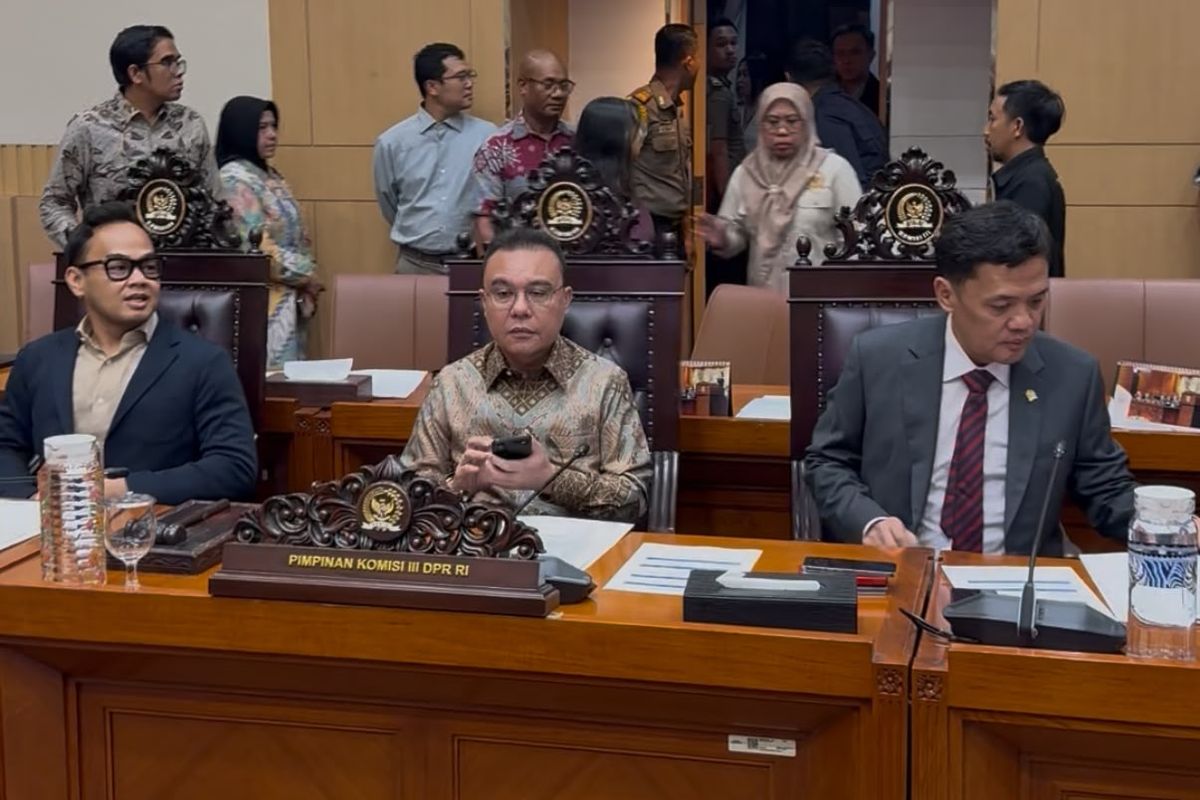
Dasco stated that the DPR would request Commission III, the commission responsible for police affairs, to reassess the Police Law.
"In response to this, we will then ask the technical committee, in this case, Commission III, to review it again. We will respect the MK's decision," he said.
Dasco clarified that the harmonization stage in the law-making process has been integral to examining the substance and wording of legislative drafts.
In addition to reviewing the Police Law, Dasco mentioned that the DPR would also reorganize the harmonization mechanism in the revision of the Law on the Formation of Legislation (UU P3).
According to him, the regulation is necessary to clarify which legislative drafts require harmonization and which do not.
"And in the revision of the law regarding the preparation of legislation, we will re-establish guidelines. What requires harmonization and what does not, to ensure legal certainty for laws that have been enacted," concluded Dasco.
The MK stated that the formation of the Police Law was formally flawed when it granted part of the petition Number 251/PUU-XXIV/2026 on Monday (23/11/2026).
In its decision, the MK stated that the Police Law remains legally binding conditionally as long as the legislator makes corrections within one year from the reading of the verdict.
If the DPR and the government do not make the necessary corrections by the deadline, the previously valid law will revert to Law Number 2 of 2002 concerning the Police.
In its legal considerations, the MK emphasized the legislative process, particularly the failure to undergo harmonization stages in the DPR.
The MK also judged that the law-making process did not comply with the stages set forth in the UU P3 and DPR Regulation Number 1 of 2020.
One highlighted issue was the decision by the DPR for the 2024-2029 period to take over the draft police law from the DPR for the 2019-2024 period and then establish it as a legislative initiative. This takeover did not undergo harmonization stages in the Legislative Body (Baleg) of the DPR.
Additionally, the MK pointed out the absence of real-time public publication of the official draft of the Police Law.
The MK noted that video documentation and live broadcasts of discussions in the DPR could not replace the written documents that must be published through the official legislative channels.