
Dasco Affirms No Interest in Vice Presidency: I Only Want to Support Prabowo's Victory
-
News
-
10 minutes ago
This article was translated by AI. Read the original article on Kompas.com. See Original
THE ATMOSPHERE in Senayan that afternoon, Monday, November 23, 2026—specifically at the Nusantara IV Building within the Parliament Complex—felt more subdued and tense than usual.
Outside the parliamentary walls, traffic had begun to crawl, signaling the start of the evening rush hour.
This was due to the ongoing constitutional event inside the House of Representatives (DPR), where the President was set to deliver two vice presidential candidates to the People’s Consultative Assembly (MPR).
As this article was being written, a convoy of Presidential Security Forces (Paspampres) had just arrived at the parliament building.
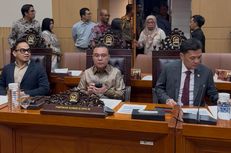
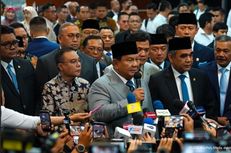
The President stepped down calmly, greeted immediately by MPR Chairman Ahmad Muzani, Deputy Chairman Sohibul Iman, Deputy Chairman of the DPR RI Sufmi Dasco Ahmad, Cucun Ahmad Syamsurizal, Sari Yuliati, and Saan Mustopa—who were seen waiting on the main terrace.
Suddenly, camera flashes and a swarm of microphones surrounded him from every direction.
Questions were fired rapidly, attempting to penetrate the veil of secrecy that had surrounded the candidate list for days.
However, the President chose not to respond to any of the reporters' barrage of questions that afternoon.
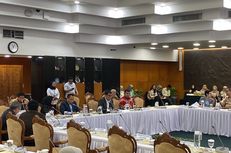
Without pausing to make a press statement, he walked straight to the Central Meeting Room in Nusantara IV.
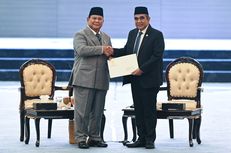
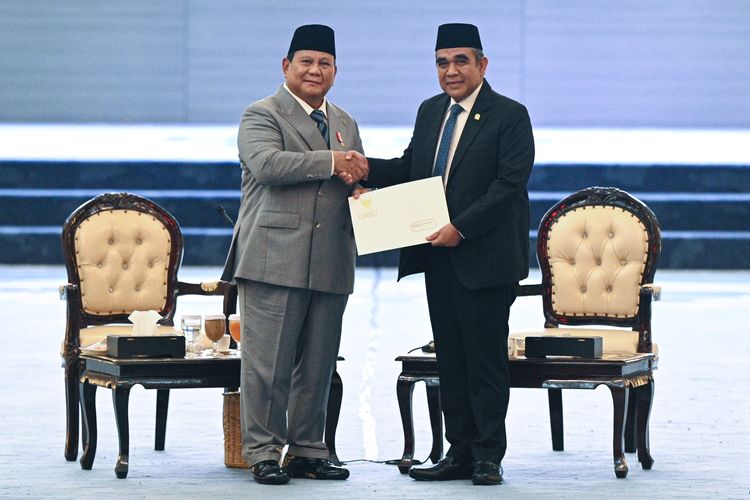
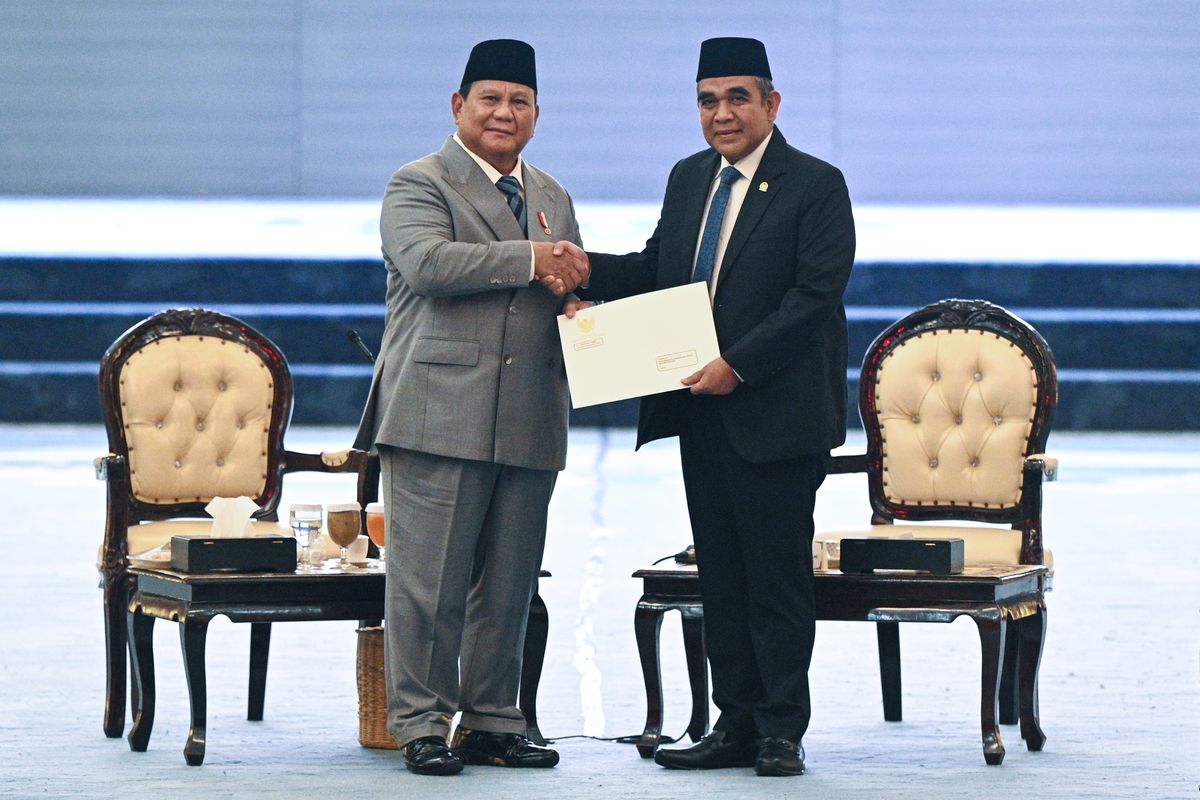
In a relatively short time, it was in this historic room that President Prabowo Subianto symbolically handed the documents containing the two vice presidential candidates to MPR Chairman Ahmad Muzani following the ceremonial procession.
Amid a political culture frequently filled with information leaks, lobbying whispers, and mutual claims before official decisions are made, the President's document handover felt like a subtle yet constitutionally significant political event.
The folder brought from the Palace to Nusantara IV was not just an administrative document but a symbol of authority, fiercely protected from short-term interests.
This constitutional event indirectly signified how the principle of presidentialism was fully exercised by the President, in line with applicable regulations.
In the architecture of the presidential system we adopted post-amendment to the 1945 Constitution of the Republic of Indonesia, the President is not a mandate holder subjected to the pulls of parliamentary factions but the highest governmental authority directly responsible to the people.
As a consequence, at certain points—such as in the appointment of strategic state positions like the replacement of Gibran for vice president—the constitution grants full autonomous space recognized as the President's prerogative.
This prerogative is often misunderstood in the public sphere.
Some view it as a completely unbounded space, while others seek to undermine it through political pressure under the guise of coalition stability.
In fact, the essence of prerogative lies in the independence of decision-making accompanied by singular responsibility that mandates freedom from interference from any external powers and pressures.
When the President determined two names to be submitted to the MPR, this decision-making process was entirely within his constitutional authority as head of state and government.
President Prabowo's steadfast position becomes more interesting when contextualized with the reality of the government coalition regime—where in administrations supported by large political party coalitions, the temptation to divide positions and present a slate of candidates almost always emerges as part of daily political transactions.
However, in the context of handing over the two names that afternoon, the boundary was drawn firmly, and no party could intervene, let alone compel the submission of the two names, even from coalition parties.
Theoretically, such practices align with the scholarship on presidential governance systems, as noted by Juan J. Linz—in his classic essay The Perils of Presidentialism (1990), where he discusses that presidential systems are more vulnerable to political deadlock and crises than parliamentary systems.
In this case, an unconsolidated presidential system can trap the president in a coalition compromise quagmire that could paralyze executive autonomy.
A healthy presidentialism demands clear boundaries regarding decision-making areas that should be sterilized from factional political pressures.
In this context, President Prabowo appears to position the coalition as a functional instrument to support governmental effectiveness based on robust legislative output rather than as a shadow assembly entitled to dictate the President's prerogative decisions in the final decision-making arena at the parliament level.
Ironically, the President's firmness in maintaining secrecy is in stark contrast to the clamor of speculation outside the Palace over the past two weeks.
As noted previously, various simulations of vice presidential candidates had circulated widely in the public sphere, political discussion tables, and social media timelines—these were nothing more than guesses surrounding a riddle of simulations.
When official information is tightly secured, the public naturally produces its own counter-narratives through speculative candidate rumors.
Some names did indeed fall under consideration, while others were deliberately floated to test the public or merely to participate in the opinion warfare between interest groups.
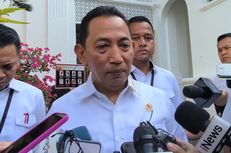
However, this did not undermine the President's prerogative to keep the proposed candidate list confidential until ultimately MPR Chairman Ahmad Muzani opened the letter and revealed the two names proposed by the President during a press conference.
What has been articulated here is not merely rhetorical expression; rather, it is the most honest portrayal of how sacred the President's final decision must be kept secret within the framework of upholding the dignity of presidentialism.
On the other hand, it must also be contextualized within the framework of upholding the constitution—where under constitutional governance, the proposal of a vice presidential candidate in the event of a vacancy mid-term is an exceptional authority (prerogative right) of the President.
This is regulated in Article 8, Paragraph (2) of the 1945 Constitution, Law Number 17 of 2014 concerning MD3 (specifically Article 46), and MPR Regulation Number 1 of 2024 on MPR Procedures.
However, while the appointment of a vice president to replace Gibran Rakabuming Raka falls within the President's prerogative, administratively, it remains bound by applicable regulations.
In this context, the President's silence in front of a crowd of journalists upon arriving in Senayan should also be interpreted as part of measured political communication.
In the tradition of governance, silence at the right moment can often serve as a more straightforward answer than a lengthy verbal response.
By declining to answer media inquiries—both before and after the documents were officially submitted during the MPR forum—the President was indirectly upholding the MPR's dignity as a high state institution, which ought to be placed in a respected position as stipulated by the constitution.
In this regard, the MPR is respected not merely as the institution for submitting administrative documents but also for its authority and esteem as the guardian of the constitution and the four pillars of the nation: Pancasila, Bhinneka Tunggal Ika, the Unitary State of the Republic of Indonesia (NKRI), and the 1945 Constitution (PBNU).
Now, as the ceremonial event at Nusantara V has concluded and the contents of the proposed documents have passed hands to MPR leadership and been revealed to the public, the next chapter of the mystery begins: which of the two candidates, Sugiono or Amran Sulaiman, is most likely to be selected by the MPR?
Once these names are opened and processed according to constitutional mechanisms in the parliament, the public will no longer assess how closely the secret has been kept, but rather how accurately the choices made by the MPR serve the national interest.
At this juncture, the prerogative finds its true meaning.
The President's complete independence in selecting two candidates, who somewhat fall outside the scrutiny of public opinion, should be appreciated for successfully minimizing intervention from dominant political factions or pressure groups.
Ultimately, the constitutional event that afternoon in Senayan leaves an important note for the course of our democracy.
In an environment often drowned out by ambition and power struggles, the silent space within the President's grasp proves that the sovereignty of presidential decision-making remains intact.
Now, the public awaits the verification and thorough examination of the two names within the framework of applicable legislation.
That these two names, representative of the nation’s best sons—previously known only to God and President Prabowo—have now truly emerged, are accessible, and can be audited based on their track record by the public.
Thus, the public can now engage in scrutiny, provide input, and present corrective notes regarding the qualifications of the two vice presidential candidates put forth by the President.
And from this public commentary, it is hoped that it could form the basis for the MPR's decision-making, considering the leadership aspects of the figure, rather than a narrow calculation of power.