
Dasco Affirms No Interest in Vice Presidency: I Only Want to Support Prabowo's Victory
-
News
-
10 minutes ago
This article was translated by AI. Read the original article on Kompas.com. See Original
This prerogative is often misunderstood in the public sphere.
Some view it as a completely unbounded space, while others seek to undermine it through political pressure under the guise of coalition stability.
In fact, the essence of prerogative lies in the independence of decision-making accompanied by singular responsibility that mandates freedom from interference from any external powers and pressures.
When the President determined two names to be submitted to the MPR, this decision-making process was entirely within his constitutional authority as head of state and government.
President Prabowo's steadfast position becomes more interesting when contextualized with the reality of the government coalition regime—where in administrations supported by large political party coalitions, the temptation to divide positions and present a slate of candidates almost always emerges as part of daily political transactions.
However, in the context of handing over the two names that afternoon, the boundary was drawn firmly, and no party could intervene, let alone compel the submission of the two names, even from coalition parties.
Theoretically, such practices align with the scholarship on presidential governance systems, as noted by Juan J. Linz—in his classic essay The Perils of Presidentialism (1990), where he discusses that presidential systems are more vulnerable to political deadlock and crises than parliamentary systems.
In this case, an unconsolidated presidential system can trap the president in a coalition compromise quagmire that could paralyze executive autonomy.
A healthy presidentialism demands clear boundaries regarding decision-making areas that should be sterilized from factional political pressures.
In this context, President Prabowo appears to position the coalition as a functional instrument to support governmental effectiveness based on robust legislative output rather than as a shadow assembly entitled to dictate the President's prerogative decisions in the final decision-making arena at the parliament level.
Ironically, the President's firmness in maintaining secrecy is in stark contrast to the clamor of speculation outside the Palace over the past two weeks.
As noted previously, various simulations of vice presidential candidates had circulated widely in the public sphere, political discussion tables, and social media timelines—these were nothing more than guesses surrounding a riddle of simulations.
When official information is tightly secured, the public naturally produces its own counter-narratives through speculative candidate rumors.
Some names did indeed fall under consideration, while others were deliberately floated to test the public or merely to participate in the opinion warfare between interest groups.
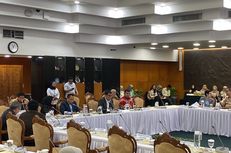
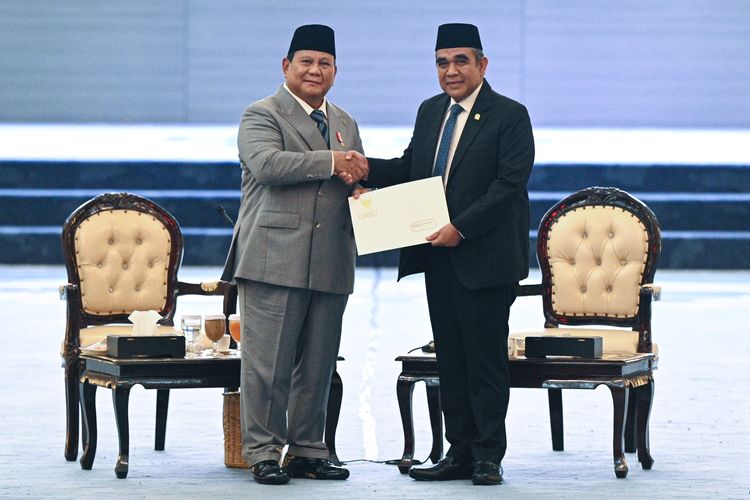
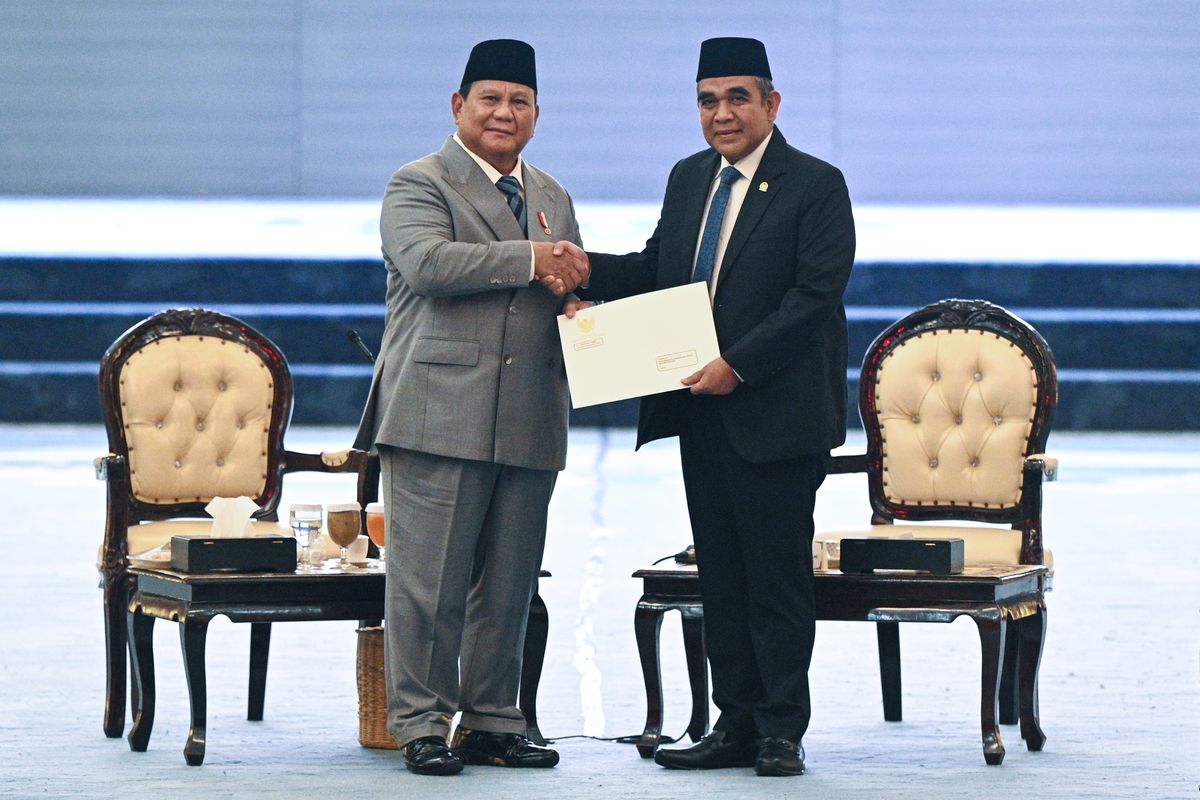
However, this did not undermine the President's prerogative to keep the proposed candidate list confidential until ultimately MPR Chairman Ahmad Muzani opened the letter and revealed the two names proposed by the President during a press conference.