DPD RI Leadership Seen as Alternative for Prabowo’s Vice Presidential Candidate, Here are the Considerations
-
News
-
Just now
This article was translated by AI. Read the original article on Kompas.com. See Original

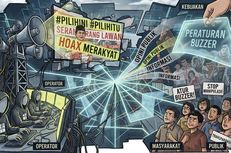
Despite facing numerous criticisms, the existence of political buzzers is expected to continue coloring Indonesia's political dynamics in the future.
Ari Junaedi believes that this phenomenon will remain as long as the democratic processes have not matured.
He notes that social media has become a primary arena for political communication, particularly for younger generations that are increasingly active on digital platforms.
This situation turns the political contest on social media into a battleground exploited by various interests.
"The political buzzer phenomenon will persist as long as the democratic process lacks maturity. The currently superficial democracy allows ample room for the existence of buzzers to favor candidates with substantial capital," Ari commented.
He further pointed out that the growing influence of social media among Generation Z leads users of buzzer services to view the political contest as a competitive space to be won.
Meanwhile, Rulli Nasrulah predicts that technological advancements will widen the capacities for narrative production and distribution.
If not matched with transparency and public awareness regarding information consumption, public discourse may become dominated increasingly by groups equipped with resources to mobilize communication networks.
In the long run, this could undermine public trust, deepen polarization, and disrupt the quality of democracy.
"Because the debates are controlled more by narrative production power than by healthy exchanges of ideas," Rulli concluded.