Tracing the Footsteps of Political Buzzers: From Opinion Manipulation to Winning Strategies
-
News
-
1 minute ago
This article was translated by AI. Read the original article on Kompas.com. See Original

JAKARTA, KOMPAS.com - Social media has evolved into more than just a platform for public expression; it has become a battleground for influence within the political sphere.
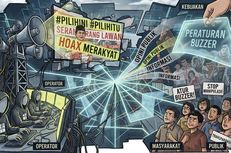
In this competitive landscape, the role of buzzers—individuals who amplify messages on social media—has gained significance due to their ability to shape narratives, sway opinions, and undermine political opponents.
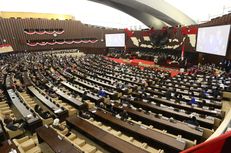
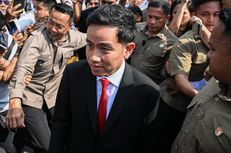
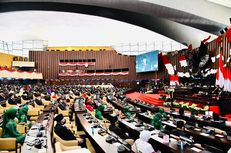
This phenomenon has gained renewed attention after the Chairperson of the Indonesian Democratic Party of Struggle (PDI-P), Megawati Soekarnoputri, urged the House of Representatives to draft regulations to manage political buzzers.
Megawati suggested that these buzzers often voice opinions online but shy away from confrontations with those they criticize.
However, the political buzzer phenomenon is not new to Indonesia's democratic landscape.
With technological advancements, the operation of buzzers has shifted from merely spreading messages to becoming part of a more organized network involving various actors and leveraging digital technology.
So, how has the political buzzer evolved in Indonesia, what is its impact on the quality of democracy, and will this phenomenon continue to persist in future political dynamics?
Political communication expert from Esa Unggul University, M Jamiluddin Ritonga, stated that discussions surrounding the existence of buzzers have been ongoing since their emergence around 2009.
"Buzzers emerged alongside the rise of social media use, particularly Twitter," Jamiluddin told Kompas.com on Friday (20/11/2026).
From the start, the messages conveyed by these buzzers have often been polarized.
There have been positive narratives crafted to enhance an individual or group's image, as well as negative narratives aimed at attacking individuals, groups, or specific institutions.
As time progressed, the role of buzzers has expanded beyond mere information dissemination or political image building.
Political communication expert and Director of Nusakom Pratama Political Studies Institute, Ari Junaedi, mentioned that buzzers are now an integral part of considered communication strategies in political contests.
According to Ari, the ability of buzzers to influence public opinion can contribute to the victory of a candidate while simultaneously tarnishing the image of competitors.
"Given the significant role of political buzzers, their influence cannot be overlooked. The success of buzzers in shaping public opinion contributes to a candidate's win while degrading others," said Ari to Kompas.com on Friday.
Thus, the activities of buzzers are not only related to message dissemination but also to shaping collective public perceptions of competing political actors.
Ari believes that these developments have granted buzzers a distinct position within political communication strategies.
This is especially pertinent as social media is increasingly utilized by the public to gain information and keep up with political developments.