

Learning from the Raffi Ahmad Controversy, It's Time for the Government to Be More Sensitive in Budget Formulation
-
News
-
3 minutes ago
This article was translated by AI. Read the original article on Kompas.com. See Original
This alignment should help Southeast Asian nations foster dialogue, prevent conflicts, and ensure the region does not become a battleground for great power rivalry.
In this context, the ASEAN Outlook on the Indo-Pacific (AOIP) carries strategic relevance. This approach emphasizes openness, inclusivity, dialogue, maritime cooperation, connectivity, and respect for international law.
Indonesia must continue to advocate for the Indo-Pacific to be a zone of cooperation, not confrontation.
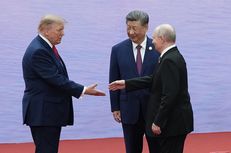
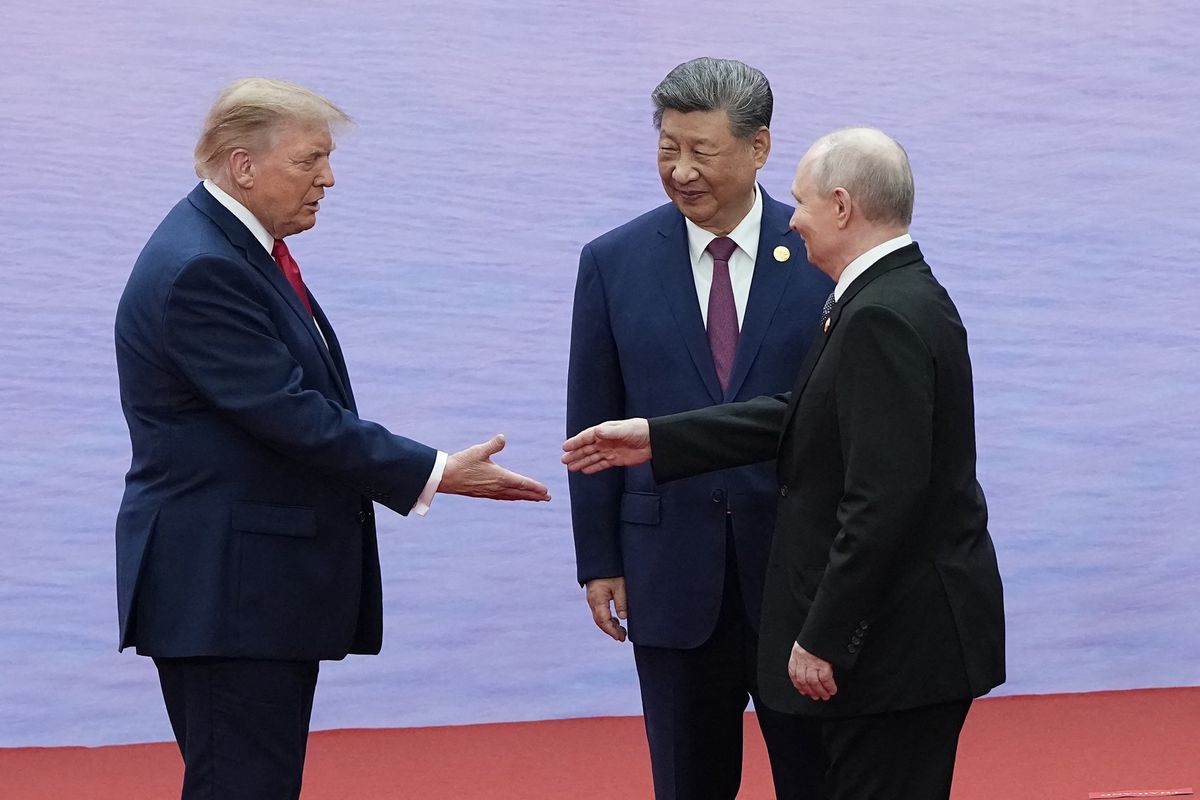
Thus, the meeting of Trump, Xi Jinping, and Putin in Shenzhen must also be viewed through a more foundational question: are the world’s great powers willing to transform competition into cooperation for the safety of humanity?
This question is crucial because peace is never something that arrives on its own.
It must be fought for through political courage, diplomatic wisdom, respect for sovereignty, and a willingness to restrain ambitions for power.
This momentum should provide Indonesia with an opportunity to reaffirm its national geopolitical identity.
A foreign policy of active neutrality is not merely a historical legacy but a strategic guideline for navigating an increasingly complex world.
Thus, Indonesia must build constructive relationships with the United States, China, Russia, and other powers without sacrificing its independence in formulating national policies.
Economic partnerships, defense cooperation, technology investments, and international diplomacy must be framed within the long-term national interests.
Simultaneously, Indonesia must strengthen multilateral diplomacy through ASEAN, the United Nations, the G20, BRICS, and various other international forums.
Participation in these forums is not a contradiction to an active neutrality policy. Rather, it is through various diplomatic channels that Indonesia can expand its sphere of influence and advocate for the interests of developing nations.
From a Pancasila perspective, world peace is also a consequence of commitment to humanity and social justice.
The Second Principle, a Just and Civilized Humanity, teaches that every individual has dignity that must be respected.
This value aligns with the mandate of the 1945 Constitution's preamble to contribute to the establishment of a world order based on independence, eternal peace, and social justice.
Amidst shifting global geopolitics, Indonesia, therefore, must translate this constitutional mandate into concrete diplomacy.
Not merely issuing statements about peace but actively building cooperative mechanisms that prevent conflicts, strengthen trust, and protect the interests of weaker nations.
The meeting in Shenzhen may not necessarily yield substantial agreements. The agendas of the three nations still contain different interests, and the likelihood of reaching concrete agreements concerning nuclear arms control is seen as slim.
However, the opportunity for communication among these three nuclear powers remains a diplomatic chance that should be valued.
We should not place our hopes too quickly, but we should also not lose faith in diplomacy.
The world requires more spaces for meeting than for conflict, more wisdom than power's arrogance, and more cooperation than military threats.
Indonesia must stand firm amidst these changes. Not drawn into the rivalries of great powers, not losing direction in determining national interests, and not neglecting its historical responsibility to contribute to world peace.
Indonesia's geopolitical strength lies not only in its vast territory, rich natural resources, strategic position, or defense capabilities.
Indonesia's strength also resides in its consistency to uphold an active-neutral foreign policy, its ability to foster friendships among nations, and its courage to fight for a more just and civilized world order.
This is the path of Indonesia's geopolitics: preserving sovereignty, enhancing national resilience, building international friendships, and dedicating the strength of the nation to achieving world peace.